Why Bruges Should Be Your Next European Destination
Nestled in the heart of Belgium, Bruges stands as one of Europe’s most enchanting medieval cities—a living museum where time seems to have stopped somewhere in the 15th century. This UNESCO World Heritage site captivates visitors with its labyrinth of winding canals, cobblestone streets that echo with centuries of history, and Gothic architecture that rises majestically against the Belgian sky.
Often called the “Venice of the North,” Bruges offers an intimate European experience that larger capitals simply cannot match. The city’s compact historic center, encircled by medieval walls and dotted with picture-perfect bridges, creates an atmosphere so magical that it feels like stepping into a storybook. Whether you’re a photography enthusiast, history buff, or simply someone seeking authentic European charm, Bruges delivers an unforgettable experience that will leave you planning your return visit before you’ve even left.
Our comprehensive guide reveals the secrets of this remarkable city. We’ve walked every cobblestone street, climbed every tower, and tasted every chocolate shop to bring you insider knowledge that transforms a typical tourist visit into an extraordinary journey through living history.
When to Visit Bruges: Timing Your Perfect Trip
Spring: The Optimal Season (April-May)
Spring emerges as the absolute best time to visit Bruges, offering a perfect confluence of ideal conditions for travelers and photographers alike. During these months, the city awakens from its winter slumber with blooming cherry trees lining the canals, creating natural frames for your photographs. Tourist crowds remain manageable in spring, allowing you to enjoy popular spots like Rozenhoedkaai without fighting for the perfect photo angle.
Winter: Intimate and Atmospheric (December-February)
While colder, winter in Bruges possesses a unique charm that many travelers overlook. The city transforms into a medieval winter wonderland, especially during the holiday season when Christmas markets fill the squares with warm lights and the scent of mulled wine. Fewer tourists mean you’ll often have iconic locations to yourself, particularly in early morning or late afternoon.
Summer Considerations (June-August)
Summer brings the highest tourist numbers, making popular attractions crowded and accommodation prices peak. However, long daylight hours and warm weather create perfect conditions for outdoor dining and extended evening photography sessions. If visiting in summer, book accommodations well in advance and plan to visit major attractions very early in the morning.
The 10 Best Things to Do in Bruges: A Complete Guide
1. Master the Art of Canal Photography at Rozenhoedkaai
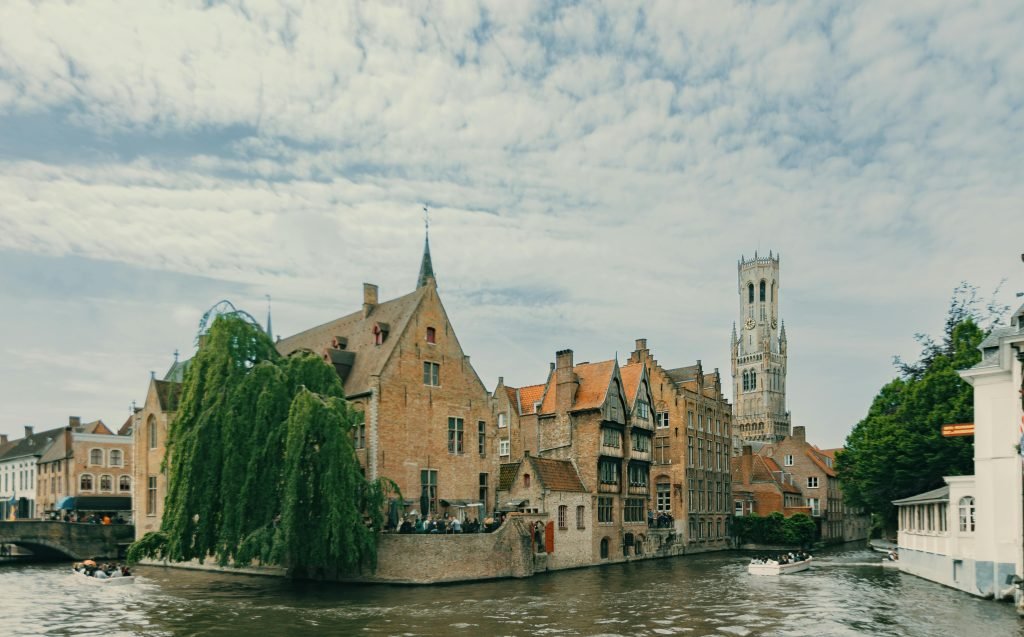
Rozenhoedkaai stands as Bruges’ most photographed location, and for compelling reasons that become apparent the moment you round the corner onto this canal-side viewpoint. The spot offers a perfect composition where medieval guild houses, their step-gabled rooftops creating a serrated skyline, reflect in the still waters of the Dijver canal.
The secret to capturing Rozenhoedkaai’s magic lies not just in timing, but in understanding how the light interacts with the water throughout the day. Morning light illuminates the eastern facades while creating deep shadows on the western buildings, producing high contrast that adds drama to your images. Evening light reverses this effect, bathing the entire scene in warm, golden tones.
Don’t limit yourself to the obvious viewpoint—explore the narrow alleyways leading to the canal for unique angles that most tourists miss. The ivy-covered walls and hidden doorways along these paths offer intimate details that tell the story of Bruges’ living history.
2. Conquer the Belfry Tower for Breathtaking City Views
The Belfort van Brugge towers 83 meters above the Markt Square, offering the most spectacular panoramic views of the entire city and surrounding Flemish countryside. This 13th-century bell tower, immortalized in literature and film, requires climbing 366 steep, narrow steps—a challenge that rewards visitors with unforgettable vistas.
The climb itself becomes part of the experience as you ascend through different levels of the tower’s history. Midway up, you’ll encounter the impressive carillon mechanism with its 47 bells, some dating back to the 16th century. The mechanical workings offer fascinating insight into medieval engineering and continue to chime the hours across the city.
From the top platform, you’ll understand Bruges’ geography in a way impossible from street level. The concentric pattern of canals, the red-tiled rooftops creating a carpet of color, and the flat Flemish landscape stretching to the horizon provide context for the city’s historical importance as a medieval trading center.
3. Immerse Yourself in Medieval Life at the Markt
The Markt serves as Bruges’ beating heart, a vast square where medieval commerce once thrived and where the city’s energy still concentrates today. Surrounded by colorful guild houses, each telling the story of different medieval trades, the square creates a living theater where horse-drawn carriages clip-clop across cobblestones while outdoor cafés buzz with international conversation.
The Markt’s architecture tells the story of Bruges’ evolution through different periods. The Provincial Court building showcases neo-Gothic revival architecture, while the guild houses display the wealth accumulated during the city’s medieval prosperity. Each building’s facade reveals details about the trades and families who built Bruges’ reputation as a European trading hub.
Local Insight: Visit the Markt during the Wednesday and Saturday morning markets when locals shop for fresh produce and flowers, creating authentic scenes of modern Bruges life against the medieval backdrop.
4. Discover Artisanal Chocolate Beyond the Tourist Traps
Bruges’ reputation for exceptional chocolate extends far beyond marketing hype—the city maintains genuine traditions of chocolatier craftsmanship that date back generations. However, navigating between authentic artisanal chocolate shops and tourist-oriented chains requires local knowledge and discerning taste.
Exceptional Chocolatiers to Visit:
The Chocolate Line: Dominique Persoone’s innovative workshop pushes chocolate boundaries with unusual flavor combinations like chocolate with bacon, wasabi, or pink pepper. The shop doubles as a working atelier where you can watch chocolatiers hand-crafting each piece.
Chocolaterie Dumon: Four generations of chocolate-making expertise create classic Belgian pralines with traditional techniques. Their ganache fillings use only natural ingredients, and their seasonal specialties reflect the finest Belgian chocolate traditions.
Choco-Story Museum: Beyond chocolate shopping, this museum provides comprehensive education about cacao cultivation, chocolate history, and Belgian chocolate-making techniques. The admission includes tastings and live chocolate-making demonstrations.
5. Escape Tourist Crowds in Hidden Medieval Neighborhoods
Bruges’ greatest treasures often lie just meters away from crowded tourist paths, in neighborhoods where local life continues much as it has for centuries. These hidden areas offer photographers and travelers authentic glimpses of medieval Bruges without the commercial overlay that dominates central tourist zones.
Exploration Strategy: Use the major tourist sites as anchor points, then deliberately walk away from crowds into residential areas. Bruges’ compact size means you’re never more than a 10-minute walk from major attractions, but you’ll discover neighborhoods that feel like private discoveries.
Secret Exploration Areas:
Around Jeruzalemkerk (Jerusalem Church): This unique Byzantine-style church, modeled after Jerusalem’s Church of the Holy Sepulchre, anchors a neighborhood of narrow medieval streets where ivy climbs ancient walls and locals bicycle past without acknowledging the area’s extraordinary beauty as anything unusual.
Sint-Annarei District: North of the city center, this residential area features canals lined with medieval houses where lace curtains frame windows and small gardens create private sanctuaries behind historic facades. The absence of commercial activity allows for peaceful photography and genuine cultural observation.
Carmerstraat and Surrounding Alleys: These narrow streets showcase Bruges’ residential medieval architecture without tourist crowds. Gothic doorways, medieval brick patterns, and architectural details that tell stories of centuries of daily life create endless photographic opportunities.
6. Experience Spiritual and Architectural Wonder at the Basilica of the Holy Blood
The Basilica of the Holy Blood houses one of Christianity’s most venerated relics while showcasing architectural evolution spanning nearly a millennium. This double-level church demonstrates the transition from Romanesque to Gothic architecture while maintaining active religious significance that adds spiritual depth to its historical importance.
Visiting Considerations:
The basilica’s location in Burg Square provides easy access while maintaining sacred atmosphere separate from commercial tourist activities. The juxtaposition of ancient spiritual practices continuing in medieval settings offers unique cultural insights into European religious heritage.
7. Navigate Bruges from a Unique Perspective: Canal Boat Tours
Canal boat tours provide perspectives on Bruges impossible to achieve from street level, revealing architectural details, garden glimpses, and spatial relationships that walking tours cannot match. These 30-minute guided tours combine historical education with photographic opportunities while offering rest for tired feet after extensive walking exploration.
Tour Advantages:
Local Perspective: While some dismiss canal tours as tourist activities, locals often recommend them for visitors seeking comprehensive city orientation and historical context that enhances subsequent independent exploration.
8. Find Romance and Tranquility at Minnewater Park and Begijnhof
Minnewater Park, romantically dubbed the “Lake of Love,” offers a peaceful retreat from Bruges’ bustling center while providing access to some of the city’s most historically significant and photographically rewarding locations. This southern district combines natural beauty with religious heritage, creating a perfect balance of recreation and cultural education.
Minnewater Lake and Park:
The park’s centerpiece lake, actually a medieval harbor basin, reflects surrounding trees and medieval buildings while providing habitat for swans and other waterfowl. Walking paths encircle the lake, offering different perspectives throughout the day as lighting changes transform the scene from peaceful morning reflections to dramatic sunset silhouettes.
Begijnhof: A Medieval Women’s Community:
Adjacent to Minnewater Park, the Begijnhof represents one of Europe’s best-preserved examples of medieval women’s religious communities. These white houses surrounding a peaceful courtyard once housed the Beguines—religious women who lived community lives without taking permanent religious vows.
Visitor Etiquette: The Begijnhof remains an active religious community. Visitors should maintain quiet, respectful behavior and understand that photography may be restricted in certain areas to preserve residents’ privacy and spiritual atmosphere.
9. Discover Gothic Grandeur in Burg Square’s Architectural Ensemble
Burg Square serves as Bruges’ administrative heart, showcasing an extraordinary collection of Gothic and Renaissance architecture that demonstrates the city’s political importance throughout medieval and early modern periods. This intimate square, often overshadowed by the larger Markt, offers some of Bruges’ most impressive architectural details and historical significance.
Architectural Masterpieces:
Gothic Town Hall (Stadhuis): Built between 1376 and 1420, this building ranks among Europe’s oldest and most beautiful Gothic town halls. The facade’s intricate stonework, featuring elaborate niches with statues and delicate tracery, demonstrates medieval stone carving at its finest. Inside, the Gothic Hall displays impressive murals depicting Bruges’ history and medieval governance.
Basilica of the Holy Blood: Already detailed above, but worth noting its architectural contribution to the square’s ensemble of religious and secular power.
Old Civil Registry (Oude Civiele Griffie): This Renaissance building, with its distinctive stepped gable and ornate facade, represents the evolution of Bruges architecture beyond the medieval period while maintaining harmony with older structures.
Palace of the Liberty of Bruges: The ornate facade of this former courthouse showcases Renaissance architecture with elaborate sculptural decoration celebrating justice and governance.
10. Embrace Serendipitous Discovery Through Mindful Wandering
Perhaps the most valuable advice for visiting Bruges involves abandoning rigid itineraries in favor of curious, open-ended exploration. The city’s compact medieval layout, designed for pedestrian navigation, rewards travelers who allow themselves to become pleasantly lost in its maze of narrow streets and hidden courtyards.
The Philosophy of Slow Travel in Bruges:
Bruges operates on a different temporal rhythm than modern urban centers. The city’s architecture, layout, and cultural pace encourage visitors to slow down, observe details, and appreciate subtleties that rapid tourism overlooks. This approach often leads to the most memorable discoveries and authentic cultural connections.
Wandering Strategies:
The magic of Bruges reveals itself most generously to visitors who approach the city with curiosity, respect, and patience rather than consumption-oriented tourism that treats cultural sites as items to be checked off lists.
Final Thoughts: Why Bruges Deserves Multiple Visits
Bruges reveals different aspects of its character depending on season, time of day, and visitor approach. A single day trip, while worthwhile, only scratches the surface of what this remarkable city offers. The interplay between preserved medieval architecture and contemporary Belgian culture creates layers of experience that reward repeat visits and deeper exploration.
The city’s compact size might suggest quick exploration is sufficient, but this assumption underestimates the richness embedded in Bruges’ streets, buildings, and cultural life. Each visit reveals previously unnoticed details, seasonal changes that transform familiar scenes, and opportunities for deeper cultural understanding.
Whether you’re drawn by photography opportunities, historical interest, culinary exploration, or simply the desire to experience one of Europe’s most beautiful and well-preserved medieval cities, Bruges offers experiences that linger long after departure. The city’s ability to transport visitors into a fairy tale setting while maintaining authentic cultural life makes it a destination that rewards both careful planning and spontaneous discovery.
Pack your camera, comfortable walking shoes, and an appetite for both chocolate and wonder—Bruges awaits with centuries of stories and beauty that continue to unfold for every visitor willing to look beyond the obvious and embrace the magic of medieval Europe preserved in contemporary splendor.