Belgium’s deceptively compact geography conceals one of Europe’s most rewarding travel secrets—within an hour of Brussels lies a treasure trove of medieval cities, artistic masterpieces, and architectural wonders that would take weeks to properly explore in other countries. The nation’s exceptional railway system transforms Brussels into your personal gateway to centuries of Flemish culture, Gothic grandeur, and living history that continues to shape European identity today.
We discovered these destinations during an extended winter weekend that defied seasonal expectations—crisp January air paired with surprisingly generous sunshine and temperatures that made wandering cobblestone streets a pleasure rather than an endurance test. However, spring remains the optimal season for Belgian exploration, when ancient market squares burst with flowering trees and extended daylight hours allow you to fully appreciate the intricate stonework and canal reflections that define these remarkable cities.
This comprehensive guide covers Bruges, Ghent, Antwerp, and Leuven with the honest insights that only come from actual exploration. We’ll reveal not just the obvious attractions, but the subtle timing strategies, transportation nuances, and realistic expectations that transform a rushed tourist checklist into meaningful cultural immersion.
Belgium Railway Mastery: Your Key to Effortless Exploration
Belgium’s SNCB/NMBS railway system operates with Swiss-like punctuality and German efficiency, connecting major cities with frequent departures that eliminate the stress of rigid scheduling. This isn’t just convenient—it’s liberating. Miss your planned train? Another departs within 30-60 minutes to most destinations.
Understanding Belgian Rail Economics
Standard ticket prices range from €6-20 one way depending on distance, but savvy travelers exploit several discount opportunities. Travelers under 26 benefit from the remarkable Go Pass 1 system, reducing any domestic journey to just €7.10—a pricing structure that makes spontaneous exploration financially painless for young travelers.
Weekend warriors should investigate the 50% weekend discount on round-trip fares, valid from Friday evening through Sunday. This transforms a typical Brussels-Bruges round trip from €32-40 to roughly €16-20, making weekend cultural immersion surprisingly affordable.
Strategic Departure Stations
Brussels offers multiple departure points, each with distinct advantages. Brussels Central Station provides the most convenient access to Grand Place and tourist areas, while Gare du Midi serves high-speed international trains and some domestic routes. For Antwerp journeys, Gare du Nord actually offers marginally shorter travel times, though the neighborhood requires additional caution as discussed in our Brussels safety guide.
Bruges: Medieval Perfection That Demands More Than Drive-By Tourism
Journey Details: 1 hour from Brussels Central | €16-20 one way | Full day minimum recommended
Bruges exists in a temporal paradox—a living medieval city that somehow escaped the industrial revolution’s transformative touch. Walking its streets feels like stepping into a illuminated manuscript, where every canal reflection and Gothic spire creates compositions worthy of the Flemish masters who once called this place home.
The Brutal Truth About Day Trips to Bruges
Most travel guides treat Bruges as a convenient day trip checkbox, but this approach fundamentally misunderstands what makes the city extraordinary. Bruges reveals its true magic during the golden hours—early morning mist rising from silent canals and evening light painting brick facades in warm amber. Day-trippers arrive to find crowds, tour groups, and commercialized attractions that obscure the medieval atmosphere they came seeking.
Our honest recommendation: If you can only manage a day trip, arrive on the earliest possible train and stay through dinner. Better yet, plan an overnight stay to experience Bruges when most tourists have retreated to Brussels, leaving you alone with centuries of preserved architecture and the gentle lapping of canal water against ancient stone.
From Station to Storybook Streets
The 15-minute walk from Bruges station to the historic center serves as perfect transition from modern Belgium to medieval wonder. Tree-lined paths and residential streets gradually give way to Gothic spires and canal glimpses, building anticipation for the visual feast ahead. Resist the temptation for taxis or buses—this approach walk is integral to the Bruges experience.
Beyond the Obvious: Discovering Authentic Bruges
While Markt Square and its towering Belfry provide the iconic Bruges photographs everyone expects, the city’s true character emerges in quieter corners. The Begijnhof offers contemplative courtyards where religious women once lived in semi-monastic community, while the backstreets around Jeruzalemkerk reveal daily life continuing alongside tourist spectacle.
Minnewater Park, despite its romantic “Lake of Love” marketing, provides genuine respite from crowded central areas and spectacular photography opportunities as swans glide past medieval towers reflected in still water. Time your visit for late afternoon when tour groups have departed but golden hour light still illuminates the Gothic architecture.
Ghent: Medieval Power Meets Contemporary Creative Energy
Journey Details: 35-40 minutes from Brussels | €11 one way | 6-8 hours ideal
Ghent occupies Belgium’s cultural sweet spot—possessing Bruges’ medieval grandeur while maintaining the authentic vitality that comes from being a living university city rather than a preserved tourist attraction. This combination creates fascinating contrasts: Gothic cathedrals neighbor contemporary art installations, while student bars operate in buildings older than most European nations.
Transportation Reality Check
Unlike Bruges’ convenient station-to-center walk, Ghent presents logistical challenges that catch unprepared visitors off-guard. Gent-Sint-Pieters station sits inconveniently distant from the historic center, requiring 20-25 minutes by tram or Uber to reach the attractions you actually came to see. Budget both time and money for this transfer—it’s not optional unless you enjoy 45-minute walks through unremarkable residential neighborhoods.
The Photogenic Heart: Korenlei and Graslei
These riverside promenades deliver Belgium’s most Instagram-worthy medieval streetscapes, where perfectly preserved guild houses reflect in the Leie River while creating living postcards that no camera fully captures. Plan to spend substantial time here—not just for photographs, but for the deeply satisfying experience of afternoon coffee at waterside cafés while medieval towers provide your backdrop.
The afternoon light transforms these streets into something approaching magical realism, particularly when golden hour illuminates the stepped gable rooflines and Gothic stonework. This isn’t just tourist marketing—it’s genuinely one of Europe’s most beautiful urban settings.
Student Energy Meets Ancient Stones
Ghent’s university population prevents the museum-piece atmosphere that can make historic cities feel sterile. Students cycling over medieval bridges, contemporary art exhibitions in Gothic buildings, and modern cafés serving craft beer in centuries-old cellars create dynamic cultural layers that make exploration continuously surprising.
Antwerp: Fashion Capital with Diamond District Soul
Journey Details: 45 minutes from Brussels | €12-15 one way | 6-8 hours recommended
Antwerp defies easy categorization—simultaneously serving as Europe’s second-largest port, global diamond trading center, international fashion capital, and repository for Baroque masterpieces. This complexity creates a city experience far richer than most visitors expect from a simple day trip.
The Cathedral of Train Stations
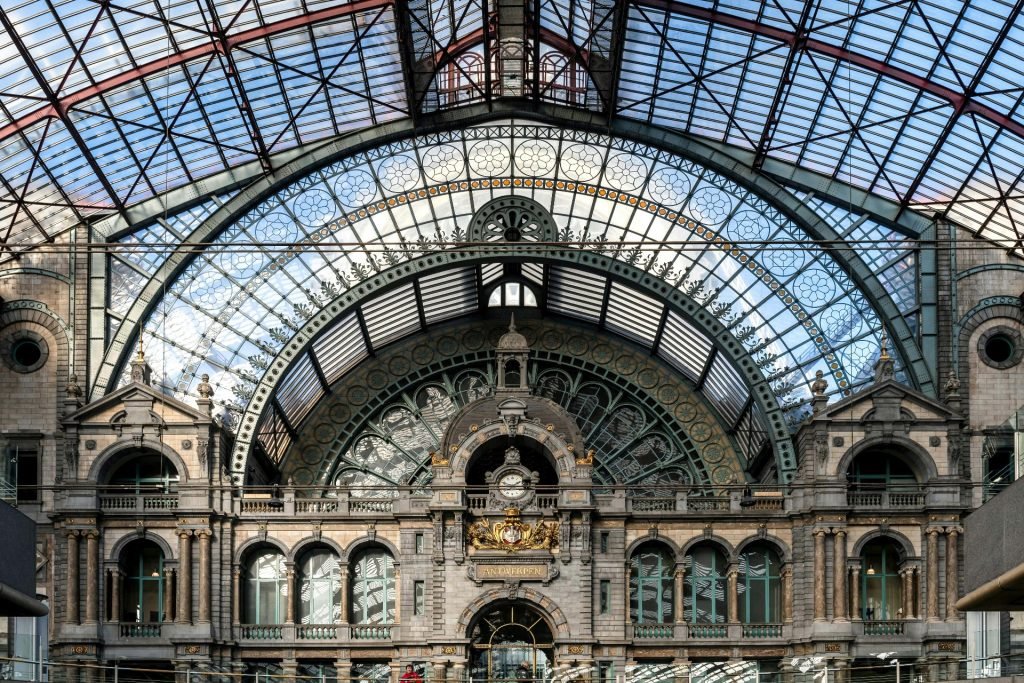
Your Antwerp journey begins with one of railway travel’s most spectacular arrivals. Antwerp Central Station transcends mere transportation infrastructure to achieve architectural magnificence that rivals any cathedral or palace. The soaring iron and glass dome, marble staircases, and ornate decorative details create such visual impact that many visitors spend their first hour simply marveling at the station itself.
The 20-minute walk from station to city center takes you through Antwerp’s diamond district—a fascinating glimpse into an industry that handles 80% of the world’s rough diamonds and 50% of cut diamonds in anonymous-looking buildings along Hoveniersstraat and Pelikaanstraat.
Artistic Heritage That Shaped European Culture
Cathedral of Our Lady justifies its €12 admission through sheer Gothic grandeur and artistic treasures that include multiple Rubens masterpieces displayed in their intended sacred context. The soaring nave creates spiritual atmosphere that museums struggle to replicate, while Rubens’ “Descent from the Cross” and “Elevation of the Cross” demonstrate why Antwerp served as the Baroque movement’s artistic epicenter.
Grote Markt rivals Brussels’ Grand Place for architectural drama, with ornate guild houses creating a theatrical backdrop for daily life that continues around outdoor cafés and seasonal markets. The Renaissance town hall and Brabo fountain provide focal points for photography, though the real pleasure lies in observing contemporary Belgian life unfolding against this historic backdrop.
Strategic Day Trip Planning
Antwerp works exceptionally well as a full-day cultural immersion combining art appreciation, architectural exploration, and retail therapy. The compact historic center allows efficient movement between attractions, while the diverse offerings prevent the cultural fatigue that can affect museum-heavy itineraries.
Leuven: Academic Elegance Without Tourist Crowds
Journey Details: 20 minutes from Brussels | €6-8 one way | 4-6 hours perfect
Leuven offers something increasingly rare in European travel—authentic small-city charm without tourist crowds, Instagram hordes, or commercialized attractions. Home to one of Europe’s oldest universities, this elegant city provides cultural sophistication on a human scale that feels refreshingly manageable after Brussels’ urban intensity.
Effortless Accessibility
The mere 10-minute walk from Leuven station to the historic center eliminates transportation stress while providing gentle introduction to the city’s refined atmosphere. Tree-lined streets and university buildings create academic ambiance that prepares you for a city where intellectual pursuits have shaped daily life for over six centuries.
Architectural Gems in Intimate Settings
Leuven Town Hall represents Gothic civic architecture at its most elaborate, with intricate stonework and sculptural details that reward close examination. Unlike larger cities where such buildings become tourist magnets, here you can appreciate the craftsmanship in relative solitude while understanding its role in continuing civic life.
Oude Markt transforms throughout the day—quiet morning coffee destination, afternoon student gathering place, and evening social center where university life spills into historic surroundings. The terraced bars and cafés create authentic Belgian social atmosphere without tourist-focused pricing or manufactured authenticity.
Perfect Timing for Stress-Free Exploration
Leuven’s compact size and relaxed pace make it ideal for arrival or departure days when you want meaningful cultural experience without exhausting schedules. The 4-6 hour timeframe allows thorough exploration without rushing, while the short train journey preserves energy for Brussels activities or international connections.
Strategic Planning: Maximizing Your Belgian Cultural Immersion
Optimal Pairing Strategies
The classic Bruges-Ghent combination works only with overnight accommodation in Bruges, allowing you to experience both cities’ evening atmospheres when day-trippers have departed. Attempting both as rushed day trips from Brussels creates transportation stress that undermines the cultural experiences you came seeking.
For single-day exploration, Antwerp offers the richest combination of art, architecture, and contemporary culture, while Leuven provides the most relaxed introduction to Belgian city life beyond Brussels.
Budget Consciousness Without Cultural Compromise
Leuven emerges as the most economical option—minimal transportation costs, free architectural attractions, and university-influenced pricing that makes café culture accessible. However, “cheapest” shouldn’t determine cultural choices when the price differences remain modest compared to the distinctive experiences each city offers.
Transportation Realities
Bruges and Leuven provide the most convenient station-to-center access, with pleasant walks that enhance rather than complicate your visit. Ghent requires additional transportation planning and costs that affect both budget and schedule flexibility.
Antwerp’s magnificent station arrival experience compensates for the longer walk to attractions, while providing diamond district insights unavailable elsewhere.
The Deeper Belgian Experience
Belgium’s remarkable cultural density becomes apparent through multi-city exploration that reveals regional variations within this small nation. Each destination offers distinct perspectives on Flemish history, artistic traditions, and contemporary life that combine into comprehensive understanding of Belgian identity.
The joy of Belgian travel lies not in checking destinations off lists, but in discovering how centuries of cultural evolution continue shaping daily life in settings of extraordinary beauty. Whether you choose medieval perfection in Bruges, creative energy in Ghent, cosmopolitan sophistication in Antwerp, or academic charm in Leuven, you’re accessing authentic European culture that remains largely unfiltered by mass tourism.
These aren’t just day trips from Brussels—they’re windows into the cultural complexity that makes Belgium one of Europe’s most rewarding destinations for travelers who look beyond surface attractions to discover the deeper stories that continue unfolding in Gothic squares, along ancient canals, and within communities that have adapted centuries-old traditions to contemporary life.