Seville doesn’t just capture your heart—it rewrites your definition of what a Spanish city should be. This is the birthplace of flamenco, the inspiration for Carmen, and the only place where orange trees line medieval streets that lead to Moorish palaces. Unlike other Spanish cities that feel like museums, Seville maintains its role as a living, breathing capital where 700,000 sevillanos still gather in neighborhood bars, celebrate religious festivals with genuine passion, and keep traditions alive not for tourists, but for themselves.
The city’s magic lies in its layers. Romans founded it as Hispalis, Muslims transformed it into Ishbiliya, and Christians reconquered it to create the launching point for New World exploration. Each civilization left architectural treasures, cultural traditions, and a piece of their soul. The result is a city where you can touch 2,000 years of history while sipping wine in a 15th-century courtyard, listening to spontaneous flamenco that erupts from neighborhood bars.
Understanding Seville means accepting its contradictions. The city is simultaneously sophisticated and traditional, cosmopolitan and provincial, deeply religious and hedonistically social. The same people who maintain elaborate religious processions during Semana Santa (Holy Week) will dance in the streets until dawn during Feria de Abril (April Fair). This isn’t cognitive dissonance—it’s the essence of Andalusian culture.
The Monumental Heart: Cathedral and Alcázar
Seville Cathedral: Gothic Grandeur
Cost: €12 general admission, €6 for students and EU seniors
Hours: Mon-Fri 10:45 AM – 7:30 PM, Sun 2:30 PM – 7:30 PM
Time needed: 2-3 hours
The reality: This is the world’s largest Gothic cathedral and the third-largest Christian church globally. The building’s scale is genuinely overwhelming—you cannot prepare for the physical impact of entering this space. The nave stretches 126 meters in length, with vaulted ceilings that seem to disappear into heaven itself.
The cathedral was built on the site of Seville’s main mosque, and the builders famously declared their intention to “build a church so large that future generations will think we were mad.” They succeeded spectacularly. The interior contains Christopher Columbus’s tomb (though historians debate whether his remains actually rest here), the world’s largest wooden altarpiece, and La Giralda—the iconic bell tower that serves as Seville’s symbol.
La Giralda is the cathedral’s crown jewel. Originally built as a minaret for the 12th-century mosque, the tower was converted to a bell tower when Christians conquered the city. The climb to the top takes about 75 minutes to completely explore, but the views over Seville’s rooftops and the Guadalquivir River are spectacular. The interior contains ramps rather than stairs, originally designed to allow horsemen to ride to the top.
Insider tip: Before 11:00 AM (the official opening time of the Cathedral), during Mass hours, you can enter for free through the small doors on the left side of the Cathedral. This provides a preview of the interior, though access is limited during religious services.
Real Alcázar: Moorish Paradise
Cost: €15.50 general admission, €6 for students 14-30 and EU nationals over 65
Hours: Oct-Mar: 9:30 AM – 5:00 PM, Apr-Sep: 9:30 AM – 7:00 PM
Time needed: 3-4 hours (book well in advance)
Why it’s unmissable: This is Europe’s oldest royal palace still in use, where Spanish monarchs still stay during official visits to Seville. The complex represents 1,000 years of architectural evolution, from the original Moorish fortress to Gothic additions to Renaissance modifications. The result is a masterpiece of Mudéjar architecture—the unique Spanish style that blends Islamic artistic traditions with Christian symbolism.
The Patio de las Doncellas (Courtyard of the Maidens) is architectural perfection. The space combines geometric tile work, carved stucco, and reflecting pools in proportions that create visual harmony. The mathematical precision of Islamic design meets the dramatic flair of Spanish decoration, creating spaces that feel both intimate and grand.
The palace gardens are equally spectacular, with fountains, pavilions, and carefully designed sight lines that create outdoor rooms within the larger landscape. The gardens influenced palace design across Europe, and you can see why—they represent the Islamic concept of paradise made manifest in earthly form.
Critical booking advice: The key to having a successful visit here is to plan ahead, by buying tickets in advance to avoid the lines, and it being sold out. The day we were here the non advance tickets sold out by 12:00 on a Sunday. Book online weeks in advance, especially during spring and fall peak seasons.
Combined Experience: Cathedral and Alcázar Strategy
Cost: €27.50 for both attractions
Time needed: Full day (5-6 hours minimum)
Best approach: Visit the Alcázar first thing in the morning (9:30 AM opening), then the Cathedral in the afternoon. The best time of the day to visit the Royal Alcázar of Seville is before 11am or after 3pm. Not only you avoid the heat of the afternoon but mainly the big tour crowds.
These two monuments form the heart of Seville’s appeal. The cathedral represents the city’s Christian identity and New World connections, while the Alcázar embodies its Islamic heritage and artistic sophistication. Together, they tell the story of a city that has always been a crossroads of cultures and civilizations.
Historic Neighborhoods: Living Museums
Barrio Santa Cruz: The Jewish Quarter
Cost: Free to explore
Time needed: 2-3 hours
The experience: This maze of narrow streets and hidden plazas was Seville’s Jewish quarter until 1492, when the Catholic Monarchs expelled the city’s Jewish population. The neighborhood’s layout preserves medieval urban planning—narrow streets designed to provide shade, small plazas that create community gathering spaces, and buildings that turn inward to private courtyards.
The neighborhood is undeniably beautiful, with whitewashed walls, wrought-iron balconies, and orange trees that perfume the air. However, it’s also the most touristy part of Seville, with restaurants that cater to visitors rather than locals and souvenir shops that sell mass-produced “flamenco” merchandise.
Visit Santa Cruz for its architectural beauty and historical significance, but eat and drink elsewhere. The neighborhood is perfect for photography and getting lost in medieval street patterns, but it doesn’t represent authentic Seville life.
Triana: The Flamenco Soul
Cost: Free to explore
Time needed: 3-4 hours
Why it matters: This neighborhood across the Guadalquivir River from the historic center is Seville’s most authentic district. Triana is the traditional home of flamenco, ceramics, and the city’s gitano (Roma) community. The narrow streets contain family-run tapas bars, ceramic workshops, and venues where locals still gather for spontaneous flamenco performances.
Triana maintains its working-class character despite increasing gentrification. The neighborhood’s residents are proud of their distinct identity—they consider themselves trianeros first, sevillanos second. This pride preserves authentic traditions and creates a social atmosphere that feels genuinely local.
The ceramic tradition is particularly strong, with workshops that have operated for generations. The neighborhood’s location along the river provided the clay necessary for ceramics, and the artistic traditions blend Islamic, Christian, and gitano influences. The azulejos (decorative tiles) that cover buildings throughout Seville largely come from Triana workshops.
Where to go: Calle Betis provides riverside dining with cathedral views, while the interior streets contain the most authentic bars and restaurants. The Mercado de Triana offers excellent food stalls and local atmosphere.
Macarena: Traditional Seville
Cost: Free to explore
Time needed: 2-3 hours
The authentic experience: This working-class neighborhood north of the center represents traditional Seville life. The area contains some of the city’s most important religious sites, including the Basílica de la Macarena, home to the Virgin that inspires the most passionate devotion during Semana Santa.
The neighborhood’s bars and restaurants serve locals rather than tourists, creating opportunities to experience authentic Seville social life. The atmosphere is relaxed and welcoming, with excellent tapas at reasonable prices and conversation that flows as freely as the wine.
The area also contains significant remains of Seville’s medieval walls, providing historical context for the city’s development. The contrast between ancient stone fortifications and modern neighborhood life illustrates Seville’s ability to integrate history into daily life.
Parks and Riverside: Green Seville
Parque de María Luisa: Romantic Landscapes
Cost: Free
Hours: 8:00 AM – 10:00 PM (summer), 8:00 AM – 8:00 PM (winter)
Time needed: 2-3 hours
What makes it special: This expansive park was designed for the 1929 Ibero-American Exhibition and represents romantic landscape design at its finest. The park combines formal gardens, natural woodlands, and architectural monuments in a composition that feels both planned and organic.
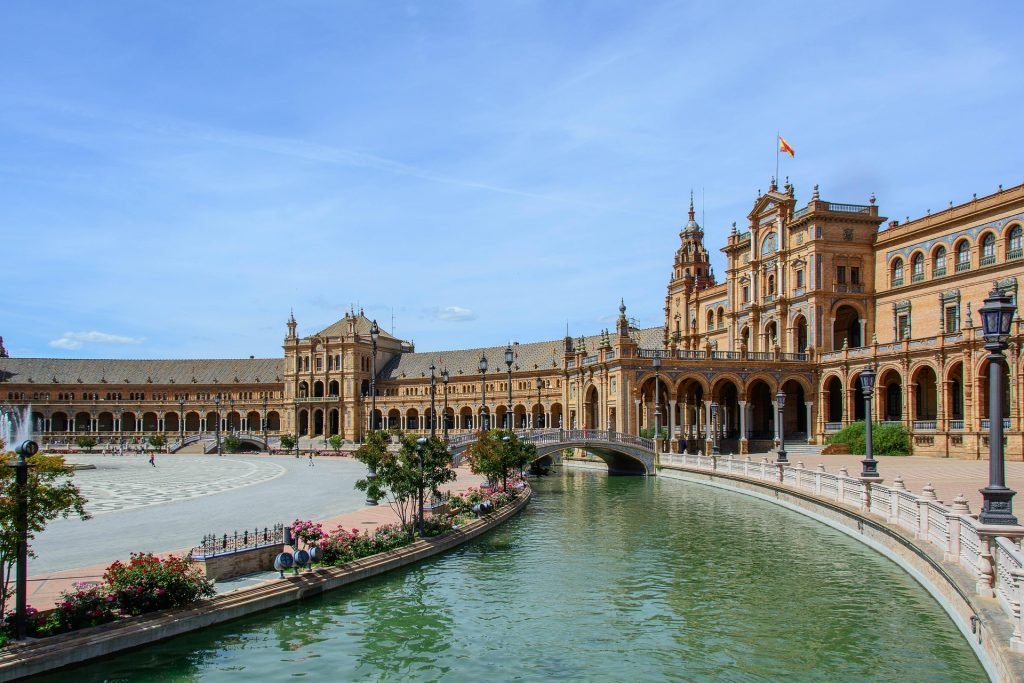
The park’s crown jewel is the Plaza de España, a massive semicircular complex that represents Spanish architectural grandeur. The building’s ceramic work tells the story of Spanish history, with alcoves dedicated to each Spanish province. The central fountain and canal create dramatic reflections, while the scale of the construction impresses even visitors accustomed to European monumentality.
The park also contains the Archaeology Museum and the Museum of Popular Arts and Traditions, both housed in pavilions from the 1929 exhibition. The buildings themselves are architectural treasures that complement their collections.
Best time to visit: Early morning or late afternoon, when the light is soft and the temperature is comfortable. The park is popular with locals for jogging, walking, and socializing, making it excellent for people-watching.
Guadalquivir River: The City’s Lifeline
Cost: Free to walk along
Time needed: 1-2 hours
The experience: The river that connects Seville to the Atlantic Ocean has shaped the city’s history and identity. The riverbanks provide excellent walking paths, with views of the cathedral, Torre del Oro, and the bridges that connect the historic center to Triana.
The Torre del Oro (Golden Tower) served as the endpoint of the chain that ancient Seville used to close the river to enemy ships. Today, it houses a naval museum and provides historical context for Seville’s role as the gateway to the New World.
The modern bridges, particularly the Puente de la Barqueta and Puente del Alamillo, represent contemporary Seville’s architectural ambition. These striking structures were built for the 1992 Universal Exhibition and demonstrate the city’s commitment to combining historical preservation with modern development.
The Overrated (But Worth Understanding)
Archivo de Indias: Document Repository
Cost: Free
Hours: Mon-Sat 9:30 AM – 5:00 PM, Sun 10:00 AM – 2:00 PM
Time needed: 1-2 hours
The reality: This Renaissance building houses the most important collection of documents related to Spanish colonization of the Americas. The historical significance is undeniable—these are the papers that documented the discovery, conquest, and administration of the New World.
However, the museum experience is disappointing for most visitors. The documents are fascinating for historians and scholars, but the presentation is dry and academic. The building itself is beautiful, but the exhibitions lack the dramatic presentation that makes historical documents engaging for general audiences.
Visit if you have serious interest in colonial history or Renaissance architecture, but don’t expect an engaging museum experience. The building’s location between the cathedral and Alcázar makes it convenient for a quick visit, but it’s not essential for understanding Seville.
Metropol Parasol: Modern Controversy
Cost: €5 for rooftop viewpoint
Hours: 10:00 AM – 11:00 PM
Time needed: 1 hour
Honest assessment: This massive wooden structure, nicknamed “Las Setas” (The Mushrooms), was designed to revitalize Plaza de la Encarnación. The contemporary design provides dramatic contrast to Seville’s historic architecture, creating a striking visual landmark.
The structure includes a market, restaurants, and a rooftop walkway that provides panoramic views of the city. The views are genuinely spectacular, offering perspectives of the cathedral, Alcázar, and neighborhoods that you cannot get elsewhere.
However, the building remains controversial among locals, who argue that its modern design clashes with Seville’s architectural heritage. The commercial spaces haven’t attracted the high-quality vendors originally envisioned, and the overall project feels more like a tourist attraction than a community space.
The rooftop views justify the modest admission fee, but manage expectations about the overall experience. The building is architecturally interesting and photographically striking, but it doesn’t represent authentic Seville culture.
The Underrated Gems
Hospital de la Caridad: Baroque Masterpiece
Cost: €8
Hours: Mon-Sat 10:30 AM – 7:30 PM, Sun 10:30 AM – 4:30 PM
Time needed: 1-2 hours
Hidden treasure: This 17th-century hospital contains one of Spain’s most important baroque art collections, including works by Murillo, Valdés Leal, and Pedro Roldán. The building itself is a masterpiece of Seville baroque architecture, with a church that demonstrates the dramatic religious art of the Counter-Reformation.
The hospital was founded by Miguel de Mañara, a nobleman who devoted his life to caring for the poor after experiencing a spiritual conversion. The art collection reflects themes of charity, death, and redemption, creating a unified artistic program that tells the story of Christian salvation.
The collection includes Murillo’s series on the works of mercy, paintings that combine religious instruction with genuine emotion. The contrast between the opulent artistic decoration and the building’s charitable purpose creates a powerful statement about baroque religious culture.
Few tourists discover this gem, despite its artistic significance and historical importance. The intimate setting allows close examination of masterworks that would be major attractions in other cities.
Casa de Pilatos: Aristocratic Elegance
Cost: €10 for complete tour, €8 for ground floor only
Hours: 9:00 AM – 7:00 PM (summer), 9:00 AM – 6:00 PM (winter)
Time needed: 2-3 hours
Why it’s special: This 16th-century palace represents the height of Seville aristocratic taste, combining Mudéjar, Renaissance, and classical elements in a harmonious composition. The building was inspired by the Duke of Alcalá’s pilgrimage to Jerusalem, hence the name “Pilate’s House.”
The palace demonstrates how Seville’s nobility adapted Moorish architectural traditions to Christian symbolism and Renaissance aesthetics. The result is uniquely Spanish—neither purely Islamic nor purely European, but something distinctly Andalusian.
The tile work is exceptional, with geometric patterns that create visual rhythms throughout the building. The classical sculptures, collected by the duke during his travels, provide Renaissance context for the Moorish architectural elements.
The palace remains family-owned, creating an intimate atmosphere that contrasts with the institutional feel of other monuments. The gardens are particularly beautiful, with fountains and plantings that create peaceful outdoor spaces.
Convento de Santa Paula: Monastic Treasures
Cost: €4
Hours: Tue-Sun 10:00 AM – 1:00 PM
Time needed: 1 hour
Authentic experience: This active convent, founded in 1475, provides insight into religious life that has continued virtually unchanged for 500 years. The nuns who live here maintain traditional contemplative practices while welcoming visitors to their church and museum.
The convent’s art collection includes works by major Spanish artists, religious artifacts, and decorative arts that demonstrate the wealth and artistic patronage of Seville’s religious institutions. The building itself preserves medieval and Renaissance architectural elements in their original context.
The experience of visiting an active convent adds authenticity that museum presentations cannot match. The nuns who show visitors around are genuinely engaged with their religious mission, creating encounters that feel personal rather than touristic.
The convent also sells traditional sweets made by the nuns, maintaining economic traditions that have supported religious communities for centuries. The interaction with the sisters provides insight into Spanish religious culture that tourists rarely experience.
Flamenco: The Soul of Seville
Authentic Flamenco Venues
Cost: €20-35 per person
Time needed: 2-3 hours
The real thing: Seville is the birthplace of flamenco, and the city maintains venues where locals still gather for spontaneous performances. The best flamenco experiences happen in small tablao venues where the relationship between performers and audience creates genuine artistic exchange.
La Carbonería in Barrio Santa Cruz offers free flamenco most nights, with performances that range from amateur to professional. The atmosphere is casual and authentic, with locals mixing with tourists in a space that feels like a neighborhood bar rather than a tourist attraction.
Casa de la Memoria provides more formal performances in an intimate setting. The venue focuses on traditional flamenco forms and features established artists who maintain the art form’s authenticity while making it accessible to international audiences.
Avoid: Large tourist flamenco shows in hotels or purpose-built venues. These performances often sacrifice authenticity for spectacle, presenting flamenco as entertainment rather than artistic expression.
Understanding Flamenco Culture
Cost: Free to observe
Time needed: Ongoing cultural immersion
What to know: Flamenco is not just performance—it’s a cultural expression that emerges from specific social and historical conditions. The art form developed among Andalusia’s marginalized communities, particularly the gitano (Roma) population, as a way of expressing suffering, joy, and resistance.
Authentic flamenco maintains this emotional authenticity. The best performers are not necessarily the most technically skilled, but those who can convey genuine emotion through song, dance, and guitar. The relationship between performer and audience is crucial—flamenco works best when the audience participates through palmas (clapping) and vocal encouragement.
The different flamenco forms (palos) each have distinct rhythms, emotions, and cultural contexts. Understanding these differences enhances appreciation for the art form’s complexity and cultural significance.
Neighborhood Food Culture: Beyond Tourist Traps
Traditional Tapas Bars: The Social Heart
Cost: €15-25 per person
Time needed: 2-3 hours
The authentic experience: Seville’s tapas culture is more sophisticated than the tourist version suggests. The best bars serve small plates that represent centuries of culinary tradition, prepared with high-quality ingredients and genuine skill.
The social aspect is equally important. Sevillanos use tapas bars as extensions of their living rooms, gathering with friends and family for conversation that can last hours. The pace is relaxed, the atmosphere is convivial, and the food provides the excuse for human connection.
What to order: Jamón ibérico (Iberian ham), gazpacho or salmorejo (cold soups), pescaíto frito (fried fish), spinach with chickpeas, and montadito de pringá (slow-cooked meat sandwich). These dishes represent authentic Seville flavors rather than tourist approximations.
Where to go: El Rinconcillo (oldest bar in Seville, dating to 1670), Casa Morales (traditional sherry bar), and neighborhood bars in Triana and Macarena that serve locals rather than tourists.
Sherry Culture: Andalusian Tradition
Cost: €8-15 per person
Time needed: 1-2 hours
Understanding the tradition: Sherry is Andalusia’s great wine contribution to world culture, and Seville’s bars maintain traditional serving methods and social customs. The different sherry types—fino, manzanilla, amontillado, oloroso—each have distinct flavors and appropriate food pairings.
The social ritual is important. Sherry is served in small glasses, consumed slowly, and accompanied by tapas that complement the wine’s characteristics. The conversation flows as freely as the wine, creating social experiences that can extend for hours.
The best sherry bars maintain traditional character, with wooden barrels, marble counters, and bartenders who understand the cultural significance of what they’re serving. These establishments provide authentic insight into Andalusian social life.
Practical Seville Information
Climate and Timing
Best months: March-May, September-November
Summer reality: June-August temperatures regularly exceed 40°C (104°F)
Winter considerations: December-February can be cool and rainy
Festival seasons: Semana Santa (March/April) and Feria de Abril (April) are spectacular but crowded
Transportation
Airport: Seville Airport (SVQ), 10km from center
High-speed rail: AVE trains connect to Madrid (2.5 hours) and Barcelona (5.5 hours)
Local transport: Efficient tram system and bus network
Walking city: Historic center is compact and pedestrian-friendly
Tips for your Planning
Essential Seville:
- Real Alcázar (book in advance)
- Cathedral and Giralda climb
- Neighborhood exploration (Triana essential)
- Traditional tapas crawl
Worth Your Time:
- Hospital de la Caridad or Casa de Pilatos
- Parque de María Luisa and Plaza de España
Warnings:
- Summer heat is genuinely extreme
- Authentic experiences require effort to find
- Siesta closures still affect some businesses
Final Thoughts
Seville’s greatest gift is its ability to make visitors feel like participants in ongoing cultural traditions rather than observers of preserved history. The city maintains its authentic character while welcoming millions of visitors, creating opportunities for genuine cultural exchange. Focus on experiences that connect you with local life—whether that’s sharing tapas with strangers in a neighborhood bar, listening to impromptu flamenco, or simply wandering through residential areas where real Seville life continues as it has for centuries.
The city rewards visitors who embrace its rhythms and respect its traditions. Eat late, stay up later, and remember that in Seville, the best experiences often happen when you least expect them—in conversations with locals, in discoveries of hidden courtyards, and in moments when the city reveals its soul to those willing to look beyond the surface.