Welcome to Istria: Croatia’s Underrated Gem
Let me be completely honest with you – after traveling through dozens of European destinations, I never expected to find such a perfect blend of Italian sophistication and Croatian authenticity tucked away in this northwestern peninsula. Istria isn’t just another travel destination; it’s a revelation that challenges everything you think you know about Croatia.
Most travelers rush past this region on their way to the crowded beaches of Dalmatia, but those who pause here discover something extraordinary: a land where Venetian bell towers pierce azure skies, where truffle hunters still work ancient forests, and where you can swim in crystalline waters without fighting for space on the sand.
What Makes Istria Different from the Rest of Croatia?
Istria operates on a different rhythm entirely. While Split and Dubrovnik pulse with cruise ship crowds and inflated prices, this peninsula whispers its stories through empty medieval streets and family-run tavernas where recipes haven’t changed in generations. The Italian influence isn’t just aesthetic – it’s woven into the very DNA of the region, creating a unique cultural tapestry that feels both foreign and familiar.
The landscape itself tells this story: rolling hills carpeted in vineyards that wouldn’t look out of place in Tuscany, dotted with hilltop towns that seem suspended in time. Yet step into any local konoba (tavern), and you’ll hear conversations flowing seamlessly between Croatian, Italian, and Istrian dialect – a linguistic dance that reflects the region’s complex, beautiful identity.
Getting to Istria: The Insider’s Route (And How to Save Money)
The Secret Border Crossing That Saves You €15
Here’s travel advice you won’t find in most guidebooks: you can completely avoid Slovenia’s highway vignette fee when driving from Italy to Istria. I discovered this by accident during my own journey from Trieste, and it’s become my go-to recommendation for budget-conscious travelers.
Instead of taking the obvious A1 highway through Slovenia, configure your GPS to avoid toll roads and highways entirely. Yes, the journey takes an additional 20-30 minutes, but you’ll save the €15 vignette fee and enjoy a more scenic route through Slovenia’s countryside. The winding roads offer glimpses of vineyards and villages that highway travelers miss entirely.
Pro tip: Start your journey from Trieste, Italy’s most underrated city. The elegant Miramare Castle, perched dramatically on the Adriatic coast, makes for a perfect morning visit before crossing into Croatia. The contrast between Trieste’s Habsburg grandeur and Istria’s Mediterranean simplicity creates a beautiful narrative arc for your journey.
Border Crossing Reality Check
Until 2023, crossing from Slovenia into Croatia involved passport checks, sometimes lengthy delays, and occasionally intrusive vehicle searches – especially if you were traveling with pets. I’ve waited in line for over an hour during peak summer months. However, Croatia’s entry into the Schengen Area has transformed this experience completely. The border now feels more like crossing from France into Germany – seamless and stress-free.
Istria’s Hilltop Towns: Where Time Stands Still
Motovun (Montona): The Crown Jewel of Inland Istria
I’ll admit my bias upfront – Motovun captured my heart completely. Perhaps it’s because this medieval town, perched 277 meters above the Mirna Valley, reminded me so powerfully of Italy’s hill towns. But there’s something distinctly Croatian about its character that sets it apart from its Tuscan cousins.
I arrived during one of the most spectacular thunderstorms I’ve ever witnessed. Lightning illuminated the entire valley, turning the surrounding vineyards into a dramatic chessboard of light and shadow. But the next morning revealed Motovun’s true magic: absolute silence broken only by church bells and morning birds.
Walking the ancient walls at sunrise, with the valley shrouded in mist below and not another soul in sight, felt like stepping into a medieval manuscript. The view stretches endlessly – vineyards, oak forests where precious truffles hide, and distant hilltop villages that seem to float on morning clouds.
When to visit: Early morning or late afternoon for the best light and fewer crowds. Autumn brings truffle season, while summer offers the famous Motovun Film Festival.
Grožnjan: Croatia’s Montmartre
If Motovun is Istria’s aristocratic jewel, then Grožnjan is its bohemian artist cousin. This “Town of Artists” transforms completely during summer months, when international musicians converge for the Jazz Festival and gallery openings spill onto cobblestone streets.
The town’s artistic renaissance began in the 1960s when abandoned houses were offered to artists and craftspeople willing to restore them. Today, you’ll find studios tucked into medieval buildings, where glassblowers, painters, and sculptors work while visitors watch. The quality is impressive – this isn’t tourist trinket territory.
But visit outside festival season, and Grožnjan reveals a quieter personality. Empty galleries become mysterious, windows frame endless views of the countryside, and you can hear your footsteps echo off ancient stones.
Oprtalj: The Authentic Alternative
For travelers seeking complete authenticity away from any tourist trail, Oprtalj delivers in spades. This tiny hilltop village (population: around 850) feels like a working medieval town rather than a museum piece.
Local families still tend small vineyards, elderly men gather in the main square for afternoon conversations, and the single restaurant serves food that tastes like someone’s grandmother prepared it – because she probably did. It’s not Instagram-perfect, but it’s real in ways that increasingly rare in European travel.
Coastal Istria: Where Venetian Elegance Meets Adriatic Beauty
Rovinj: The Postcard That Came to Life
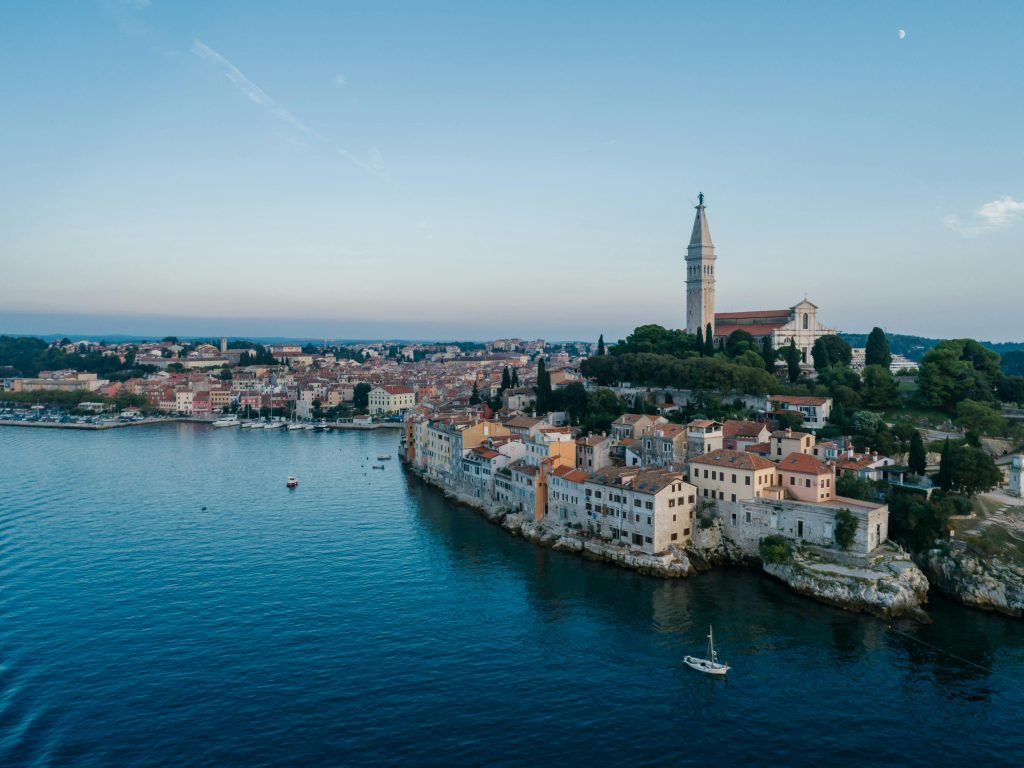
Every travel writer calls Rovinj “postcard-perfect,” and I hate contributing to the cliché, but sometimes clichés exist because they’re absolutely accurate. This former island looks like someone’s idealized vision of a Mediterranean fishing village.
The old town rises directly from the sea, a jumble of pastel houses climbing toward the baroque Church of St. Euphemia, whose bell tower serves as a lighthouse for both boats and photographers. Narrow streets wind unpredictably, opening suddenly onto hidden squares where cafes spill onto ancient stones.
But Rovinj’s magic isn’t just visual. The town maintains an authentic rhythm – fishermen still work from the harbor, local families shop at the morning market, and restaurants serve fish caught that morning rather than imported frozen seafood.
Sunset strategy: Everyone gathers at Punta Corrente Park for sunset photos, but locals know the secret spots along the harbor walls offer equally stunning views with better photo angles and fewer crowds.
Poreč: Where History Meets Beach Culture
Poreč successfully balances two personalities: serious historical destination and relaxed beach town. The Euphrasian Basilica, a UNESCO World Heritage site, showcases some of Europe’s finest Byzantine mosaics – genuinely spectacular gold and blue masterpieces that rival anything in Ravenna or Istanbul.
Yet step outside this 6th-century marvel, and you’re immediately in vacation mode. Beach clubs, gelaterias, and wine bars line streets that lead to crystal-clear swimming spots just minutes from the historic center.
This duality makes Poreč perfect for couples with different travel styles – history enthusiasts get their cultural fix while beach lovers find their paradise.
Novigrad: The Quiet Alternative
While nearby Umag draws crowds, Novigrad maintains its small-town fishing village character. The harbor still hosts working boats alongside pleasure craft, and local families gather for evening walks along the seafront promenade.
The town’s restaurants focus on truly local cuisine – fish grilled simply with olive oil and herbs, pasta with fresh shellfish, wines from nearby family vineyards. Prices remain reasonable because locals eat here year-round, not just during tourist season.
Pula: Ancient Rome Meets Modern Croatia
Pula surprises everyone. Croatia’s seventh-largest city could easily feel industrial or impersonal, but the remarkably preserved Roman amphitheater transforms the entire urban experience. Walking from modern shopping streets into this ancient arena – where gladiators once fought and Luciano Pavarotti performed in recent decades – creates a powerful time-travel sensation.
The Arena, built in the 1st century AD, ranks among the world’s six largest Roman amphitheaters and remains remarkably intact. Modern concerts and film festivals utilize the space exactly as Romans intended, creating an continuous cultural thread spanning two millennia.
Beyond the Arena, Pula offers excellent restaurants, vibrant nightlife, and serves as the perfect base for exploring southern Istria’s natural wonders.
Kamenjak Nature Park: Istria’s Wild Side
Croatia’s Most Spectacular Natural Peninsula
Just 30 minutes south of Pula lies one of Croatia’s most extraordinary natural areas – a place where Mediterranean scrubland meets dramatic coastline in ways that feel almost prehistoric. Kamenjak Peninsula stretches 9.5 kilometers into the Adriatic, creating dozens of hidden coves, natural swimming pools, and dramatic cliff-top viewpoints.
The park operates on honor system principles that feel refreshingly honest. Pay your €10 entry fee (cash only), receive a simple map, and explore freely. No guided tours, no designated walking paths, no souvenir shops – just raw nature and your own curiosity.
The unpaved roads require careful driving, especially when sharing space with cyclists and hikers, but this slight inconvenience preserves the area’s wild character. Every turn reveals new possibilities: a hidden beach accessible only by scrambling over rocks, a natural arch carved by centuries of waves, a viewpoint where you can see Italy’s coastline shimmering in the distance.
Swimming advisory: The water clarity here is extraordinary – you’ll see fish swimming 10 meters below as clearly as if they were in an aquarium. Bring snorkeling gear if you have it, but even without equipment, the swimming experience feels magical.
Your Perfect Istrian Itinerary: 4 Days of Discovery
Day 1: Elegant Arrivals and Coastal Beauty
Begin in Trieste with morning coffee and pastries at a historic café before visiting Miramare Castle. Cross into Croatia using the toll-free route, arriving in Novigrad for lunch at a harborside restaurant. Spend the afternoon exploring Novigrad’s quiet streets and swimming at nearby beaches. Overnight in Poreč or Rovinj depending on your preference for historical sites versus romantic atmosphere.
Day 2: Rovinj’s Romantic Magic
Dedicate a full day to Rovinj’s charms. Morning explorations of the old town, including climbs to the Church of St. Euphemia for panoramic views. Lunch at a family-run restaurant specializing in fresh seafood. Afternoon swimming or boat trips to nearby islands. Evening aperitivo followed by sunset dinner with views of the illuminated old town.
Day 3: Hilltop Medieval Adventures
Venture inland for Istria’s time-capsule towns. Start early in Motovun, walking the medieval walls and exploring truffle shops. Continue to Grožnjan for artistic discoveries and valley viewpoints. If time permits, visit tiny Oprtalj for complete authenticity. Return to coast for evening relaxation.
Day 4: Ancient Romans and Wild Nature
Morning in Pula, focusing on the spectacular Roman Arena and archaeological museum. Afternoon adventure in Kamenjak Nature Park – swimming in hidden coves, scrambling over dramatic rocks, and enjoying Croatia’s last truly wild coastline. Evening departure or extend your stay for deeper exploration.
Final Thoughts: Why Istria Deserves Your Time
After exploring much of Europe, I can confidently say Istria offers something increasingly rare: authentic cultural experiences without artificial tourism infrastructure. This isn’t a theme park version of Mediterranean life – it’s the real thing, still operating on rhythms dictated by seasons, traditions, and genuine hospitality rather than tour bus schedules.
The region succeeds because it hasn’t tried to become something else. Hill towns remain working villages rather than museum pieces. Restaurants serve local families alongside visitors. Beaches attract regional families rather than international crowds. This authenticity creates travel experiences that feel earned rather than purchased.
For couples seeking romantic getaways, foodies pursuing culinary adventures, history enthusiasts exploring Roman ruins, or nature lovers craving unspoiled coastlines, Istria delivers without compromise. The region’s manageable size means you can experience all these facets in a single extended weekend, yet its depth rewards longer explorations.
Most importantly, Istria still feels like a discovery rather than a destination. That sense of finding something special – something not everyone knows about yet – has become precious in our interconnected world. Visit now, while that feeling remains intact.