Madrid defies expectations. Spain’s capital isn’t the most beautiful city in the country, nor the most historic, but it possesses something more valuable: authenticity. This is a city where locals live, work, and play alongside visitors, where world-class museums coexist with neighborhood taverns, and where centuries-old traditions blend seamlessly with contemporary culture. Unlike Barcelona’s tourist-focused areas, Madrid feels genuinely lived-in, which creates both remarkable experiences and some tourist challenges.
The city’s greatest strength is its lack of pretense. Madrileños are proud of their city without being precious about it. They’ll direct you to the best tapas bar, argue passionately about football, and stay out until 3 AM on weeknights because that’s simply how life works here. Understanding this rhythm—late dinners, afternoon siestas, and an emphasis on social connection—is key to experiencing Madrid properly.
The Golden Triangle: World-Class Art
Prado Museum: European Master’s Paradise
Cost: €15 (free Mon-Sat 6-8 PM, Sun 5-7 PM)
Hours: Mon-Sat 10:00 AM – 8:00 PM, Sun 10:00 AM – 7:00 PM
Time needed: 3-4 hours (or multiple visits)
The reality: This is one of the world’s greatest art museums, period. The collection of Spanish masters—Velázquez, Goya, El Greco—is unparalleled, while the Flemish and Italian collections rival anything in Europe. The building itself, designed by Juan de Villanueva, is a neoclassical masterpiece that perfectly frames the artistic treasures within.
Velázquez’s “Las Meninas” is worth the admission alone—a painting so revolutionary it influenced centuries of artists. Goya’s “Black Paintings” are genuinely haunting, created during his illness and exile. The museum’s Spanish collection tells the story of a nation through its greatest artists.
The crowds are manageable compared to the Louvre or Uffizi, but arrive early or use the free evening hours strategically. The free hours are busy but not overwhelming, and the golden light streaming through the galleries in late afternoon creates magical viewing conditions.
Reina Sofía: Modern Spanish Art
Cost: €12 (free Mon-Sat 7-9 PM, Sun 1:30-7 PM)
Hours: Mon, Wed-Sat 10:00 AM – 9:00 PM, Sun 10:00 AM – 7:00 PM (closed Tuesdays)
Time needed: 2-3 hours
Why it matters: While the Prado covers Spanish art through the 19th century, Reina Sofía picks up the story with 20th-century masters. Picasso’s “Guernica” is the crown jewel—a massive anti-war masterpiece that captures the horror of the Spanish Civil War. The painting’s emotional impact is overwhelming, and the context provided by the museum’s extensive documentation enhances the experience.
The museum also houses exceptional works by Dalí, Miró, and Juan Gris, creating a comprehensive overview of Spanish avant-garde art. The building cleverly combines a historic hospital with modern glass additions, creating spaces that feel both intimate and grand.
Don’t miss the works by Spanish women artists like María Blanchard and Maruja Mallo, who are finally receiving recognition for their contributions to modern art.
Thyssen-Bornemisza: The Private Collection
Cost: €13 (free Mondays 12-4 PM)
Hours: Tue-Sun 10:00 AM – 7:00 PM (closed Mondays)
Time needed: 2-3 hours
What makes it special: This museum completes the Golden Triangle by filling gaps in the other collections. The Thyssen family’s private collection spans from medieval to contemporary art, with particular strengths in Impressionism and German Expressionism that you won’t find elsewhere in Madrid.
The museum’s intimate scale makes it less overwhelming than the Prado, while the chronological layout tells a clear story of art history. The American art collection is surprisingly strong, featuring works by Hopper, Pollock, and Rothko that provide context for 20th-century developments.
The building is elegant and manageable, with excellent natural light and comfortable viewing spaces. It’s often overlooked by tourists rushing between the Prado and Reina Sofía, making it a peaceful alternative.
Royal Madrid: Palace and Parks
Royal Palace: European Grandeur
Cost: €13 (free for EU residents Wed-Thu 4-6 PM)
Hours: Mon-Sat 10:00 AM – 6:00 PM, Sun 10:00 AM – 4:00 PM
Time needed: 2-3 hours
Honest assessment: This is one of Europe’s largest functioning royal palaces, with over 3,000 rooms (50 open to the public). The building is undeniably impressive—baroque architecture, lavish interiors, and the largest collection of Stradivarius instruments in the world. The Throne Room is genuinely spectacular, with frescoes by Tiepolo and furniture that screams absolute monarchy.
However, the palace suffers from tourist processing syndrome. You’ll shuffle through rooms with audio guides and crowds, making it difficult to appreciate the craftsmanship and historical significance. The royal family doesn’t actually live here (they prefer the more modest Zarzuela Palace), which adds to the museum-like atmosphere.
The palace is worth visiting for its architectural significance and decorative arts, but manage expectations about the experience. The building itself is more impressive than the tour format allows you to appreciate.
Retiro Park: Madrid’s Green Heart
Cost: Free
Hours: 6:00 AM – 12:00 AM (midnight)
Time needed: 2-4 hours
Why it works: This former royal park is now Madrid’s most important green space, and it perfectly captures the city’s social rhythms. Madrileños use Retiro for everything—morning jogs, afternoon picnics, evening strolls, and weekend family gatherings. The park feels alive rather than preserved.
The Crystal Palace (Palacio de Cristal) is genuinely magical, especially when hosting contemporary art installations. The structure itself, built for the 1887 Philippine Exposition, is architectural eye candy—iron and glass creating a greenhouse-like space that seems to float in the landscape.
The park’s lake and rowing boats provide peaceful escape from urban energy, while the various gardens showcase different landscaping styles. The rose garden is spectacular in spring, and the parterre garden provides formal French-style elegance.
What makes Retiro special is its authenticity as a social space. This is where Madrid comes to relax, making it perfect for people-watching and understanding local life rhythms.
Historic Madrid: Plazas and Neighborhoods
Plaza Mayor: The Grand Stage
Cost: Free to visit
Time needed: 1-2 hours
The experience: This massive rectangular plaza is Madrid’s most famous square, and it genuinely deserves its reputation. The uniform red buildings with their arcade galleries create a perfect outdoor room, while the cobblestone plaza serves as a stage for street performers, artists, and daily life.
The plaza has hosted everything from bullfights to executions to royal celebrations over its 400-year history. Today, it’s more peaceful—tourists taking photos, locals cutting through on their way to work, and cafés serving overpriced but atmospheric meals.
The tourist restaurants around the plaza are expensive and mediocre, but the architecture and atmosphere justify spending time here. Visit in the early morning or late evening when the tourist crowds thin out and the light is beautiful.
Puerta del Sol: The Heart of Spain
Cost: Free
Time needed: 30 minutes
What you’ll find: This semicircular plaza is officially the center of Spain—Kilometer Zero, from which all Spanish roads are measured. The square contains the famous Bear and Strawberry Tree statue (Madrid’s symbol), the clock that marks New Year’s Eve for the entire country, and constant crowds of locals and tourists.
Sol is more functional than beautiful—a transportation hub where metro lines converge and people meet before heading elsewhere. The square itself is pleasant but not spectacular, serving as Madrid’s equivalent to Times Square—essential for orientation but not a destination in itself.
The surrounding streets contain excellent shopping and dining, making Sol a useful base for exploring central Madrid.
Malasaña: Alternative Madrid
Cost: Free to explore
Time needed: 3-4 hours
Authentic experience: This former working-class neighborhood became the center of Madrid’s 1980s cultural explosion (La Movida Madrileña) and maintains its alternative character today. The narrow streets contain vintage shops, independent boutiques, innovative restaurants, and bars that stay open until sunrise.
The neighborhood’s authentic appeal lies in its residents—artists, students, young professionals, and long-time locals who’ve watched the area evolve. The gentrification is obvious but hasn’t eliminated the creative energy that makes Malasaña special.
Great for wandering, shopping, and experiencing Madrid’s famous nightlife culture. The area comes alive after 10 PM, when bars fill with locals and the streets become outdoor social spaces.
Chueca: LGBTQ+ Heart of Madrid
Cost: Free to explore
Time needed: 2-3 hours
What makes it special: This compact neighborhood is one of Europe’s most vibrant LGBTQ+ districts, but its appeal extends far beyond its identity as a safe space. The area contains some of Madrid’s best restaurants, most creative cocktail bars, and most interesting independent shops.
The neighborhood successfully balances its identity as an LGBTQ+ haven with broader appeal to anyone seeking excellent food, creative nightlife, and community atmosphere. The streets are walkable, the architecture is charming, and the social energy is infectious.
Chueca also hosts Madrid’s Pride celebration, one of Europe’s largest, which transforms the neighborhood into a week-long festival of music, art, and celebration.
The Overrated (But Worth Understanding)
Gran Vía: Madrid’s Broadway
Cost: Free to walk
Time needed: 1-2 hours
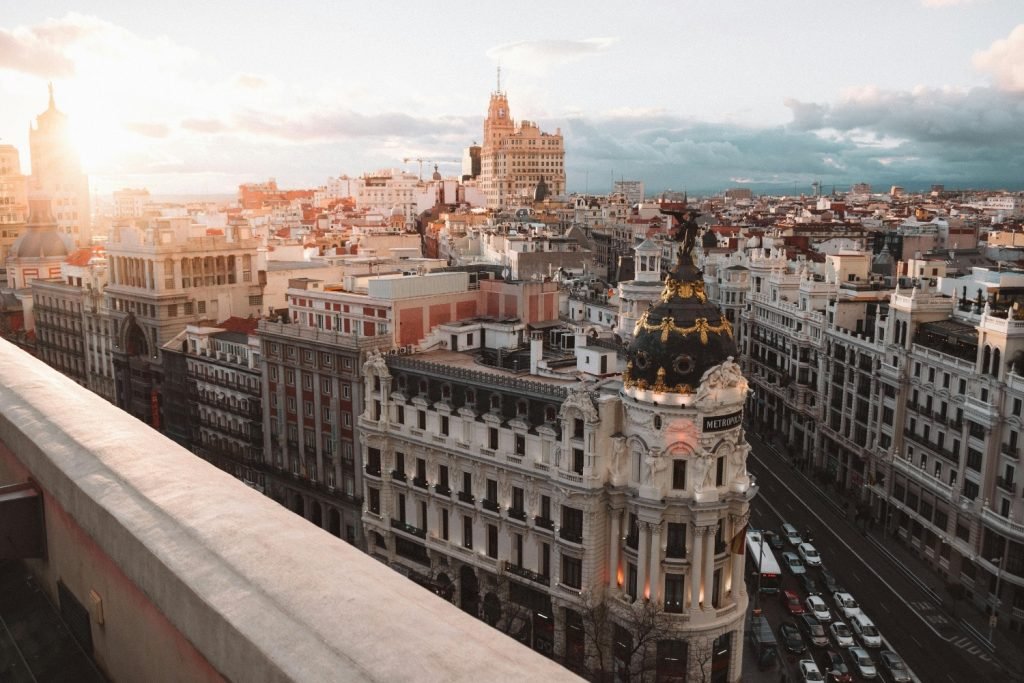
The reality: This grand avenue was Madrid’s attempt to create a Parisian-style boulevard, connecting different parts of the city with impressive architecture and wide sidewalks. The buildings are genuinely beautiful—early 20th-century architecture that showcases Madrid’s growth during its golden age.
However, Gran Vía has become Madrid’s most touristy street, lined with international chain stores, theater box offices, and restaurants that cater to visitors rather than locals. The architecture is worth seeing, but the street itself feels generic compared to Madrid’s more authentic neighborhoods.
Use Gran Vía for orientation and architecture appreciation, but spend your time and money elsewhere. The side streets often contain more interesting shops and restaurants than the main avenue.
Mercado de San Miguel: Tourist Market
Cost: Free to browse, food €5-15 per item
Time needed: 1-2 hours
Honest take: This beautifully renovated iron and glass market near Plaza Mayor looks like a food lover’s paradise, with vendors selling everything from jamón ibérico to gourmet cheeses to creative tapas. The architecture is stunning, and the variety is impressive.
The problem is price and authenticity. Most vendors target tourists with inflated prices and Instagram-worthy presentations that prioritize appearance over flavor. A simple jamón sandwich costs €8-12, while the same quality costs €4-5 at neighborhood bars.
The market serves a function—it’s convenient, clean, and offers variety in one location. But it’s not representative of Madrid’s food culture, and the prices reflect its tourist focus. Visit for the architecture and to sample high-end Spanish products, but don’t expect authentic local food experiences.
The Underrated Gems
Sorolla Museum: Impressionist Paradise
Cost: €3 (free Saturdays 2-8 PM, Sundays 10 AM-3 PM)
Hours: Tue-Sat 9:30 AM – 8:00 PM, Sun 10:00 AM – 3:00 PM
Time needed: 1-2 hours
Hidden treasure: This intimate museum showcases the work of Joaquín Sorolla, Spain’s master of light and color. The museum occupies Sorolla’s former home and studio, creating an intimate setting that feels like visiting the artist’s private workspace.
Sorolla’s paintings capture Spanish life with impressionistic technique and brilliant color. His beach scenes from Valencia glow with Mediterranean light, while his portraits reveal psychological depth and technical mastery. The museum’s small scale allows close examination of brushwork and technique that’s impossible in larger institutions.
The garden, designed by Sorolla himself, provides peaceful respite and shows another side of the artist’s creativity. Few tourists discover this gem, making it a serene alternative to the major museums.
Lavapiés: Multicultural Madrid
Cost: Free to explore
Time needed: 2-3 hours
Why it matters: This working-class neighborhood has become Madrid’s most multicultural district, with immigrants from Africa, Asia, and Latin America creating a vibrant community alongside Spanish residents. The result is fascinating—Moroccan tea shops next to traditional Spanish bars, Indian restaurants sharing streets with century-old taverns.
The neighborhood maintains its authentic character despite increasing gentrification. The food scene is exceptional and affordable, with family-run restaurants serving cuisines from around the world. The social atmosphere is relaxed and welcoming, with street art and community gardens adding creative energy.
Lavapiés also hosts excellent cultural events, from flamenco performances to contemporary art exhibitions, making it a creative hub that feels distinctly different from tourist Madrid.
Debod Temple: Egyptian Surprise
Cost: Free
Hours: Tue-Sun 10:00 AM – 2:00 PM, 6:00 PM – 8:00 PM
Time needed: 1 hour
Unexpected delight: This authentic Egyptian temple was dismantled block by block and reconstructed in Madrid as a gift from Egypt for Spain’s help in preserving monuments threatened by the Aswan Dam. The 2,200-year-old temple sits in a hilltop park with excellent views of the Royal Palace and city skyline.
The temple itself is fascinating—hieroglyphics, ancient stonework, and architectural details that transport you to ancient Egypt. The setting is equally impressive, with the temple positioned to catch dramatic lighting during sunset.
Few tourists make the effort to visit, despite the temple’s historical significance and photogenic appeal. The walk from central Madrid takes about 20 minutes and provides views of different neighborhoods along the way.
Neighborhoods for Food and Nightlife
La Latina: Sunday Tradition
Cost: Varies by establishment
Time needed: 3-4 hours
What makes it special: This historic neighborhood becomes the epicenter of Madrid’s Sunday social ritual. After visiting El Rastro flea market (Sunday mornings), locals flood the neighborhood’s taverns and terraces for vermut, tapas, and conversation that extends well into the afternoon.
The neighborhood’s narrow streets contain some of Madrid’s oldest bars and restaurants, many family-run establishments that have served the same recipes for generations. The atmosphere is convivial and authentic, with locals of all ages gathering to eat, drink, and socialize.
The food quality is generally excellent and reasonably priced, with traditional Spanish dishes prepared according to time-tested recipes. This is where you’ll find the most authentic tapas experience in Madrid.
Chamberí: Local Living
Cost: Free to explore
Time needed: 2-3 hours
Why locals love it: This residential neighborhood north of the city center represents Madrid at its most livable. The streets contain excellent local restaurants, neighborhood markets, and bars that serve residents rather than tourists.
The area maintains village-like character within the big city, with tree-lined streets, local shops, and community spaces where neighbors actually know each other. The food scene is exceptional—innovative restaurants that attract food lovers from across the city while maintaining neighborhood character.
Chamberí also contains some of Madrid’s best nightlife for those seeking experiences beyond the tourist circuit. The bars and clubs cater to locals, creating more authentic social atmospheres.
Day Trip Excellence: Toledo
Toledo: The Perfect Escape
Cost: €20-25 round-trip by train, €11 by bus
Transportation: High-speed AVANT train from Atocha (30 minutes) or bus from Plaza Elíptica (1 hour)
Time needed: Full day (8-10 hours including travel)
Why it’s essential: Toledo sits just under an hour from Madrid and offers spectacular views from multiple viewpoints, with the Mirador del Valle providing particularly Instagram-worthy panoramas. The high-speed train from Madrid’s Atocha station gets you there in half an hour for around €20 round-trip, making it one of Europe’s most accessible day trips.
This UNESCO World Heritage city preserves 2,000 years of history within medieval walls. The narrow cobblestone streets contain Gothic cathedrals, Mudéjar architecture, Jewish synagogues, and Islamic monuments—testimony to Toledo’s unique role as a city where Christian, Jewish, and Muslim cultures coexisted for centuries.
The Cathedral is genuinely spectacular, with Gothic architecture that rivals anything in Europe. The Alcázar fortress provides military history and panoramic views, while the El Greco Museum showcases the Greek artist who made Toledo his home and subject.
Practical Toledo tips:
- The high-speed AVANT trains operated by Renfe depart from Madrid’s Atocha station with journey times of just half an hour
- Bus service by Alsa company departs from Plaza Elíptica Station, takes about one hour, and costs around €11 round-trip
- The city is fairly hilly, so consider the Hop On Hop Off bus or Toledo Tourist Train if you have mobility concerns
- Book morning trains to maximize your time in Toledo
- Wear comfortable walking shoes—the cobblestones are beautiful but challenging
What to See in Toledo:
Cathedral: €12.50 | One of Spain’s greatest Gothic cathedrals
Alcázar: €5 | Fortress with military museum and city views
El Greco Museum: €3 | Works by Toledo’s most famous adopted son
Jewish Quarter: Free | Narrow streets and historic synagogues
Mirador del Valle: Free | Best panoramic views of the city
Toledo works perfectly as a day trip because it’s compact, walkable, and offers a completely different experience from Madrid’s urban energy. The medieval atmosphere, historical significance, and dramatic hilltop setting create memories that last long after you return to Madrid.
Madrid’s Food Culture: Beyond Tourist Traps
Traditional Taverns: The Real Deal
Cost: €15-25 per person
Time needed: 2-3 hours
What to order: Cocido madrileño (Madrid’s chickpea stew), callos a la madrileña (tripe stew), huevos rotos (broken eggs with potatoes), and jamón ibérico. These dishes represent centuries of Madrid cooking tradition.
The best taverns feel like family dining rooms, with checkered tablecloths, wooden chairs, and walls covered in bullfighting memorabilia. The service is often brusque but efficient, and the food is prepared according to recipes passed down through generations.
Vermouth Culture: Sunday Ritual
Cost: €8-12 per person
Time needed: 2-3 hours
The tradition: Sunday vermouth is a Madrid institution that starts around noon and extends well into the afternoon. Locals gather at neighborhood bars for sweet red vermouth, olives, and conversation. The ritual is social rather than about alcohol—it’s about community, relaxation, and maintaining human connections.
The best vermouth bars are unpretentious neighborhood establishments where regulars have their own glasses and bartenders know everyone’s preferred drink. Joining this tradition provides insight into Madrid’s social rhythms and values.
Late-Night Dining: Madrid Schedule
Cost: €20-40 per person
Time needed: 2-3 hours
Understanding the rhythm: Madrileños eat dinner late—9:30 PM is early, 10:30 PM is normal, and 11:30 PM is perfectly acceptable. This isn’t tourist affectation; it’s cultural reality based on Spain’s late sunset and afternoon siesta tradition.
The best restaurants don’t open until 8:30 PM, and reservations before 9:30 PM are often impossible. Embrace the schedule rather than fighting it—use early evening for drinks and tapas, then settle in for a proper late dinner.
Practical Madrid Information
Transportation Basics
Metro: €1.50-2.00 per journey, efficient and clean
Metro Hours: 6:00 AM – 1:30 AM (2:30 AM Fri-Sat)
10-journey ticket: €12.20 (best value for tourists)
Airport Express: €5, connects airport to city center
Weather Considerations
Summer (Jun-Aug): Hot and crowded, many locals leave the city
Winter (Dec-Feb): Cold but fewer tourists, museums less crowded
Spring/Fall: Ideal weather, perfect for walking and outdoor dining
Siesta: 2-4 PM closures still exist, plan accordingly
Tips for Your Planning
Essential Madrid:
- At least one Golden Triangle museum (Prado if choosing one)
- Retiro Park for social atmosphere
- Toledo day trip (genuinely unmissable)
- Authentic neighborhood exploration (La Latina or Malasaña)
Worth Your Time:
- Royal Palace for architecture enthusiasts
- Debod Temple for unique experience
Manage Expectations:
- Gran Vía (see it, but don’t linger)
- Mercado de San Miguel (beautiful but touristy)
- Plaza Mayor restaurants (overpriced)
- Tourist flamenco shows (not authentic to Madrid)
Final Thoughts
Madrid’s greatest strength is its authenticity. Unlike cities that feel designed for tourists, Madrid functions as a living capital where visitors can participate in genuine local culture. The museums are world-class, the food culture is exceptional, and the neighborhoods maintain distinct personalities that reward exploration. Focus on experiences that connect you with local life—whether that’s Sunday vermouth, late-night dining, or simply walking through residential neighborhoods where real Madrid happens every day.
The city rewards visitors who embrace its rhythms rather than fighting them. Eat late, stay out later, and remember that in Madrid, the best experiences often happen when you least expect them.