Last updated: August 2025 | 12-minute read
Safety Level: High Caution Required – Extreme Desert Conditions & Border Crisis
Visiting Abu Simbel has always been a dream of mine. Growing up, I watched several films that showcased this incredible temple complex, and the story of its relocation during the construction of the Aswan High Dam has always fascinated me. Finally, I had the chance to admire these temples in person — an experience I highly recommend to anyone traveling to southern Egypt.
We reached Abu Simbel with a private driver, the best solution in terms of quality and cost. Only in recent years has it become possible to hire private drivers for this trip, avoiding the obligation to travel by crowded tourist buses with rigid schedules.
Abu Simbel is extraordinary, but visiting during Sudan’s civil war taught me that even ancient wonders exist within modern geopolitical reality. Here’s how to experience Ramses II’s masterpiece safely when the world around it is changing rapidly.
When Ancient History Meets Modern Crisis
My Abu Simbel pilgrimage happened at the worst possible time – just as Sudan’s civil war erupted, sending thousands of desperate refugees toward Egypt’s border. What should have been a straightforward desert journey became a lesson in how tourism intersects with humanitarian crises.
Standing before those magnificent 3,300-year-old colossi while knowing that just 50km away, families were fleeing violence, put everything in perspective. Abu Simbel has witnessed empires rise and fall for millennia. Today’s crisis is just another chapter in its long story.
But here’s what I learned: even during regional instability, this UNESCO World Heritage site remains accessible to determined travelers willing to navigate the complexities responsibly.
Why Abu Simbel Justifies Every Challenge
Abu Simbel isn’t just another Egyptian temple – it’s humanity’s most ambitious rescue operation. When the Aswan High Dam threatened to drown these temples beneath Lake Nasser in the 1960s, UNESCO coordinated an international effort to literally move mountains.
The numbers tell the story: 1,036 stone blocks, each weighing up to 30 tons, carefully dismantled and reconstructed 280 meters inland and 65 meters higher. The precision required to maintain the original astronomical alignments – where twice yearly, sunrise illuminates Ramses and the gods while Ptah remains in shadow – defies comprehension.
Standing inside the reconstructed Great Temple, you cannot detect where ancient stones were rejoined. This engineering miracle saved cultural heritage for future generations, proving that international cooperation can achieve the impossible.
The Desert Journey: Beautiful, Dangerous, and Unforgettable
The 290-kilometer drive through the Nubian Desert tests your commitment to experiencing authentic wonders. This isn’t scenic “desert driving” – it’s three hours through one of Earth’s hottest, most unforgiving landscapes where mistakes have consequences.
What Makes It Dangerous: Mirages constantly distort visibility, making overtaking vehicles genuinely hazardous. Surface temperatures reach 50°C (122°F), turning car breakdowns into emergency situations. The monotonous landscape creates driving fatigue that has caused fatal accidents over the years.
The Border Reality: Our visit coincided with Sudan’s civil war outbreak, adding layers of complexity to an already challenging journey. Increased military presence and refugee movements created unpredictable delays and heightened tensions at checkpoints.
Why You Can’t Drive Yourself: Beyond the obvious safety concerns, this route requires local knowledge of checkpoint procedures, understanding of current political situations, and experience reading desert driving conditions that tourists simply don’t possess.
Transportation Options: What Actually Works
Private Driver (What We Chose): We paid €50 total for two people, choosing to explore the temples independently without a guide. This gave us maximum flexibility and kept costs reasonable while still ensuring safe transport through desert conditions.
Private Driver + Guide: €100 total for the same journey with an Egyptologist guide providing historical context. Worth considering for first-time visitors who want deeper cultural understanding.
Tourist Bus: €45-65 per person with rigid scheduling and crowded conditions. Less expensive per person but compromises the experience significantly.
Domestic Flight: €200+ per person for quick access but limited temple time and weather dependency.
The private driver option proved perfect for our needs – professional desert navigation combined with independent temple exploration at our own pace.
What Abu Simbel Actually Delivers
The Great Temple: Power Carved in Stone
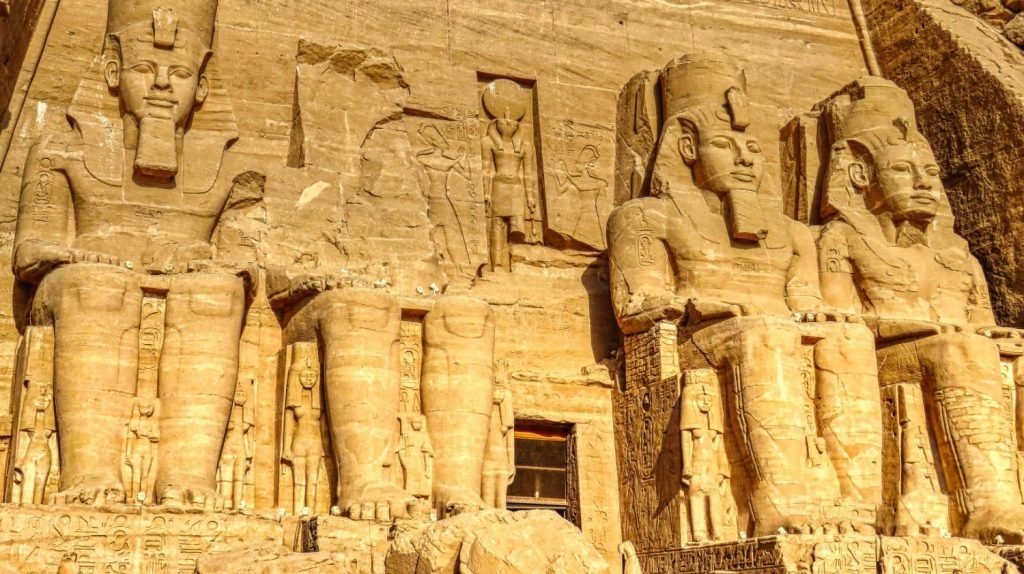
The facade stops you cold. Four 20-meter seated colossi of Ramses II emerge from the cliff face like ancient guardians awakening from eternal sleep. The scale overwhelms human perception – these aren’t sculptures, they’re architectural statements of divine authority.
Inside, the hypostyle hall features eight Osiride pillars where Ramses appears as Osiris, god of the afterlife. Walking between these creates the sensation of being judged by eternal pharaohs. The walls depict the Battle of Kadesh with documentary precision – Ramses single-handedly defeating Hittite armies in sophisticated propaganda disguised as religious art.
The sanctuary houses four seated figures: Ramses flanked by gods Amun-Ra, Ra-Horakhty, and Ptah. Twice yearly (February 22 and October 22), sunrise penetrates 200 meters of corridor to illuminate three figures while Ptah remains shadowed. This astronomical precision, maintained even after the temple’s relocation, demonstrates ancient Egyptian engineering sophistication that still amazes modern architects.
The Nefertari Temple: Love Story in Stone
Queen Nefertari’s temple breaks Egyptian royal conventions by depicting her equal in size to Ramses on the facade – unprecedented honor revealing genuine affection beyond political alliance. Inside, vibrant blues, reds, and golds maintain their intensity after 3,300 years while scenes show Nefertari participating in divine ceremonies typically reserved for pharaohs.
Inscriptions describe her as “the one for whom the sun shines,” transforming this monument from royal propaganda into ancient love letter carved in eternal stone.
Practical Planning for Crisis-Era Travel
Current Border Situation Impact
The Sudan crisis created several practical challenges during our visit. Military checkpoints, while not numerous, involved longer inspection times due to refugee screening procedures. We encountered heartbreaking scenes of families fleeing violence while we traveled for tourism – a sobering reminder of our privilege.
Essential Preparations: Carry extra water beyond normal desert travel requirements. Checkpoint delays can extend journey time unpredictably. Patience and respect for security procedures become essential when humanitarian crisis intersects with tourism.
The 4 PM Deadline Reality
The road closes at 4 PM sharp with no exceptions. During crisis conditions, this deadline becomes more critical as checkpoint delays can be substantial. Plan departure from Abu Simbel by 1 PM latest to account for extended security procedures..
Photography and Cultural Sensitivity
Current regulations allow interior photography without flash, but rules change frequently. More importantly, the border crisis requires sensitivity about photographing military installations or refugee movements – focus your camera on the ancient temples, not contemporary humanitarian situations.
Budget Reality Check
Our Actual Costs (2 people):
- Private driver (no guide): €50 total
- Temple entry: €50 total (€25 each)
- Golf cart shuttle: €6 total
- Food and water: €12
- Emergency supplies: €15
- Total: €133 (€67 per person)
The golf cart shuttle from parking to temple entrance isn’t luxury – it’s necessity. The 400-meter walk across exposed ground in extreme heat exhausts energy better saved for exploring the temples themselves.
Why Abu Simbel Changed My Travel Perspective
Visiting Abu Simbel during regional crisis revealed something profound about cultural heritage: these monuments survive because people choose to preserve them despite contemporary challenges. Ancient Egyptians built for eternity, UNESCO rescued them from drowning, and today’s guardians protect them during war.
Standing before artwork created 3,300 years ago while knowing that just kilometers away, people fled violence seeking safety, crystallized the importance of preserving human achievement across all circumstances.
The Experience Value: Abu Simbel justifies every challenge – the desert heat, the checkpoint delays, the regional instability, and the substantial cost. Some places demand pilgrimage. This is one of them.
Planning Your Visit: Book experienced drivers familiar with current border conditions, prepare for extreme weather and potential delays, and approach these temples understanding that you’re witnessing humanity at its most ambitious – both ancient achievement and modern preservation.
The road to Abu Simbel tests your commitment to experiencing authentic wonders. The temples reward that commitment with encounters that bridge ancient and modern worlds in ways that change you forever.
Planning an Abu Simbel expedition during uncertain times? Contact us, we will provide insights.