There’s something deeply romantic about the idea of driving through Jordan’s ancient landscapes, following routes that have been traveled for millennia by traders, pilgrims, and conquerors. But let’s be honest – this isn’t going to be your typical European road trip with perfect highways and predictable pit stops. This is Jordan, where biblical history meets Bedouin hospitality, where you’ll drive through landscapes that look like Mars and sleep under stars that seem close enough to touch.
After countless trips through this remarkable kingdom, I’ve crafted what I believe is the perfect 7-day Jordan road trip itinerary. It’s designed for those who want to experience the country’s greatest hits while actually understanding what makes each place special. Fair warning: you’ll return home with sand in places you didn’t know existed and stories that will make your friends seriously consider booking their own Middle Eastern adventure.
The Reality Check: What You Need to Know Before You Go
Driving in Jordan: The Good, The Bad, and The Dusty
Jordan is remarkably safe for road trips, boasting well-maintained highways and surprisingly light traffic outside major urban centers. However, the U.S. Embassy in Amman has specifically advised its employees against night driving outside the metropolitan area, citing poor rural road lighting and unpredictable driver behavior as primary concerns.
The daytime driving experience in Jordan is genuinely fantastic, featuring excellent highways that wind through stunning scenery alongside generally courteous drivers who understand the rules of the road. Road signs throughout the country display both Arabic and English text, making navigation manageable for international travelers, though having a GPS device with offline maps remains essential since cell service can become spotty in remote areas.
While gas stations generally accept credit cards, it’s worth noting that some smaller fuel stations operate on a cash-only basis, so always confirm payment options before filling up. Perhaps most importantly for planning purposes, speed limits on Jordanian highways tend to function more as gentle suggestions than strict regulations, with most drivers maintaining higher speeds on open stretches.
Essential Preparations That Actually Matter
Documentation requirements include an International Driving Permit, which is absolutely mandatory for car rental and legal driving, along with your passport and comprehensive travel insurance. Keep multiple copies of important documents stored separately from originals.
Technology essentials go beyond just your smartphone. A dedicated GPS device with offline maps proves invaluable when phone service disappears, while a reliable car charger and portable power bank ensure your devices stay functional throughout long driving days. Don’t forget extra camera batteries – you’ll be taking far more photos than anticipated.
Practical gear should prioritize comfort and sun protection. Invest in truly comfortable walking shoes since you’ll cover considerable distances on foot, particularly at Petra. A wide-brimmed hat, quality sunglasses, and high-SPF sunscreen become essential allies against the intense Middle Eastern sun. Pack a reusable water bottle and always carry cash in Jordanian Dinars for smaller establishments and tipping.
Day 1: Arrival in Amman – The Gateway to Ancient Jordan
Landing: Queen Alia International Airport (AMM)
Drive Time: 45 minutes to central Amman
Accommodation: Stay near Rainbow Street or Jabal Amman for atmosphere
Your First Taste of Jordan
Amman hits you like a sensory overload – the melodic call to prayer echoing across honey-colored limestone buildings, the intoxicating scent of cardamom and fresh mint tea wafting from countless cafes, the controlled chaos that defines Middle Eastern city life. Resist the urge to “do” everything on your first day. Instead, focus on acclimatizing to this new environment and preparing mentally for the adventure ahead.
Your essential first-day activities should include picking up your rental car from a reputable company like Hertz or Avis, then immediately heading to a supermarket to stock up on road trip essentials like snacks and bottled water. Take an evening walking tour through downtown Amman to get your bearings while exchanging money, then cap off the day with dinner at the legendary Hashem Restaurant, where authentic Jordanian cuisine has been served to locals and travelers for generations.
Professional tip: Amman’s traffic becomes absolutely insane during rush hours, particularly from 7-9 AM and 4-7 PM. Plan your departure for mid-morning to avoid the worst congestion and start your road trip on a positive note.
Accommodation recommendations range from the luxurious Four Seasons Hotel Amman if you’re splurging on comfort, to the well-located House Boutique Suites for excellent value, or the clean and safe Jordan Tower Hotel for budget-conscious travelers who still want a central location.
Day 2: Amman to Mount Nebo to Al Karak Castle
Total Drive Time: 3 hours with stops
Route: Amman → Madaba → Mount Nebo → Al Karak
Overnight: Al Karak or continue to Petra region
Morning: Mount Nebo – Where Moses Saw the Promised Land
The one-hour drive from Amman to Mount Nebo takes you through increasingly dramatic landscapes as you approach this site of profound biblical significance. Whether you’re religious or not, Mount Nebo possesses an undeniable spiritual weight that transcends individual beliefs.
What makes Mount Nebo genuinely special extends far beyond its religious significance. The panoramic views stretch across the Jordan Valley to the Dead Sea, and on exceptionally clear days, you can actually see Jerusalem glimmering in the distance. The Byzantine mosaics housed within the Moses Memorial Church are genuinely breathtaking examples of ancient artistry, while the simple yet deeply moving church structure itself creates an atmosphere of contemplation and reverence.
The honest experience requires acknowledging that Mount Nebo can feel touristy, especially when large bus groups arrive simultaneously. Visit during early morning hours around 8 AM or during late afternoon to achieve a more contemplative experience. While the views are genuinely spectacular and worthy of the journey, don’t expect a wilderness experience – this is a well-developed tourist site with all the infrastructure that entails.
Photography enthusiasts should plan for golden hour shots of the valley, which are absolutely stunning. Interior photos of the memorial church require permission, so ask respectfully. A wide-angle lens becomes essential for capturing the full scope of the panoramic views that make this location so memorable.
Afternoon: Al Karak Castle – Crusader Stronghold
The one-hour drive from Mount Nebo to Al Karak Castle takes you deeper into Jordan’s countryside, where the massive fortress emerges dramatically from the surrounding landscape. This isn’t just another medieval castle – it’s a living piece of Crusader history that you can explore for hours without exhausting its mysteries.
Al Karak Castle ranks among Jordan’s top attractions because it represents a massive 12th-century Crusader fortress with extensive underground tunnels and chambers waiting to be explored. The castle offers incredible views over the surrounding countryside while housing rich history involving legendary figures like Saladin and the dramatic conflicts of the Crusades.
The reality check requires preparation: Al Karak Castle is genuinely massive and poorly signposted throughout its interior. Bring a reliable flashlight for the underground sections, wear comfortable shoes with good grip, and prepare for numerous stairs and steep inclines. The castle’s confusing layout is actually part of its charm – you’ll feel like you’re discovering hidden chambers and secret passages that other visitors might miss.
Plan for a minimum of two to three hours for thorough exploration, accepting that you’ll encounter steep stairs and uneven surfaces throughout. The photo opportunities are amazing, but facilities within the castle are extremely limited, so bring plenty of water and snacks.
Your evening decision point involves choosing between staying in Al Karak town for an authentic but limited experience, or continuing two additional hours to the Petra region. I recommend driving to Wadi Musa (Petra town) for overnight accommodation. While it creates a longer day, this choice sets you up perfectly for tomorrow’s Petra adventure without morning travel time.
Day 3-4: Petra – The Rose City That Defies Imagination
Stay: 2 nights in Wadi Musa (Petra town)
Entry Fee: 50 JD for one day, 55 JD for two days
Day 3: Petra – First Encounter with Wonder
Start your Petra experience at 6 AM – trust me completely on this timing. The essential route for first-time visitors follows the Siq to the Treasury, then continues to the Royal Tombs and Petra Church, covering the most iconic and accessible highlights.
Entering the ancient Nabatean city through the magnificent Siq creates an experience unlike anything else on Earth. This tall, narrow canyon entrance stretches for 1.2 kilometers, creating a natural corridor that builds anticipation with every step. Nothing – and I mean absolutely nothing – prepares you for that first glimpse of the Treasury emerging from the narrow canyon walls like something conjured from pure imagination.
The Siq experience deserves your complete attention and patience. The towering canyon walls create an otherworldly atmosphere while Roman-era carvings, ancient water channels, and glimpses of sky through the narrow opening above create the effect of walking through a natural cathedral. Don’t rush this approach – it’s an integral part of the Petra experience that sets the stage for everything that follows.
That first glimpse of the Treasury represents one of travel’s genuinely breathtaking moments. The rose-red facade emerges from the canyon like something from the most vivid dream. Despite seeing it in countless photographs and movies, the reality proves overwhelming. The scale, the intricate craftsmanship, the dramatic setting – it represents architectural perfection achieved over two millennia ago.
Essential tips for your first Petra day include starting at 6 AM to beat both crowds and heat, bringing plenty of water since you’ll walk 8-10 kilometers minimum, wearing proper hiking shoes for rocky and uneven terrain, packing snacks since food inside is expensive and limited, and seriously considering hiring a guide whose stories will bring these ancient ruins to vivid life.
Day 4: Petra – The Deep Dive
Your advanced route should tackle the Monastery Trail, the High Place of Sacrifice, and if energy permits, Al Beidha (Little Petra). Your second day focuses on going deeper, both literally and figuratively, into Petra’s more challenging but rewarding experiences.
The Monastery (Ad Deir) hike represents a moderate to challenging 3-kilometer uphill trek requiring 2-3 hours round trip, but it rewards determined visitors with Petra’s most spectacular monument and significantly fewer crowds. The Monastery actually surpasses the Treasury in size and architectural impressiveness, but because reaching it requires serious hiking effort, most tourists skip this incredible experience. The views from the top are absolutely incredible, and there’s something deeply satisfying about earning your reward through physical effort.
Little Petra (Al Beidha) offers a perfect conclusion if you still have energy remaining. Located just 15 minutes north of Petra, this smaller Nabatean site provides free entry, encounters with fewer crowds, and offers a more intimate experience of Nabatean architecture and engineering.
Accommodation options in Petra range from the luxurious Movenpick Resort Petra, located literally at the entrance for maximum convenience, to the atmospheric Petra Guest House with its historic character, or the clean and affordable Cleopetra Hotel offering good location at budget prices.
The dining reality check for Petra requires honest expectations: food within Petra is expensive and generally mediocre quality. The restaurants inside the archaeological site are significantly overpriced while offering basic quality. Your best strategy involves eating breakfast at your hotel, packing substantial snacks for the day, and having dinner in Wadi Musa town where more authentic and reasonably priced options await.
Day 5-6: Wadi Rum – Mars on Earth
Drive Time from Petra: 1.5 hours
Accommodation: Bedouin camp (essential experience)
The Wadi Rum Experience: Desert Like Nowhere Else
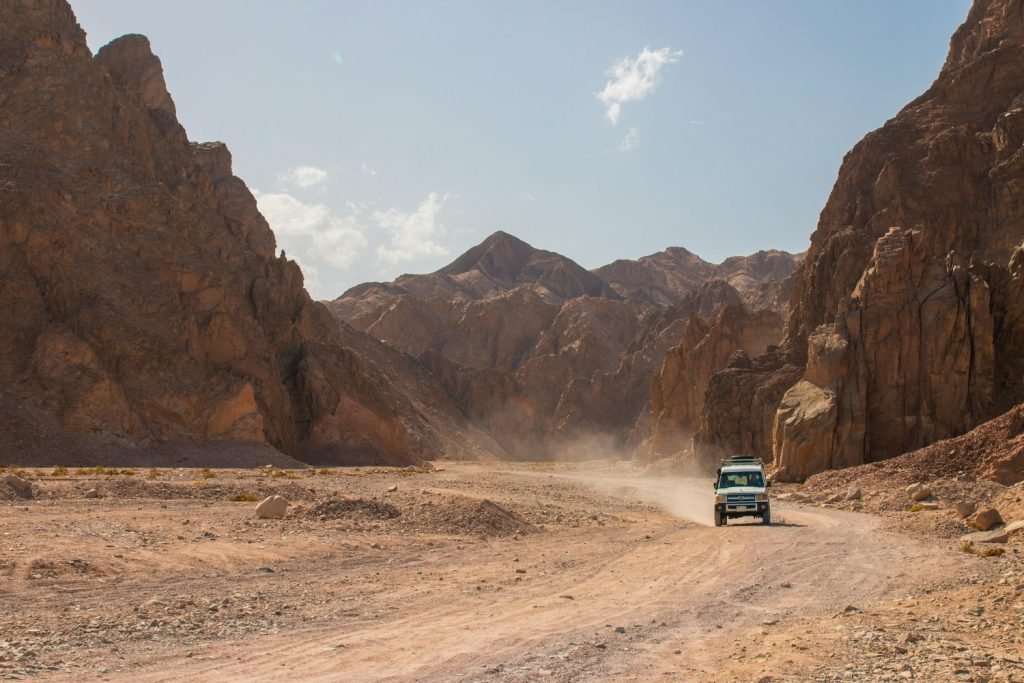
Wadi Rum deserves at least one full night because it will leave you absolutely spellbound by landscapes so otherworldly that Hollywood regularly uses it to represent Mars in major motion pictures. This isn’t just another desert destination – it’s a landscape sculpted by millions of years of wind and geological forces into something that seems to belong on another planet entirely.
What makes Wadi Rum genuinely special encompasses dramatic sandstone mountains rising from seas of red sand, natural rock bridges and arches carved by wind and time into impossible formations, ancient petroglyphs showing 12,000 years of continuous human history, thriving Bedouin culture that continues to exist meaningfully in the modern world, and stargazing experiences so spectacular they’ll permanently ruin city skies for you.
Day 5: Arrival and Desert Immersion
Afternoon activities should include a 4WD desert tour with an experienced Bedouin guide who knows every hidden corner, exploration of Khazali Canyon’s narrow slot canyon adventure, visits to Mushroom Rock and other Instagram-worthy formations, and sunset viewing from a high dune where the desert transforms into a palette of impossible colors.
Evening experiences center around traditional Zarb dinner featuring lamb and vegetables cooked underground using ancient techniques, authentic Bedouin music around a crackling campfire, and stargazing sessions where the Milky Way becomes clearly visible in ways that urban dwellers never experience.
Day 6: Deep Desert Adventure
Morning activities can include camel trekking (which proves shorter than most people expect but more memorable), rock climbing on ancient sandstone formations with various difficulty levels, hiking to spectacular natural rock bridges, and visiting Lawrence’s Spring, a historically significant site connected to T.E. Lawrence’s Arabian adventures.
The honest truth about Wadi Rum requires acknowledging both its magic and its challenges. The desert is genuinely stunning and otherworldly, but it’s also hot, dusty, and the accommodation remains basic even in so-called “luxury” camps. However, it’s also magical in ways that prove difficult to describe adequately. The silence reaches profound depths, the landscape feels genuinely otherworldly, and the Bedouin hospitality represents authentic cultural exchange rather than tourist performance.
Desert camping expectations should include shared bathroom facilities that are usually clean but basic, simple but comfortable beds with traditional bedding, no air conditioning which makes summer visits brutally challenging, amazing food prepared using traditional methods that taste unlike anything you’ve experienced, and genuine cultural exchange with Bedouin hosts who share stories and traditions passed down through generations.
Camp options range from the luxurious Feynan Ecolodge (technically outside Wadi Rum but nearby), to mid-range options like Wadi Rum Night Luxury Camp, to authentic traditional Bedouin camps that locals can recommend. Book through your hotel or reputable tour operators while avoiding random individuals approaching at the visitor center, as they’re often middlemen who unnecessarily increase prices.
Day 7: Wadi Rum to Dead Sea – From Desert to Sea Level
Drive Time: 3 hours
Route: Wadi Rum → Desert Highway → Dead Sea
Morning: Desert Farewell
Wake early for sunrise over the desert, when the way light hits the ancient sandstone formations creates pure magic that cameras struggle to capture adequately. Share breakfast with your Bedouin hosts, say heartfelt goodbyes to the desert that will have changed your perspective on solitude and natural beauty, then begin the drive to the lowest point on Earth.
The Desert Highway represents Jordan’s main north-south transportation artery, and it’s simultaneously boring and efficient. Three hours of straight road through unchanging desert landscape provide time to process your profound desert experience while preparing for the complete change of scenery ahead. Fill up with gas before leaving Wadi Rum, carry extra water since desert driving requires additional preparation, watch carefully for speed cameras placed throughout this highway, and take regular breaks since the monotonous drive can become tiring and hypnotic.
Afternoon: Dead Sea – The Surreal Finale
At 430 meters below sea level, the Dead Sea contains water that’s 34% salt – ten times saltier than ocean water – and maintains temperatures usually 5-10°C warmer than surrounding areas. Nothing adequately prepares you for the Dead Sea experience, where water so salty that sinking becomes impossible, swimming becomes literally impossible due to extreme buoyancy, and mineral content so rich that it leaves your skin feeling like silk.
What to expect includes effortless floating where you literally cannot sink no matter how you try, burning sensations on any small cuts or wounds due to extreme salinity, beneficial mud treatments using mineral-rich black mud that’s genuinely excellent for skin health, and weird sensations since the water feels oily and strange compared to normal swimming experiences.
Critical safety warnings include avoiding getting water in your eyes since it’s painfully salty and can cause temporary vision problems, avoiding shaving beforehand since any razor burn will become agony, showering immediately after since concentrated salt can irritate skin, and drinking plenty of fresh water since the minerals prove dehydrating despite the aquatic environment.
Accommodation ranges from the spectacular Kempinski Hotel Ishtar Dead Sea for luxury experiences, to the Dead Sea Spa Hotel offering good facilities at reasonable prices, or the basic but functional Dead Sea Rest House for budget travelers.
The Dead Sea reality check acknowledges that this natural wonder is shrinking rapidly due to environmental issues affecting the entire region. While beautiful hotel beaches are carefully maintained and offer excellent facilities, the natural shoreline becomes increasingly muddy and uninviting. Stay at a resort with dedicated beach access and prepared facilities for the best experience.
Practical Road Trip Essentials
Car Rental Reality
Recommended companies include Hertz for reliability and good vehicles, Avis for professional service and support, and Budget for competitive pricing without sacrificing quality. Essential requirements include an International Driving Permit, credit card for deposit and insurance purposes, comprehensive insurance coverage (buy the full coverage for peace of mind), and a GPS device since phone service becomes unreliable in remote areas.
Money Matters
Budget breakdown per person should anticipate accommodation costs of $30-200 per night depending on luxury level, food expenses of $20-50 per day, gas costs of $30-40 for the entire trip, entry fees totaling approximately $100, and activity costs of $50-100 per day. Credit cards are widely accepted at hotels and restaurants throughout Jordan, but cash remains necessary for small shops and tipping, ATMs are available in all major towns, and tipping is expected at 10-15% at restaurants.
Packing Essentials
Clothing should include comfortable walking shoes for extensive sightseeing, hiking boots specifically for Petra’s challenging terrain, casual clothes appropriate for hotels and restaurants, conservative dress for religious sites and cultural respect, plus hat and sunglasses for sun protection.
Technical items should include a camera with extra batteries since charging opportunities may be limited, portable charger for multiple devices, universal adapter for Jordan’s electrical outlets, and headlamp or flashlight for castle explorations and evening activities.
Health considerations require high-SPF sunscreen for intense Middle Eastern sun, personal medications in sufficient quantities, basic first aid kit for minor injuries, and insect repellent for evening outdoor activities.
Cultural Considerations
Dress codes require conservative clothing at religious sites, modest swimwear at the Dead Sea, comfortable walking clothes for extensive sightseeing, and respectful attire when visiting local communities. Essential etiquette includes removing shoes when entering mosques, asking permission before photographing people, tipping service providers appropriately, and respecting local customs and traditions throughout your journey.
The Honest Verdict: Is Jordan Worth the Effort?
After seven intensive days driving through Jordan, you’ll have experienced one of the world’s most diverse and historically rich destinations. You’ll have walked through a 2,000-year-old Nabatean city that represents one of humanity’s greatest architectural achievements, slept under desert stars in landscapes that have remained unchanged for millennia, floated in the saltiest water on Earth, and driven through landscapes that have witnessed the rise and fall of countless empires throughout recorded history.
The positive aspects include incredible safety and genuine warmth toward tourists, remarkably diverse landscapes and experiences packed into a small geographic area, rich historical and cultural sites that span millennia, excellent road infrastructure that makes independent travel feasible, and affordability compared to other Middle Eastern destinations.
The challenging aspects require acknowledging that Jordan can be physically demanding with extensive walking and hiking requirements, summer heat becomes brutal and potentially dangerous, some major tourist sites feel increasingly commercialized, language barriers exist outside main tourist areas, and cultural differences require adjustment and respect.
The final verdict remains unequivocal: Jordan is absolutely worth every bit of effort required. It’s a destination that will challenge your preconceptions, inspire your imagination, and leave you with stories you’ll tell for years to come. The combination of ancient history, natural wonders, and genuine hospitality creates an experience that’s both deeply educational and personally transformative.
Final Tips for Success
Start planning early by booking accommodations and car rental well in advance, especially during peak seasons. Remain flexible since weather conditions and local circumstances can change plans unexpectedly. Respect local culture by dressing modestly and behaving respectfully in all situations. Stay consistently hydrated since the climate is dry and more dehydrating than many visitors anticipate. Pack light since you’ll be moving around frequently with luggage. Learn basic Arabic phrases since locals genuinely appreciate the effort. Take your time and don’t rush through experiences just to check items off a list. Document everything thoroughly since these memories will become increasingly precious with time.
Jordan isn’t just a travel destination – it’s a transformative journey through time, culture, and some of the most spectacular landscapes on Earth. From the rose-red facades of Petra to the silent immensity of Wadi Rum, from the biblical significance of Mount Nebo to the otherworldly experience of the Dead Sea, this road trip will provide stories and memories that will enrich your life permanently.
Pack your sense of adventure, bring genuine curiosity about different cultures, and prepare for a week that will fundamentally change how you see the world. Jordan is waiting with open arms, and it’s absolutely magnificent in ways that will exceed your highest expectations.
Ready to start planning your Jordan adventure? The ancient kingdom is calling, and trust me – you definitely want to answer.