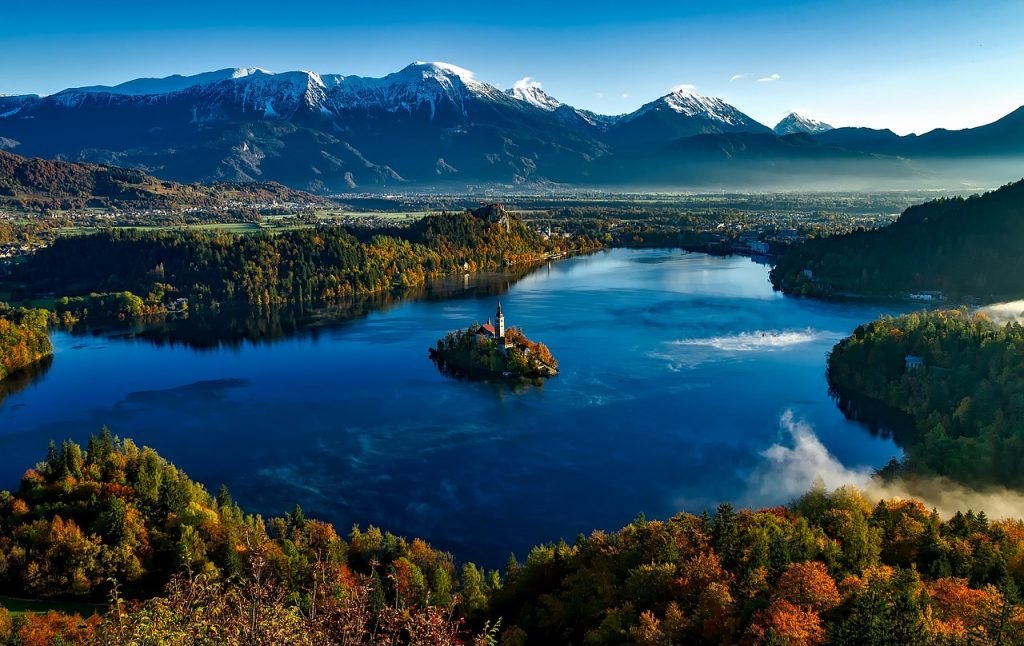
Lake Bled Slovenia represents the country’s tourism crown jewel – a glacial lake so picture-perfect it seems almost too beautiful to be real. With its emerald waters reflecting the medieval Bled Castle perched on a dramatic cliff, and a baroque church crowning the lake’s only island, this Alpine paradise has captured hearts and cameras for generations. Yet beneath its postcard perfection lies a destination that rewards visitors who look beyond the surface.
The Iconic Beauty That Made Lake Bled Famous
Stretching 2.1 kilometers long and 1.4 kilometers wide, Lake Bled owes its fame to a combination of natural wonder and human artistry. The lake’s thermal springs, bubbling up from underground sources, maintain comfortable water temperatures that make swimming possible even in cooler months. But it’s the lake’s central island – Slovenia’s only natural island – that truly sets it apart.
Bled Island (Blejski Otok) rises like a green jewel from the lake’s center, crowned by the Church of the Assumption. This 17th-century baroque church, with its distinctive bell tower, creates the iconic silhouette that has made Lake Bled one of Europe’s most photographed destinations. Local legend claims that whoever rings the church bell and makes a wish will have it granted – a tradition that has drawn visitors for centuries.
The church’s current bell, installed in 1534, replaced an earlier one that supposedly lies at the bottom of the lake. According to folklore, a young widow had the original bell cast in memory of her husband, but it sank during a terrible storm while being transported to the island. On quiet nights, locals claim you can still hear the sunken bell tolling from the depths.
Traditional Pletna Boats and Romantic Rowboat Rentals
The most famous way to reach Bled Island is aboard a traditional wooden boat called a “pletna” – an experience that has remained virtually unchanged for over 600 years. These elegant, flat-bottomed boats are operated by skilled oarsmen called “pletnarji,” whose profession passes down through generations of local families.
The pletna boat ride costs around 15-18 euros per person and takes approximately 30 minutes round trip, including time to explore the island and climb the 99 stone steps to the church. The boats operate year-round, weather permitting, with oarsmen expertly navigating the waters using traditional wooden oars. Twenty pletna boats currently operate on the lake, each licensed to specific families who have held these rights for generations.
For couples seeking a more intimate and romantic experience, Lake Bled offers wooden rowboat rentals that allow you to explore the lake at your own pace. These traditional wooden boats, similar in style to the pletnas but smaller and designed for self-rowing, can be rented for around 20-25 euros per hour. Several rental locations around the lake offer these charming vessels, complete with wooden oars and comfortable seating.
Rowing your own wooden boat creates an incredibly romantic atmosphere – imagine gliding across the mirror-like waters with your partner, the only sounds being the gentle splash of oars and distant church bells. You can row to secluded corners of the lake, enjoy a picnic on the water, or simply drift while taking in the breathtaking views of Bled Castle and the surrounding Alps. Many couples find this to be the most memorable part of their Lake Bled visit, offering privacy and intimacy that the crowded pletna boats cannot provide.
Bled Castle: A Thousand Years of History
Perched 130 meters above the lake on a sheer cliff face, Bled Castle (Blejski Grad) claims the title of Slovenia’s oldest castle, with written records dating back to 1004. The castle’s strategic position offers commanding views across the entire lake and surrounding valleys, making it clear why medieval lords chose this spot for their stronghold.
The castle complex houses a fascinating museum that tells the story of the region from prehistoric times to the present day. Visitors can explore the medieval printing press, where craftsmen demonstrate traditional bookmaking techniques, or visit the wine cellar where local vintages are aged in oak barrels. The castle’s restaurant serves traditional Slovenian cuisine with what many consider the finest view in the country.
The entrance fee of around 13 euros for adults includes access to all castle areas and the museum. The climb to the castle takes about 20 minutes via a steep but well-maintained path, though those preferring easier access can drive to a parking area closer to the entrance.
The Reality of Overtourism at Lake Bled
Lake Bled’s beauty comes with a price – it has become a victim of its own success. During peak summer months, the lake transforms from a peaceful Alpine retreat into a bustling tourist hub. The narrow path circling the lake can become congested with tour groups, selfie-stick wielding visitors, and families with strollers, making the traditional leisurely walk around the lake feel more like navigating a crowded shopping mall.
The overtourism issue is most pronounced between July and September, when bus after bus of day-trippers arrives from Ljubljana, nearby countries, and Mediterranean cruise ships. The famous viewpoints at Mala Osojnica and Ojstrica, once peaceful spots for contemplation, now require patience and strategic timing to capture that perfect Instagram shot without crowds.
Local authorities have implemented various measures to manage the flow of visitors, including timed entry systems for some attractions and enhanced public transportation options. However, the fundamental challenge remains: how to preserve the intimate, fairy-tale atmosphere that made Lake Bled famous while accommodating the hundreds of thousands of visitors who flock here annually.
The Expensive Reality of Parking
One of the most frustrating aspects of visiting Lake Bled is the parking situation. The town’s popularity has created a perfect storm of high demand and limited spaces, resulting in parking fees that can shock unprepared visitors. Official parking areas around the lake charge between 2-4 euros per hour, with daily rates reaching 20-30 euros in peak season.
The main parking areas near the lake center fill up quickly, especially during summer months and weekends. Many visitors arrive to find themselves circling the lake multiple times searching for spaces, or forced to park in distant lots and walk considerable distances to reach the main attractions.
Private parking lots, often operated by local hotels and businesses, charge premium rates but offer more reliability. Some visitors opt to stay in accommodations that include parking, though this typically comes with higher room rates. The parking situation has become so challenging that many travel guides now recommend visiting early morning or late afternoon to avoid both crowds and parking hassles.
Beyond the Tourist Trail
Despite the challenges of overtourism, Lake Bled rewards visitors who venture beyond the main attractions. The 6-kilometer walk around the lake reveals hidden corners where locals still fish at dawn and elderly residents feed swans from quiet benches. The western shore, away from the main tourist areas, offers peaceful stretches where the lake’s natural beauty can still be appreciated without crowds.
The nearby Vintgar Gorge, just 4 kilometers from Lake Bled, provides an excellent escape from the lakeside crowds. This dramatic canyon, where the Radovna River has carved its way through vertical rock walls, offers a cool, shaded walk through one of Slovenia’s most spectacular natural features. The gorge’s wooden walkways and bridges create an adventure that feels worlds away from the lake’s tourist bustle.
For those seeking authentic local experiences, the town of Bled itself maintains pockets of traditional life. Local restaurants serve genuine Slovenian cuisine, including the famous Bled cream cake (kremšnita), invented in 1953 and still made according to the original recipe. The Park Hotel, where the dessert was created, continues to serve what many consider the definitive version.
Lake Bohinj: The Peaceful Alternative
For visitors seeking the Alpine lake experience without the crowds, Lake Bohinj offers a compelling alternative just 26 kilometers away. This larger, wilder lake sits entirely within Triglav National Park and maintains the pristine character that Lake Bled has largely lost to tourism. While Lake Bled charms with its refined beauty and accessibility, Lake Bohinj captivates with raw, untamed magnificence.
Lake Bohinj’s crystal-clear waters reflect the towering peaks of the Julian Alps, including Mount Triglav, Slovenia’s highest mountain. The lake remains largely undeveloped, with small villages scattered along its shores and vast wilderness areas stretching in every direction. Here, you’re more likely to encounter local fishermen and hikers than tour groups, offering a glimpse of what Lake Bled might have been like decades ago.
Strategic Timing for Your Visit
The key to enjoying Lake Bled lies in strategic timing. Early morning visits, particularly during sunrise, offer the best chance to experience the lake’s magic without overwhelming crowds. The golden hour light transforms the landscape into something truly spectacular, and pletna boats operate with minimal wait times.
Late autumn through early spring provides the most authentic experience, when the tourist crowds thin and the lake returns to its role as a peaceful Alpine retreat. Winter brings its own magic, with the lake occasionally freezing over and snow-capped mountains creating a pristine white landscape.
Summer visitors should consider staying overnight in Bled to take advantage of early morning and evening hours when day-trippers have departed. The shoulder seasons of May-June and September-October offer the best balance of good weather and manageable crowds.
The Honest Assessment
Lake Bled Slovenia delivers on its promise of fairy-tale beauty, but visitors must navigate the realities of overtourism and commercialization. The lake’s iconic attractions – the pletna boat ride, Bled Castle, and the island church – remain genuinely magical experiences, but they require patience and planning to fully appreciate.
The high costs, from expensive parking to premium-priced attractions, reflect the lake’s popularity and Slovenia’s recognition of tourism’s economic importance. Yet for those willing to look beyond the crowded viewpoints and tourist shops, Lake Bled still offers moments of genuine wonder and natural beauty.
The combination of natural splendor, human history, and cultural tradition creates an experience that, despite its challenges, remains uniquely captivating. Lake Bled may no longer be the hidden gem it once was, but it continues to earn its reputation as one of Europe’s most beautiful destinations – you just need to be prepared for what comes with that fame.