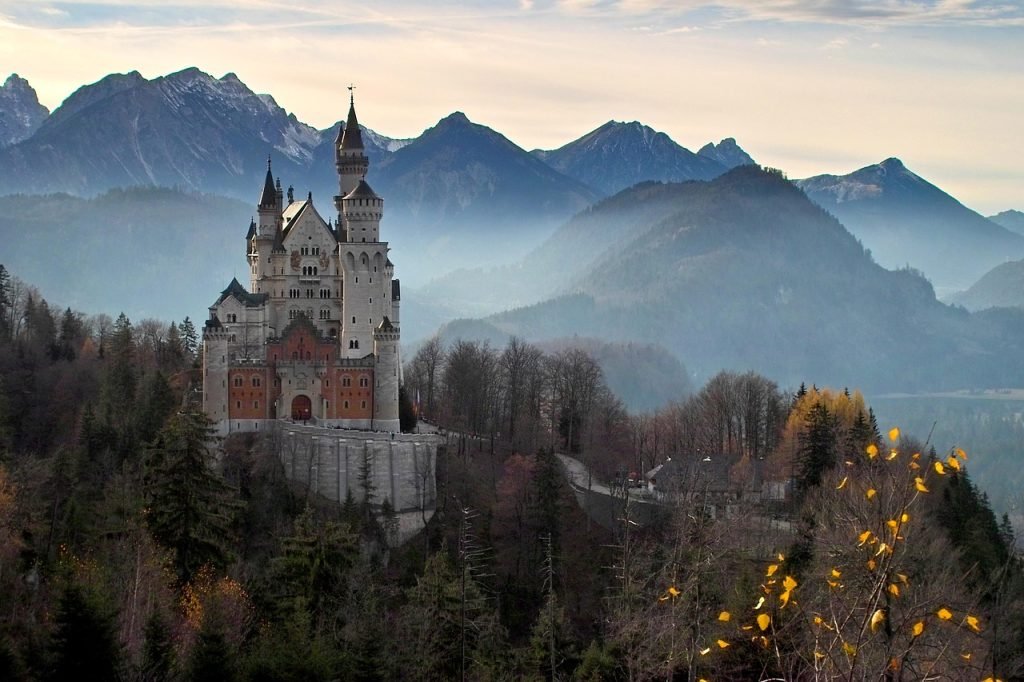
Imagine stepping into a real-life fairy tale where snow-dusted turrets pierce the Alpine sky and every footstep echoes with centuries of romantic legend. Welcome to Neuschwanstein Castle in winter – Germany’s most photographed castle and the inspiration behind Disney’s Sleeping Beauty Castle. This isn’t just another tourist destination; it’s a journey into the extraordinary vision of Bavaria’s “Mad King” Ludwig II, where 19th-century dreams meet breathtaking Alpine reality.
Located majestically in the Bavarian Alps near Füssen, this architectural marvel transforms into something truly otherworldly when winter’s embrace blankets the landscape. After experiencing this wonder firsthand during the snowy months, I can honestly say that while summer offers accessibility, winter delivers pure magic – though it comes with its own set of challenges that every visitor should know about.
The Fascinating Story Behind Bavaria’s Most Famous Castle
King Ludwig II: The Dreamer Who Built a Fantasy
The story of Neuschwanstein begins with one of history’s most enigmatic rulers. King Ludwig II of Bavaria, crowned at just 18 years old, was a man utterly captivated by medieval romance, Germanic legends, and the soaring operas of Richard Wagner. Rather than focusing on politics and warfare, this young monarch poured his soul into creating something unprecedented – a castle that would embody pure artistic vision.
The remarkable facts about Neuschwanstein’s creation:
- Construction commenced in 1868 on the ruins of ancient fortresses overlooking the picturesque Schwangau region
- Ludwig personally financed the entire project using his royal inheritance, deliberately avoiding state funds to maintain complete creative control
- The name “Neuschwanstein” translates to “New Swan Stone,” paying homage to the swan symbolism that permeated Ludwig’s life and the nearby Hohenschwangau Castle
- Tragically, Ludwig died under mysterious circumstances in 1886, leaving his masterpiece forever unfinished
- Only 15 of the planned 200 rooms were ever completed, yet what exists today continues to captivate millions
A Castle Born from Opera and Legend
What makes Neuschwanstein truly unique is its inspiration. This isn’t a fortress built for defense or political power – it’s a three-dimensional love letter to Germanic mythology and Wagnerian opera. Every room tells a story from medieval legends, every mural depicts scenes from epic tales, and every architectural detail reflects Ludwig’s desire to live within the romantic fantasies that consumed his imagination.
Architectural Wonder: Where Medieval Dreams Meet Modern Innovation
Revolutionary Design Philosophy
Neuschwanstein represents something entirely new in castle architecture – a 19th-century romantic interpretation of medieval design, enhanced with cutting-edge technology that would have seemed magical to actual medieval inhabitants.
The castle’s groundbreaking architectural features include:
- A stunning fusion of Gothic revival, Romanesque, and Byzantine architectural styles that creates visual harmony despite mixing different periods
- Innovative use of steel and concrete foundations hidden within stone facades – revolutionary engineering for the 1860s
- Soaring towers and delicate turrets that seem to defy gravity as they cling to the rocky Alpine precipice
- Elaborate balconies and windows positioned to frame the most spectacular views of the Bavarian Alps and surrounding lakes
Interior Marvels: Fantasy Made Real
The completed interior rooms of Neuschwanstein are nothing short of spectacular, each one a masterpiece of decorative arts and craftsmanship:
The Throne Hall: Perhaps the castle’s most impressive space, this Byzantine-inspired chamber features a breathtaking 13-meter-high ceiling adorned with intricate mosaics and golden details. Ironically, despite its name, no throne was ever installed – Ludwig died before its completion.
The Singer’s Hall: Designed as the ultimate medieval banquet hall, this space was intended to host performances of Wagner’s operas. The elaborate wooden ceiling and romantic murals create an atmosphere where you can almost hear the echoes of epic Germanic ballads.
Advanced Amenities: Despite its medieval appearance, Neuschwanstein was remarkably modern for its time. Ludwig ensured his dream castle included central heating systems, running water, flush toilets, electric lighting, and even an early telephone system – luxuries that most European palaces lacked in the 1880s.
Planning Your Winter Visit to Neuschwanstein Castle
Getting to Bavaria’s Crown Jewel
From Munich (Most Popular Route):
- Distance: Approximately 130 kilometers southwest of Munich
- By car: 2-hour scenic drive through the Bavarian countryside
- By train: Take the regional train to Füssen (about 2 hours), then local bus 73 or 78 to Hohenschwangau village
- From Füssen: Regular shuttle buses connect to the castle area every 30 minutes
The Final Approach:
The journey to Neuschwanstein’s entrance is an adventure in itself. From the ticket center in Hohenschwangau village, visitors face three options:
- Walking: A steep 30-40 minute uphill hike through forest paths (most rewarding but challenging in winter)
- Shuttle bus: Regular service that reduces walking time significantly
- Horse-drawn carriage: A romantic but weather-dependent option that operates when conditions permit
Ticketing Strategy: Secure Your Fairy-Tale Experience
Essential booking information:
- Advance reservations are mandatory
- Book online at the official Bavarian Palace Administration website 2-8 weeks in advance
- Tours are available in German, English, French, Spanish, Italian, Russian, Japanese, and Mandarin
Winter Visiting Conditions: Beauty and Challenges
What makes winter visits extraordinary:
The transformation that occurs when snow blankets Neuschwanstein is nothing short of magical. The white-capped turrets emerge from snowy forests like something from a Brothers Grimm tale, while the surrounding Alpine peaks create a stunning backdrop that changes throughout the day as light plays across the snow-covered landscape.
Honest winter visit challenges:
- Trail closures: Some of the most famous photography viewpoints, including parts of the Marienbrücke (Mary’s Bridge), may be closed due to ice and snow safety concerns
- Treacherous paths: The uphill approach becomes significantly more challenging with ice and snow. Proper winter hiking boots with excellent grip are absolutely essential
- Reduced services: Shuttle buses may run less frequently, and horse carriages often suspend operations during heavy snow periods
- Weather unpredictability: Alpine weather can change rapidly, so layers and waterproof gear are crucial
What to Expect During Your Castle Tour
The Interior Experience: Managing Expectations
Let me be completely honest about the interior tour experience. While the completed rooms of Neuschwanstein are undeniably beautiful, with their rich murals depicting Wagnerian themes and Germanic legends, the castle represents Ludwig’s 19th-century romantic fantasy rather than authentic medieval history.
The 30-40 minute guided tour moves quickly through about 15 finished rooms, offering glimpses into Ludwig’s extraordinary vision but leaving many visitors wanting more time to absorb the details. Photography inside is prohibited, so the memories you create must be purely experiential.
What makes the interior tour worthwhile:
- Intricate hand-painted murals telling stories from Germanic mythology
- Elaborate woodwork and decorative arts representing the pinnacle of 19th-century craftsmanship
- The fascinating contrast between medieval aesthetics and Victorian-era modern conveniences
- Insight into the mind of one of history’s most enigmatic monarchs
The True Magic: Neuschwanstein’s Exterior and Setting
Where Neuschwanstein truly excels is in its breathtaking exterior presence and incomparable setting. The castle’s silhouette against the Alpine backdrop has become one of the world’s most recognizable images for good reason. In winter, this beauty intensifies dramatically.
The real experience of Neuschwanstein lies in:
- The approach: Each step up the winding mountain path reveals new angles of the castle’s magnificent facade
- The surroundings: Snow-laden Alpine forests and dramatic mountain vistas that change with the light
- The atmosphere: The profound sense of stepping into a living fairy tale that has inspired countless stories and dreams
Maximizing Your Neuschwanstein Winter Adventure
Essential Nearby Attractions
Hohenschwangau Castle: Just across the valley stands Ludwig’s childhood home, offering a fascinating contrast to Neuschwanstein. This yellow neo-Gothic castle provides insight into Ludwig’s early life and the influences that shaped his later architectural fantasies. The interior here feels more authentically historical and lived-in.
Alpsee Lake: Even in winter, this pristine Alpine lake offers spectacular scenery. While swimming and boating aren’t options in the cold months, the frozen or partially frozen lake creates stunning photographic opportunities, especially when viewed from the castle heights.
Tegelberg Cable Car: Weather permitting, this cable car provides unparalleled panoramic views of the entire region, including both royal castles from an eagle’s perspective. The winter landscape visible from the summit is absolutely breathtaking on clear days.
Photography and Viewpoints: Capturing the Perfect Shot
Best photography locations:
- Marienbrücke (Mary’s Bridge): The classic postcard view, though often closed in winter for safety
- The approach path: Multiple angles reveal different aspects of the castle’s dramatic positioning
- From Hohenschwangau village: Distance shots showing the castle’s relationship to the broader Alpine landscape
- Alpsee shoreline: Reflection shots when the lake isn’t completely frozen
Winter photography tips:
- Golden hour (sunrise/sunset) creates magical lighting on snow-covered turrets
- Overcast days can provide dramatic, moody shots with low-hanging clouds
- Bring extra batteries – cold weather drains camera power quickly
- Consider waterproof camera protection for snowy conditions
The Honest Truth About Visiting Neuschwanstein
What Neuschwanstein Delivers
This castle succeeds brilliantly as a romantic architectural fantasy and natural wonder. The exterior beauty is genuinely breathtaking, particularly in winter when snow enhances every Gothic detail. The Alpine setting is unmatched, and the story of King Ludwig II adds fascinating human drama to the visual spectacle.
For photography enthusiasts, fairy-tale lovers, and anyone seeking a truly unique European castle experience, Neuschwanstein delivers something special that you won’t find anywhere else in the world.
Setting Realistic Expectations
However, it’s important to approach Neuschwanstein with appropriate expectations. This isn’t a medieval fortress with centuries of authentic history – it’s a 19th-century romantic interpretation of medieval ideals. Visitors seeking deep historical authenticity might find more satisfaction in castles like Wartburg or Heidelberg.
The interior tour, while beautiful, feels somewhat rushed and limited. The real magic happens outside, in the approach, the views, and the overall atmospheric experience of this extraordinary place.
Final Thoughts: Is Neuschwanstein Worth the Winter Journey?
After experiencing Neuschwanstein in winter firsthand, I can say with complete honesty that despite the challenges – the treacherous paths, closed viewpoints, and unpredictable weather – this remains one of Europe’s most rewarding castle experiences.
The combination of architectural fantasy, natural Alpine beauty, and the romantic tragedy of King Ludwig II’s story creates something truly special. In winter, when snow transforms the landscape into a living fairy tale, Neuschwanstein transcends mere tourism and becomes something approaching magic.
Yes, you’ll face logistical challenges. Yes, you’ll need proper gear and careful planning. But you’ll also witness one of the world’s most extraordinary castles in its most enchanting season, creating memories that will last a lifetime.
For the best Neuschwanstein winter experience: Come prepared for adventure, dress warmly, book early, embrace the journey as part of the destination, and remember that sometimes the most magical experiences require a little extra effort to reach.
This fairy-tale fortress in the Bavarian Alps continues to inspire dreamers worldwide, and experiencing it wrapped in winter’s embrace reveals exactly why King Ludwig II’s vision has captivated imaginations for more than a century.