There are moments in travel that fundamentally shift your perspective on what humans are capable of creating. Standing before Petra’s Treasury as it emerges from the narrow canyon walls of the Siq represents one of those profound, soul-stirring encounters that will forever alter how you view ancient civilizations. After exploring dozens of UNESCO World Heritage sites across six continents and countless archaeological wonders, I can declare with unwavering conviction that nothing – absolutely nothing – can adequately prepare you for that first breathtaking glimpse of this ancient Nabatean masterpiece.
Yet Petra transcends that singular iconic Treasury facade immortalized in countless photographs and Indiana Jones adventures. This extraordinary archaeological complex sprawls across more than 260 square kilometers of Jordan’s dramatic landscape, encompassing an intricate network of tombs, temples, theaters, and monasteries carved directly into rose-red sandstone cliffs with such precision and artistry that they seem to have grown naturally from the rock itself. This is a destination where you can easily lose yourself for three full days, continually discovering hidden chambers, secret passageways, and breathtaking vistas that reveal new layers of ancient ingenuity around every corner.
Consider this your definitive guide to Petra – encompassing the practical necessities, the magical moments, and most importantly, the brutally honest truth about what it’s genuinely like to explore one of the New Seven Wonders of the World in all its glory and complexity.
The Petra Reality Check: What You Actually Need to Know
The Scale Will Completely Overwhelm You
Understanding Petra’s true magnitude represents the first crucial step in planning your visit. This isn’t merely a single monument or even a collection of buildings – Petra constitutes an entire ancient metropolis carved into living rock. The main tourist circuit alone encompasses approximately 8 kilometers of walking across uneven, sometimes treacherous terrain that will test your endurance and reward your persistence. The advanced routes, which lead to some of Petra’s most spectacular hidden treasures, can easily add another 6 to 8 kilometers to your daily journey. Your feet will ache, your legs will protest, and despite the physical demands, you’ll find yourself falling deeper in love with this place with every step.
The scale becomes truly apparent when you consider that Petra’s total area spans 260 square kilometers, making it roughly the size of a small country. The main tourist route covers 8 kilometers of essential sites, but most visitors end up walking between 10 and 15 kilometers daily when accounting for exploration, backtracking, and the inevitable detours to capture that perfect photograph. The terrain includes significant altitude changes, with major sites requiring substantial climbs that will leave even experienced hikers breathing heavily. Plan for a minimum of two days to see Petra’s highlights, though three to four days allows for a more leisurely exploration that truly does justice to this remarkable site.
The Crowds Are Real But Strategically Manageable
Petra welcomes over one million visitors annually, and during peak season, the crowds can feel overwhelming, particularly around the Treasury and main thoroughfares. However, here’s the insider knowledge that transforms your Petra experience: approximately 80% of all visitors confine themselves to the primary Treasury-to-Royal Tombs corridor. Venture beyond this well-trodden path, and you’ll discover relative solitude even during the busiest periods, finding yourself alone with ancient wonders that rival anything on the main route.
Peak congestion occurs predictably between 10 AM and 2 PM when tour buses disgorge their passengers for rushed visits that barely scratch Petra’s surface. The months from March to May bring perfect weather conditions but also maximum crowds, while September through November represents the second major peak season. Weekends see particularly heavy visitation from regional tourists, creating bottlenecks at popular photo spots.
The savvy traveler employs strategic timing to avoid these crowds entirely. Arriving at the 6 AM gate opening puts you among the first visitors of the day, allowing you to experience the Treasury in relative solitude and capture photographs without human obstacles. Late afternoon visits, particularly after 4 PM, offer another excellent opportunity as most tour groups depart by this time. The advanced hiking routes, including the spectacular Monastery trail and the panoramic High Place of Sacrifice, naturally filter out casual visitors, providing more intimate experiences with Petra’s wonders. Off-season visits from December through February require warmer clothing but reward you with smaller crowds and a more contemplative atmosphere.
Planning Your Petra Adventure: The Essential Practicalities
Tickets and Costs: Understanding the Investment
Petra represents a significant financial investment, and there’s no diplomatic way to soften this reality. However, when you consider that you’re gaining access to one of humanity’s most extraordinary archaeological achievements – a site that required centuries to create and represents the pinnacle of ancient engineering and artistic vision – the cost reflects both the site’s incredible significance and the substantial resources required for its preservation and maintenance.
Current ticket prices for 2025 reflect Petra’s status as a world-class destination: a single day costs 50 JD (approximately $70 USD), while a two-day pass costs 55 JD (roughly $77 USD), and a three-day pass runs 60 JD (about $85 USD). The Jordan Pass, priced between 70 and 80 JD depending on duration, presents exceptional value for visitors staying in Jordan for three or more nights, as it includes Petra entry alongside access to more than 40 other attractions throughout the country and can waive visa fees entirely.
Beyond the entrance fees, several hidden costs deserve consideration. Professional guides, which I strongly recommend for first-time visitors to provide crucial historical context and navigate the complex site efficiently, typically charge between 50 and 100 JD for a full day. While donkey and horse rides are available for 20 to 30 JD, I generally discourage these services due to animal welfare concerns and the fact that walking provides a more authentic and immersive experience. Food inside Petra carries premium pricing, with basic meals costing 10 to 15 JD, while water bottles can cost 3 to 5 JD each – making it essential to bring your own supplies.
Accommodation Strategies: Positioning Yourself for Success
Your base of operations will be Wadi Musa, the modern town that has grown around Petra to serve its visitors, offering accommodation options ranging from budget-friendly hostels to luxury resorts that rival any in the world.
Luxury travelers gravitate toward the Movenpick Resort Petra, which enjoys the unparalleled advantage of sitting literally at Petra’s entrance gates, allowing you to be among the first visitors each morning. The Petra Marriott Hotel provides modern amenities with spectacular views across the surrounding mountains, while the Feynan Ecolodge, though located 1.5 hours from Petra, offers an extraordinary eco-luxury experience that complements your archaeological adventure with sustainable tourism practices.
Mid-range options deliver excellent value and character, with the historic Petra Guest House providing authentic atmosphere and convenient location. The Cleopetra Hotel offers clean, comfortable accommodations with central positioning, while the Sharah Mountains Hotel has earned reputation for exceptional breakfast and genuinely helpful staff who enhance your entire Petra experience.
Budget-conscious travelers can choose from several excellent backpacker-friendly establishments. The Petra Moon Hotel provides clean rooms with a rooftop terrace perfect for evening relaxation, while Valentine Inn offers basic but comfortable accommodations at reasonable prices. The Rocky Mountain Hotel caters specifically to backpackers with a social atmosphere that facilitates meeting fellow travelers and sharing Petra experiences.
Essential Gear: Your Petra Survival Arsenal
Proper preparation can make the difference between a challenging but rewarding experience and a potentially miserable ordeal. Hiking boots represent an absolute non-negotiable requirement – Petra’s terrain includes rocky, uneven surfaces, steep climbs, and loose stones that can easily cause ankle injuries with inadequate footwear. A comfortable backpack becomes essential for carrying the supplies you’ll need during long days of exploration, including multiple water bottles, energy-sustaining snacks, and layers for changing weather conditions.
Sun protection takes on critical importance in Petra’s exposed environment, requiring a wide-brimmed hat, high-quality sunglasses, and SPF 50+ sunscreen that you’ll need to reapply frequently. Hydration represents perhaps the most crucial safety consideration, with each person requiring a minimum of 3 liters of water per day, and possibly more during summer months or strenuous hiking. Pack energy bars, nuts, and dried fruit to maintain energy levels during long exploration days.
A comprehensive first aid kit should include blister treatment supplies, pain relief medication, and basic wound care items. A headlamp or high-quality flashlight proves essential for exploring darker tombs and absolutely necessary for Petra by Night experiences. Weather considerations require different preparation depending on your visit season – summer demands early morning starts to beat brutal midday heat, while winter requires warm layers for cold mornings that transition to pleasant midday temperatures.
The Complete Petra Experience: A Detailed Journey
Day One: The Classic Route – Your First Encounter with Wonder
Begin your Petra adventure at 6 AM when the gates open during summer months (6:30 AM in winter), positioning yourself among the first visitors to experience the site’s magic without crowds. The classic route from the Visitor Center through the Siq to the Treasury, continuing along the Street of Facades to the Theater and concluding at the Royal Tombs, covers approximately 8 kilometers and requires 6 to 8 hours for proper exploration.
The Siq: Nature’s Most Dramatic Entrance
The 1.2-kilometer journey through the Siq represents far more than simple transportation to Petra’s main attractions – it constitutes a carefully orchestrated introduction to the wonders awaiting within. This narrow canyon, with towering walls reaching 200 meters above your head, served as ancient Petra’s main entrance and remains one of the most spectacular approaches to any archaeological site in the world. The Siq functions as a journey through both geological and human history, revealing layers of natural formation and ancient engineering that set the stage for the marvels ahead.
As you walk through this natural corridor, observe the intricate Nabatean water channels carved into the rock walls over 2,000 years ago, representing sophisticated hydraulic engineering that supplied the entire city with precious water. Small votive niches carved into the canyon walls served as shrines where ancient travelers made offerings for safe passage, while the dramatic rock formations create natural sculptures that seem almost too perfect to have occurred without human intervention. Sections of original Roman paving remain visible beneath your feet, connecting you directly to the countless ancient travelers who made this same journey.
Photography in the Siq requires patience and technical skill to capture its majesty effectively. Wide-angle lenses prove essential for conveying the canyon’s overwhelming scale, while the narrow opening creates dramatic lighting conditions that change throughout the day. Use the canyon walls as leading lines to frame your compositions, and don’t rush through this section as many visitors do – the Siq contains numerous details and perspectives that reward careful observation.
The Treasury: That Life-Changing First Glimpse
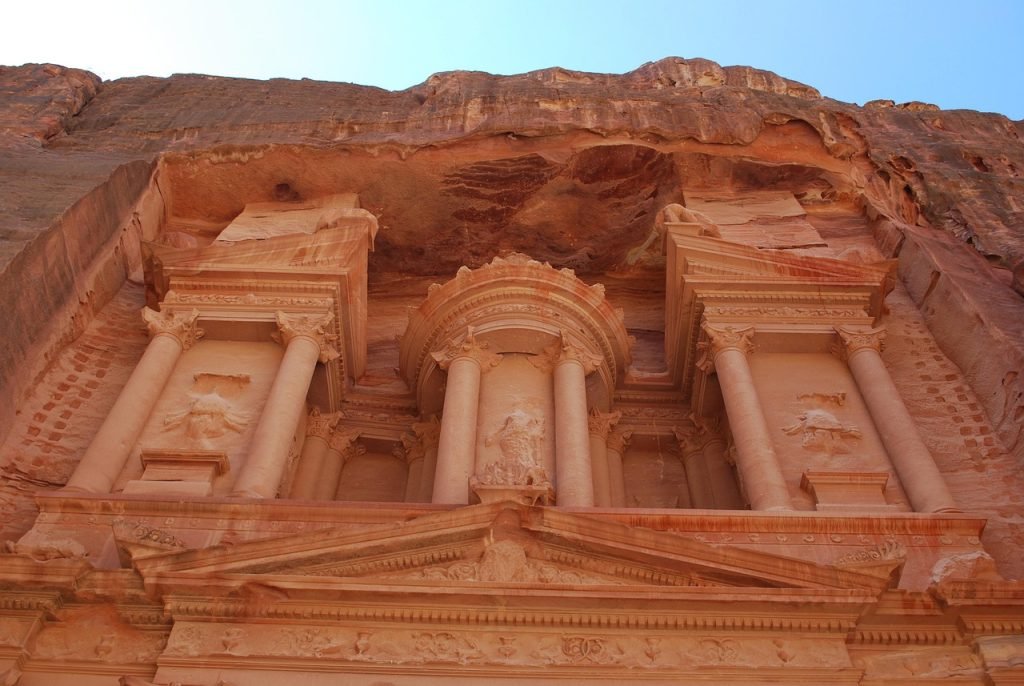
Nothing in travel literature, photography, or cinema can adequately prepare you for that moment when the Treasury emerges from the Siq’s final bend. This 40-meter-tall facade, carved with impossible precision directly into the living sandstone cliff, represents the absolute pinnacle of Nabatean architectural achievement and stands as one of humanity’s most beautiful creations. The Treasury’s perfect proportions, intricate details, and dramatic setting create a visual impact that literally takes your breath away.
Despite its popular name, the Treasury never served as a repository for treasure but rather as an elaborate tomb, most likely for King Aretas IV, one of Petra’s most powerful rulers. The bullet holes visible in the upper urn result from local Bedouin legends claiming it contained treasure, leading generations to shoot at it hoping to break it open and claim its riches. The best viewing times occur during early morning hours when soft light illuminates the facade gently, or late afternoon when golden hour lighting transforms the rose-red stone into something almost ethereal.
While the Treasury’s exterior overwhelms with its beauty, the interior consists of relatively simple chambers that, while historically significant, don’t match the spectacular facade for visual impact. Many visitors make the mistake of photographing the Treasury quickly before moving on, missing the opportunity to spend time absorbing its majesty and exploring the surrounding area, including the flanking tombs and the unofficial hiking route that leads above the Treasury for aerial photographs.
The Street of Facades: Ancient Petra’s Elite Neighborhood
Beyond the Treasury’s immediate vicinity, the Street of Facades reveals more than 40 tomb facades carved into the cliff face, representing ancient Petra’s equivalent of an exclusive residential district for the wealthy and powerful. This concentration of elaborate burial sites demonstrates the incredible prosperity that Petra’s control of trade routes generated, allowing even relatively wealthy citizens to commission spectacular final resting places.
The architectural variety displayed along the Street of Facades tells the story of Petra’s evolution over centuries, with different styles reflecting changing influences, artistic developments, and cultural connections. The remarkable preservation of many facades allows modern visitors to appreciate details and craftsmanship that have survived remarkably intact through two millennia of weather, earthquakes, and human presence. Unlike many archaeological sites where visitors can only observe from a distance, Petra allows you to enter many of these tombs, providing intimate encounters with ancient spaces still bearing traces of their original purpose and decoration.
The Theater: Where Roman Engineering Met Nabatean Vision
Petra’s theater, ingeniously carved directly into the hillside to accommodate 4,000 spectators, perfectly exemplifies how Roman engineering principles merged with existing Nabatean structures to create something entirely unique. This remarkable venue represents more than mere entertainment infrastructure – it served as ancient Petra’s social and cultural heart where the diverse population gathered for performances, public announcements, and community celebrations.
The theater’s hybrid construction reveals fascinating details about Petra’s political and cultural evolution. The Nabateans created the initial structure, which the Romans later modified and expanded, demonstrating how successive civilizations built upon existing achievements rather than destroying them. The acoustics remain excellent after 2,000 years, allowing visitors to experience the same sound quality that ancient audiences enjoyed. Remarkably, Roman expansion required cutting through existing tomb structures, revealing the pragmatic decisions ancient planners made when balancing preservation with progress.
The Royal Tombs: Architectural Masterpieces of Ancient Ambition
The Royal Tombs represent the absolute pinnacle of Nabatean architectural achievement, with each structure telling a unique story of power, artistic vision, and cultural aspiration. These monuments demonstrate how Petra’s rulers and wealthy elite competed to create increasingly spectacular final resting places that would ensure their memory endured through the ages.
The Palace Tomb, featuring the largest facade in all of Petra, required artificial reconstruction of its upper levels using conventional building techniques when the natural rock face proved insufficient for the architects’ ambitious vision. The Urn Tomb later found new life as a Byzantine church, with Christian modifications still visible within its chambers, demonstrating how Petra’s monuments adapted to serve new purposes as civilizations changed.
Day Two: Advanced Routes – Earning Your Greatest Rewards
After experiencing Petra’s greatest hits on your first day, the second day presents opportunities to discover the site’s hidden treasures through more challenging routes that reward physical effort with spectacular sights and genuine solitude. The Monastery trail leads to Petra’s most impressive monument, while the High Place of Sacrifice provides the best panoramic views in the entire complex.
The Monastery Trail: Petra’s Hidden Crown Jewel
The 3-kilometer uphill hike to Ad Deir (the Monastery) ranks among the most rewarding walks in all of archaeological tourism, despite requiring moderate to challenging physical effort. This 2 to 3-hour round trip journey follows more than 800 ancient rock-cut steps that represent remarkable Nabatean engineering, creating a sustainable path up steep terrain that remains functional after two millennia.
The Monastery itself surpasses even the Treasury in scale and grandeur, measuring 50 meters wide and 45 meters tall, yet because it requires serious hiking effort, most tourists never experience its majesty. This oversight represents their profound loss and your tremendous gain, as the Monastery offers everything that makes Petra special – spectacular architecture, dramatic setting, and authentic atmosphere – without the crowds that sometimes diminish the Treasury experience.
The hiking trail provides multiple rewards beyond its ultimate destination. Stunning viewpoints along the route offer perfect photography opportunities and natural rest stops, while traditional Bedouin tea stands provide refreshments and cultural interaction with local families who have served Petra’s visitors for generations. Wildlife enthusiasts often spot ibex, eagles, and unique desert plant species that thrive in this protected environment.
The Monastery’s superior preservation results from its protected location, which has shielded it from weather and human damage that affects more accessible sites. The simple but impressive interior chambers provide cool relief from hiking exertion, while the spectacular viewpoint accessible by climbing rocks opposite the facade offers some of Petra’s most dramatic photography opportunities. Many visitors consider the Monastery more impressive than the Treasury due to its larger scale, better preservation, and the sense of genuine discovery that comes from earning your visit through physical effort.
High Place of Sacrifice: Ritual Significance Meets Panoramic Beauty
The 1.5-kilometer uphill trek to Petra’s High Place of Sacrifice requires 2 to 3 hours round trip but rewards hikers with the most comprehensive panoramic views available anywhere in the complex. This ancient ritual site, where Nabateans conducted religious ceremonies 2,000 years ago, provides 360-degree vistas that encompass not only all of Petra but also the surrounding mountains and valleys that context the entire region.
The well-preserved sacrificial altars and ceremonial platforms allow modern visitors to connect with Petra’s spiritual significance beyond its commercial and architectural achievements. The massive obelisks carved directly from living bedrock demonstrate the same engineering mastery evident throughout Petra, while multiple descent routes provide variety for your return journey and additional exploration opportunities.
Day Three: Hidden Gems and Intimate Discoveries
Advanced Petra exploration reveals numerous sites that receive little attention from mainstream tourism but offer profound insights into Nabatean civilization and culture. Jabal Haroun (Aaron’s Mountain) presents a challenging full-day hike to the supposed tomb of the biblical Aaron, while Wadi Farasa provides a beautiful valley walk connecting multiple lesser-known but spectacular sites.
Little Petra: The Intimate Nabatean Experience
Located just 15 minutes by car from main Petra, Al Beidha (Little Petra) offers free entry to a more intimate Nabatean experience that complements rather than competes with the main site. This smaller complex served as a crucial support facility where Petra’s merchants entertained their trading partners, providing accommodation, food, and entertainment for the international businessmen who made Petra’s prosperity possible.
Little Petra’s narrow canyons echo the Siq’s drama on a more human scale, while some of the ancient world’s few surviving Nabatean frescoes provide rare glimpses of the artistic traditions that once decorated many Petra monuments but have long since faded from exposure. The peaceful atmosphere, with usually only a handful of visitors present, creates an authentic explorer experience that lets you imagine discovering these wonders for the first time.
Petra by Night: The Honest Truth About This Magical Experience
Available Monday, Wednesday, and Thursday evenings at 8:30 PM for 17 JD (approximately $24 USD), Petra by Night requires advance reservations and represents one of tourism’s most polarizing experiences. The two-hour program consists primarily of sitting on provided mats in front of the Treasury while a local musician plays traditional instruments and tells stories about Petra’s history and legends.
Managing Expectations Realistically
Petra by Night is expensive, touristy, and provides minimal educational content compared to a comprehensive day visit with a knowledgeable guide. The “show” essentially involves brief musical performances and storytelling that many visitors find underwhelming given the premium price point. However, approaching Petra by Night with appropriate expectations transforms it into something genuinely magical.
The experience begins with a candlelit walk through the Siq in complete darkness, creating an otherworldly atmosphere impossible to replicate during daylight hours. The narrow canyon walls, illuminated only by flickering candles, transport you back through centuries and generate an almost mystical journey toward ancient Petra. Emerging from the dark Siq to discover the Treasury illuminated by hundreds of candles represents one of travel’s most breathtaking moments, as the soft, warm light transforms the rose-red sandstone into something almost ethereal.
The actual program involves sitting quietly in front of the Treasury surrounded by candlelight with the night sky above, creating a peaceful, contemplative atmosphere that allows Petra’s majesty to work its magic without distractions. While the musical performance and storytelling remain simple, the setting transforms everything into something extraordinary.
Photography Realities and Recommendations
Night photography at Petra by Night presents significant technical challenges but can yield spectacular results with proper preparation. A sturdy tripod becomes absolutely essential for capturing decent images in the low-light conditions, while flash photography is strictly prohibited to preserve the atmospheric lighting and respect other visitors’ experiences. The challenging lighting conditions make technically perfect photographs difficult, but the unique opportunity creates images impossible to capture during regular daylight visits.
The Verdict: When to Splurge and When to Skip
Petra by Night makes sense if you can afford the premium price without financial stress, appreciate atmospheric experiences over educational content, and don’t mind sitting on the ground for extended periods. The experience creates lasting memories and provides a unique perspective on one of the world’s most beautiful monuments that many visitors treasure despite the high cost.
Skip Petra by Night if you’re traveling on a tight budget where 17 JD represents a significant expense, prefer educational content and comprehensive tours, have mobility issues that make sitting on the ground uncomfortable, or are visiting with young children who may become restless during the quiet, contemplative program.
My honest recommendation acknowledges that Petra by Night represents a splurge experience focused on atmosphere rather than value. If you can afford it comfortably, the unique perspective and magical setting create memories you’ll treasure long after your visit ends, even if your wallet feels lighter afterward.
Common Mistakes That Diminish the Petra Experience
Physical Preparation Oversights
Underestimating Petra’s distances and physical demands leads to exhaustion that prevents full appreciation of the site’s wonders. Inappropriate footwear, particularly flip-flops or dress shoes, creates safety hazards and discomfort that can ruin entire days of exploration. Insufficient water and sun protection can lead to dehydration and heat exhaustion that require emergency intervention and premature departure from the site.
Planning and Timing Errors
Rushing through Petra in a single day prevents proper appreciation of its complexity and significance, reducing one of the world’s greatest archaeological sites to a superficial checklist experience. Visiting during peak hours from 10 AM to 2 PM means fighting crowds for photographs and missing the peaceful contemplation that makes Petra transformative. Skipping professional guides on first visits often results in missing crucial historical context and architectural details that transform Petra from beautiful ruins into a comprehensive ancient civilization experience.
Cultural Insensitivity
Treating Petra like a theme park rather than a sacred site of profound cultural significance disrespects local communities and diminishes your own experience. Ignoring local advice about weather conditions, trail safety, or cultural customs can create dangerous situations or cultural misunderstandings that harm both visitors and host communities.
Seasonal Strategies for Optimal Experiences
Summer Survival: Beautiful but Demanding
Summer temperatures from June through August regularly reach 35 to 40°C (95 to 104°F) during midday hours, creating genuinely dangerous conditions for unprepared visitors. Successful summer strategies require starting exploration at 5 AM to complete major walking before heat becomes unbearable, taking substantial midday breaks in shade or air conditioning, consuming 4 or more liters of water per person daily, and wearing light-colored, breathable clothing that provides complete sun coverage.
Winter Opportunities: Cold Mornings, Perfect Afternoons
December through February brings cold morning temperatures of 5 to 20°C (41 to 68°F) that warm to perfect hiking conditions by midday. Layer clothing systems allow adjustment as temperatures change throughout the day, while later start times of 7 to 8 AM work well since brutal summer heat isn’t a concern. Pack warm clothes for early morning exploration and plan indoor activities or rest periods during the coldest morning hours.
Spring and Fall: Ideal Weather, Maximum Competition
March through May and September through November provide perfect weather conditions with temperatures ranging from 20 to 30°C (68 to 86°F), making these periods ideal for extensive hiking and outdoor exploration. However, these months also attract maximum crowds, requiring advance booking for accommodations and tours, early morning arrival strategies to beat tour groups, and patience with congested popular sites during peak hours.
The Final Word: Why Petra Transcends Tourism
Petra represents far more than another impressive tourist destination. The Nabateans created something that literally takes our breath away today, demonstrating how ancient civilizations achieved beauty and functionality that modern technology still struggles to replicate. They carved permanent beauty from solid stone, built trading empires connecting Eastern and Western civilizations, and left us a cultural legacy that transcends historical periods and cultural boundaries.
The brutally honest truth about Petra: it will challenge you physically with more walking and climbing than most visitors anticipate, overwhelm you financially with costs that exceed typical travel budgets, and inspire you spiritually with beauty and human achievement that stays with you for life. You’ll walk farther than expected, spend more than planned, and remember Petra more vividly than almost any other travel experience you’ve ever had.
My final recommendation emphasizes giving Petra the time and attention it truly deserves. Resist the temptation to rush through for quick photographs or superficial sightseeing – instead, sit quietly in the Treasury’s courtyard absorbing its impossible beauty, make the challenging climb to the Monastery for rewards that exceed the effort required, and watch sunset paint the mountains from the High Place of Sacrifice while contemplating the civilizations that created these wonders. Allow this ancient masterpiece to work its transformative magic on your understanding of what humans can achieve when vision, skill, and determination combine.
Now comes your turn to answer Petra’s timeless call. The ancient Nabatean masterpiece awaits your footsteps along paths walked by countless generations, ready to reveal secrets carved in stone and share beauty that transcends time itself. Are you prepared for this journey into wonder?