Why Portugal is Perfect for a Road Trip
Portugal reveals its soul gradually, like a slow-developing photograph. What begins as charming coastal towns and rolling hills evolves into a rich tapestry of medieval castles, world-class wineries, pristine beaches, and UNESCO World Heritage sites. A road trip through Portugal isn’t just transportation – it’s a journey through centuries of history, where Roman aqueducts share landscapes with Moorish castles, and traditional fishing villages exist alongside cosmopolitan cities.
This relatively compact country offers incredible diversity within manageable driving distances. You can breakfast in Lisbon’s sophisticated cafés, lunch in a medieval hilltop village, and watch the sunset over dramatic Atlantic cliffs – all in a single day. The Portuguese people are remarkably welcoming to travelers, roads are excellent, and the cost of everything from fuel to accommodation remains refreshingly reasonable compared to other Western European destinations.
But here’s the honest truth: Portugal’s popularity has exploded in recent years. The secret is out, and some destinations can feel overwhelmed during peak season. Success lies in timing, route planning, and knowing when to venture beyond the Instagram-famous spots to discover authentic Portuguese experiences.
Essential Pre-Trip Planning
The Car Rental Reality Check
Here’s a money-saving strategy: skip the car rental for your first few days in Lisbon. Instead, dedicate 2 full days to exploring Lisbon using the city’s excellent public transportation system, then take the train to Sintra on day 3, followed by the bus to Cabo da Roca. Only pick up your rental car after completing these destinations. This smart approach allows you to avoid the most complicated traffic jams in the Lisbon metropolitan area while saving 3 days of rental costs.
When you do rent, expect to pay between €35-50 daily for a compact car that can navigate narrow village streets, or €50-75 for a mid-size SUV if you prioritize comfort and storage space. Insurance isn’t optional—it’s absolutely essential. Portuguese drivers can display surprising aggression, particularly in urban areas, while those charming narrow village streets prove utterly unforgiving to rental car bumpers and side mirrors. Budget realistically for fuel costs ranging from €1.50-1.70 per liter, expecting a total fuel budget of €200-300 for this complete itinerary. Highway tolls will add another €50-80 to your expenses, with the A2 route to Algarve being particularly expensive but saving you significant time and stress.
Driving in Portugal: What to Expect
Portugal’s excellent highway infrastructure and generally clear signage make long-distance driving genuinely pleasant, with spectacular scenic routes that provide entertainment value beyond mere transportation. Rest stops offer clean facilities and reasonable prices, making roadside breaks comfortable rather than desperate necessities.
However, you’ll face significant challenges navigating narrow, steep streets in historic centers that were designed for donkeys, not rental cars. Popular destinations suffer from severely limited parking, while aggressive urban driving can transform peaceful travelers into stressed-out survivors. Most historic city centers wisely restrict vehicle access, forcing you to use park-and-ride facilities when available. Budget €5-10 daily for parking fees.
Your Complete 10-Day Portuguese Adventure
Days 1-2: Mastering Lisbon Without Your Car
Arrival Strategy: Take the metro, taxi, or airport shuttle directly from Lisbon Airport to your accommodation—no car needed yet! This strategic approach eliminates the stress of navigating unfamiliar city traffic immediately after arrival while saving you rental costs from day one.
Day 1 Focus: Explore Lisbon’s iconic neighborhoods including atmospheric Alfama with its maze-like streets, bohemian Bairro Alto known for nightlife and fado houses, and monumental Belém district using the efficient combination of historic trams, modern metro, and your own feet. The city’s public transportation system works excellently and costs far less than daily parking fees or rental car damage.
Your essential Lisbon experiences include the magnificent Jerónimos Monastery, showcasing Portugal’s unique Manueline architectural style that combines maritime motifs with Gothic elements. The iconic Belém Tower stands as a fortress monument to Portugal’s Age of Discovery, while nearby Pastéis de Belém serves the original custard tarts that inspired countless inferior imitations worldwide. Evening brings opportunities for authentic fado dining experiences, where Portugal’s haunting traditional music creates emotional connections that transcend language barriers.
Day 2 Adventure: Continue your car-free exploration of Lisbon’s diverse neighborhoods. Consider day trips to nearby Cascais or take the scenic tram 28 through the city’s historic districts. This second day allows you to truly appreciate Lisbon’s walkable neighborhoods while avoiding the stress of urban driving entirely.
Day 3: Smart Sintra Strategy via Public Transport
Take the comfortable train from Lisbon’s Rossio or Oriente stations directly to Sintra—just 40 minutes and €4 each way. Sintra’s train station connects efficiently to the historic village center via a short walk or local bus.
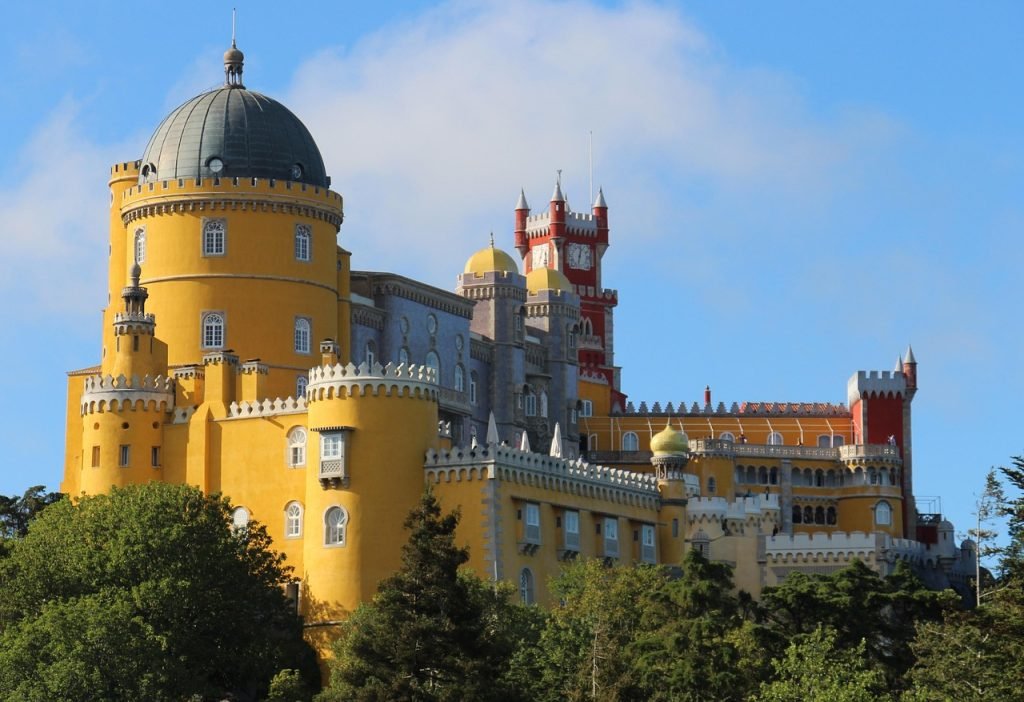
Your Sintra itinerary should begin with morning visits to Pena Palace, a fairy-tale castle offering panoramic views that justify the €14 entrance fee through sheer visual splendor. Afternoon exploration of Quinta da Regaleira provides mysterious estate grounds featuring underground tunnels, hidden grottos, and symbolic architecture for €11 that adults find fascinating and children consider the ultimate treasure hunt.
Cabo da Roca Adventure
From Sintra, take the 403 bus directly to Cabo da Roca, Europe’s westernmost point—just 30 minutes and €4. This scenic route eliminates driving stress on narrow coastal roads while providing ocean views throughout the journey. Cabo da Roca offers dramatic cliff-top walking, stunning Atlantic vistas, and the symbolic satisfaction of reaching continental Europe’s edge.
Pick Up Your Rental Car: After returning to Sintra by bus, collect your rental car from a Sintra-based rental location or take the train back to Lisbon to pick up your vehicle there. You’ll now bypass the worst metropolitan traffic while having experienced three days of Portugal completely stress-free and €100-200 richer!
Days 4-5: Medieval Magic and Atlantic Authenticity
The Journey North
Now with your rental car, leave Sintra or Lisbon via the efficient A8 motorway, covering 90 kilometers in approximately 1 hour 15 minutes for accessing one of Portugal’s most photographed destinations.
Óbidos delivers everything you imagine a medieval Portuguese town should provide: completely intact defensive walls, cobblestone streets worn smooth by centuries of foot traffic, whitewashed houses adorned with colorful trim, and castle walls you can actually walk along while pretending you’re defending against ancient invaders. The town feels like stepping into a historical fantasy novel made tangible.
But honesty demands acknowledging that Óbidos is genuinely tiny, undeniably touristy, and can feel uncomfortably theme-park-like during peak season when crowds outnumber residents by considerable margins. The town walls walk provides spectacular views completely free of charge in about 45 minutes of moderate exercise. Óbidos Castle now serves as a luxury pousada hotel where you can literally sleep within medieval walls. Igreja de Santa Maria showcases beautiful azulejo tiles that represent Portugal’s distinctive artistic heritage, while local shops sell ginjinha, the traditional cherry liqueur served in edible chocolate cups that children find delightful and adults consider dangerously easy to overconsume.
Coastal Exploration
Takes you to Caldas da Rainha, famous throughout Portugal for ceramic production and thermal springs, just 15 minutes from Óbidos. The Museu da Cerâmica charges only €3 to showcase traditional Portuguese pottery techniques that continue today, while Parque Dom Carlos I offers peaceful gardens perfect for midday relaxation.
Continue to Nazaré, 45 minutes from Caldas, where authentic fishing village culture survives alongside tourism development. This traditional community gained international fame for producing giant waves that attract extreme surfers from worldwide, but maintains its cultural authenticity through continued fishing activities, traditional costumes worn by local women, and the sight of fish drying on wooden racks throughout the village.
The Sítio (upper town) provides spectacular Atlantic Ocean views accessible via a charming funicular costing just €1.50, while the lower town preserves authentic fishing culture where you can observe traditional boats being maintained and daily catches being processed. Nazaré’s coastal road offers scenic beauty but includes narrow sections requiring careful driving and extra time allowances.
Days 6-7: Évora’s Historical Perfection and Wine Country Discoveries
The Central Route
Travel from Óbidos via A8 to A1 to A6, covering 150 kilometers in approximately 1 hour 45 minutes to reach one of Portugal’s most historically significant destinations.
Évora represents Portuguese history expressed through architectural evolution, showcasing this perfectly preserved medieval city where Roman, Moorish, and Christian influences coexist within intact defensive walls. Unlike touristy Óbidos, Évora maintains vibrant authentic life through its university student population, traditional markets selling local products, and artisan workshops continuing centuries-old crafts.
The Roman Temple, locally known as the Temple of Diana, provides free access to impressive 2nd-century ruins that survived because medieval builders incorporated the structure into later constructions. The Gothic Cathedral of Évora charges €4 for entry but rewards visitors with spectacular panoramic views from its rooftop terrace that justify the modest fee through breathtaking vistas across Alentejo countryside. The infamous Bone Chapel costs €5 to experience its macabre but genuinely fascinating interior decorated with thousands of human bones arranged in artistic patterns that simultaneously disturb and mesmerize visitors.
A 15-minute drive from Évora reaches Almendres Cromlech, a prehistoric stone circle older than Stonehenge that provides free access to one of Europe’s most important megalithic monuments, standing mysterious and evocative in rolling countryside where you can contemplate human civilization’s ancient origins.
Wine Adventure
Start the day into the renowned Alentejo wine region, beginning with morning exploration of Monsaraz, a spectacular hilltop medieval village 45 minutes from Évora. This perfectly preserved community overlooks the vast Alqueva reservoir while maintaining traditional architecture and local crafts within defensive walls that have protected residents for centuries.
Afternoon wine tasting opportunities include Quinta do Mouro (€15-25) for excellent wines paired with castle views, Herdade do Rocim (€20-30) representing modern winery techniques respecting traditional methods, and historic Cartuxa Winery (€18-25) continuing wine production traditions near Évora. Rural Alentejo roads provide excellent driving conditions through landscapes of cork oak forests and established vineyards, though speed cameras appear regularly and fines arrive swiftly for violations.
Days 8-10: The Algarve’s Coastal Magnificence
Southern Migration
Journey from Évora via A6 to A2, covering 220 kilometers in approximately 2 hours 30 minutes to reach Portugal’s most famous coastal region.
Lagos offers the perfect balance between historic charm, stunning beaches, and comprehensive tourist infrastructure that makes it an ideal western Algarve base. The legendary Ponta da Piedade coastline provides some of Portugal’s most spectacular scenery, featuring dramatic golden cliffs, hidden beaches accessible only by boat or challenging hiking trails, and crystal-clear waters that inspire countless photographers. Meanwhile, the authentic old town maintains genuine Portuguese character through traditional restaurants serving local specialties, historic churches displaying beautiful azulejo work, and museums chronicling the region’s fascinating maritime history.
Western Exploration
Today travel from Lagos to Sagres, covering 30 kilometers in 45 minutes to reach Portugal’s legendary “End of the World.” Sagres occupies mythical status in Portuguese history as Prince Henry the Navigator’s base for launching Age of Discovery expeditions that changed world history forever. This windswept promontory genuinely feels like civilization’s edge, where powerful Atlantic waves crash against dramatic cliffs while seabirds soar on constant ocean breezes.
Essential Sagres experiences include the historic fortress charging €3 for access to fortifications and ocean views that inspired generations of explorers, plus Cabo de São Vicente, Europe’s southwestern-most point where sunset viewing becomes a daily pilgrimage for travelers from worldwide. Nearby Praia do Amado provides excellent surfing conditions within a dramatic natural amphitheater setting that attracts both experienced surfers and spectators.
The coastal road from Lagos to Sagres delivers spectacular views but includes narrow sections requiring careful driving and generous time allowances for safe navigation and spontaneous photo opportunities.
Central Algarve Discovery
Morning visits to Silves reveal the former Moorish capital’s impressive castle (€3) and cathedral that chronicle the area’s Islamic heritage through architectural details and museum displays providing historical context.
Afternoon adventures focus on the famous Benagil Cave, accessible through kayak tours (€25-35) or boat trips (€20-30) that reveal the Instagram-famous golden cave interior. However, nearby Praia da Marinha offers equally stunning coastal scenery without crowds or tour requirements, featuring dramatic limestone cliffs, hidden coves, and walking trails providing spectacular photo opportunities.
Evening arrival in Faro introduces the regional capital’s authentic Portuguese atmosphere, where the medieval Old Town contrasts beautifully with modern city development, creating a living museum where contemporary Portuguese life unfolds within historic settings.
Your return journey to Lisbon offers route choices between the direct A22 to A2 motorway option covering 280 kilometers in approximately 3 hours, or the scenic alternative via Évora that adds one hour but provides lunch opportunities and countryside views that extend your Portuguese experience until the final moments.
Final Honest Assessment
This Portugal road trip delivers everything it promises: stunning coastal scenery, authentic cultural experiences, historic architecture, excellent food, and genuine Portuguese hospitality. The country’s compact size makes it perfect for road trips, while the excellent infrastructure ensures comfortable travel.
What exceeds expectations:
- Scenic beauty: Consistently spectacular landscapes
- Value for money: Excellent compared to other Western Europe destinations
- Cultural authenticity: Real Portuguese life exists alongside tourism
- Driving conditions: Generally excellent roads and clear signage
Potential disappointments:
- Crowds: Popular destinations can feel overwhelming in peak season
- Parking challenges: Historic centers aren’t designed for cars
- Tourist pricing: Popular areas charge premium rates
- Weather variability: Coastal areas can be surprisingly cool and windy
Last Thoughts
Portugal rewards road trip travelers with incredible diversity, authentic experiences, and stunning natural beauty. The key to success lies in balancing must-see attractions with spontaneous discoveries, popular destinations with hidden gems, and touristic experiences with authentic Portuguese culture.
This itinerary provides a comprehensive introduction to Portugal’s highlights while allowing flexibility for personal interests and spontaneous discoveries. Whether you’re drawn to historic architecture, coastal scenery, wine culture, or simply the pleasure of discovering a beautiful country at your own pace, Portugal’s roads lead to unforgettable experiences.
The combination of Lisbon’s sophisticated urban culture, Sintra’s romantic palaces, Óbidos’ medieval charm, Évora’s historic significance, and the Algarve’s coastal beauty creates a journey that showcases Portugal’s incredible diversity within a manageable timeframe. Each destination offers unique rewards, while the driving routes themselves provide spectacular scenery and insights into Portuguese life beyond the tourist circuits.
Most importantly, this road trip allows you to experience Portugal’s greatest asset: the warmth and authenticity of its people, who will welcome you into their country with genuine pride and hospitality that makes every mile driven worth the effort.
Remember to check current toll prices and fuel costs before departure, as these can fluctuate. Consider purchasing a Via Verde electronic toll device for convenient highway payment, and always carry some cash for parking and small purchases in rural areas.