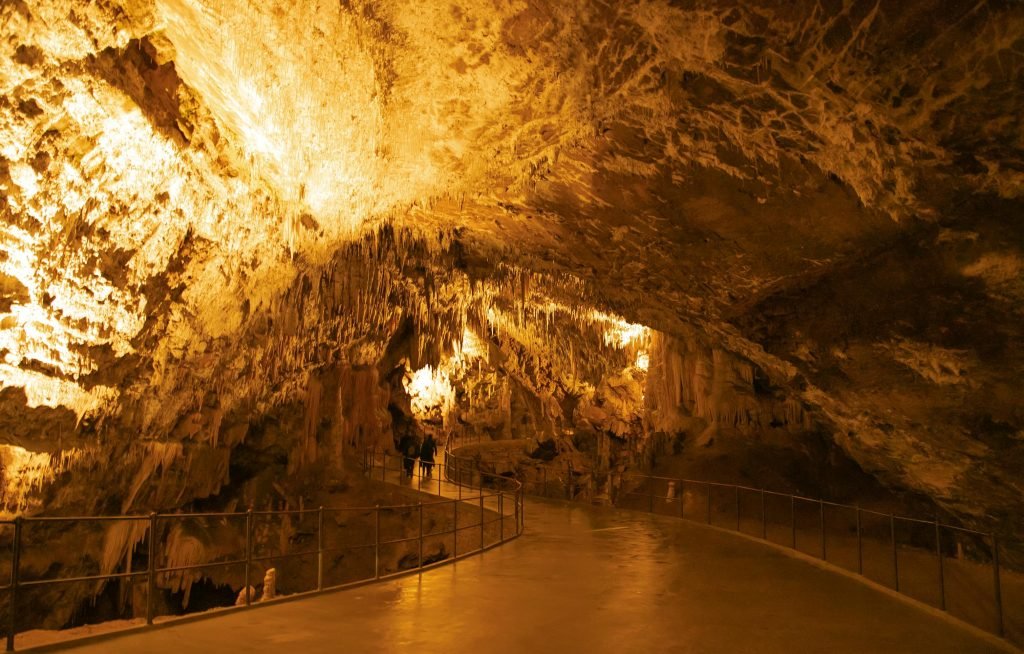
Deep beneath the Slovenian countryside lies one of Europe’s most extraordinary natural wonders – the Postojna Caves (Postojnska jama). This vast underground labyrinth, stretching over 24 kilometers beneath the surface, represents not just Slovenia’s most visited tourist attraction, but one of the world’s most accessible and spectacular cave systems. For over 200 years, these limestone caverns have captivated visitors with their otherworldly beauty, unique wildlife, and innovative tour experiences that blend natural wonder with human ingenuity.
The Underground Marvel That Redefined Cave Tourism
The Postojna Caves system formed over two million years through the persistent work of the Pivka River, which carved its way through the limestone bedrock of Slovenia’s Karst region. What makes these caves truly exceptional isn’t just their size or beauty, but their pioneering approach to cave tourism. In 1872, Postojna became the first cave in the world to install electric lighting, and in 1884, it introduced the famous cave train – a narrow-gauge railway that still carries visitors deep into the underground realm today.
The cave train experience alone sets Postojna apart from other cave systems worldwide. This 3.7-kilometer underground railway journey takes visitors through the cave’s most dramatic passages, past towering limestone formations and through chambers so vast they could house entire cathedrals. The 10-minute ride reaches speeds of up to 35 kilometers per hour, creating a thrilling introduction to the underground world that awaits.
The caves maintain a constant temperature of 8-10°C (46-50°F) year-round, making them a refreshing escape during hot summers and a relatively warm refuge in winter. However, this consistent coolness means visitors should bring warm clothing regardless of the season – a detail that catches many unprepared tourists off guard.
The Spectacular Underground Landscape
The Postojna Cave system reveals itself in a series of magnificent chambers, each with its own character and geological wonders. The Great Mountain chamber rises 45 meters high, its ceiling disappearing into darkness above the reach of artificial lighting. Here, visitors encounter the famous “Brilliant” – a pure white stalagmite that has become the cave’s unofficial symbol and one of the most photographed formations in the underground world.
The Concert Hall, with its exceptional acoustics, hosts actual musical performances and has welcomed artists from around the globe. The natural amphitheater can accommodate up to 10,000 people, making it one of the largest underground concert venues in the world. The acoustics are so perfect that even whispers carry clearly across the vast space.
Perhaps the most technically impressive chamber is the Spaghetti Hall, where thousands of thin stalactites hang from the ceiling like delicate pasta, some reaching lengths of several meters while remaining only a few centimeters thick. The precision required by nature to create these formations over millennia demonstrates the patient artistry of geological processes.
The cave’s formations display an incredible variety of colors, from pure white calcium carbonate deposits to rich browns and reds created by iron oxide. The “Curtain” formations appear so delicate they seem to flutter in an underground breeze, while massive flowstone cascades create the impression of frozen waterfalls.
The Mysterious Olm: Europe’s Baby Dragons
One of Postojna’s most remarkable residents is the olm (Proteus anguinus), an extraordinary salamander species that has adapted to life in complete darkness. These pale, almost translucent creatures, which locals call “human fish” due to their flesh-colored skin, represent one of Europe’s most unique and endangered animals.
Olms can live up to 100 years and survive without food for up to 10 years, making them one of the most resilient creatures on Earth. They’re completely blind, having evolved in absolute darkness, but possess extraordinary senses of smell and hearing that allow them to navigate their underwater world with remarkable precision.
The Postojna Caves house a dedicated vivarium where visitors can observe these fascinating creatures up close. The olm breeding program at Postojna has achieved remarkable success, with baby olms hatching in the controlled environment – a rare occurrence that draws scientists and nature enthusiasts from around the world.
The Honest Tourist Experience
The standard Postojna Caves tour lasts approximately 90 minutes and costs around 29 euros for adults during peak season. The experience includes the underground train ride, a guided walking tour through the most spectacular chambers, and access to the olm exhibition. While the caves accommodate over 700,000 visitors annually, the tour system manages crowds reasonably well, though summer weekends can feel crowded.
The walking portion of the tour covers about 3.5 kilometers on well-maintained paths, though the route includes some steps and uneven surfaces. The caves are wheelchair accessible for most of the route, with special arrangements available for visitors with mobility challenges.
Tour groups can be large, sometimes exceeding 30 people, and the pace moves steadily to accommodate the volume of visitors. Photography is permitted throughout most of the caves, though the lighting conditions can be challenging, and flash photography is prohibited in certain areas to protect the formations and wildlife.
The caves operate year-round, with tours departing every hour during peak season and less frequently in winter. Advance booking is highly recommended, especially during summer months when tours regularly sell out.
Predjama Castle: The World’s Largest Cave Castle
Just 9 kilometers from the Postojna Caves stands one of Europe’s most dramatic castles – Predjama Castle (Predjamski grad). Built directly into the mouth of a cave in a 123-meter-high cliff face, this Renaissance fortress represents a unique fusion of human architecture and natural geology. The castle has clung to its impossible perch for over 800 years, creating one of the most photographed castles in the world.
The castle’s most famous resident was Erazem Lueger, a 15th-century knight who used the cave system behind the castle to defy a year-long siege. According to legend, Erazem would disappear into the caves and emerge with fresh supplies, frustrating his besiegers who couldn’t understand how he remained well-fed during their blockade. The secret passages and caves behind the castle provided perfect smuggling routes and escape paths.
Today, visitors can explore the castle’s chambers, which include medieval living quarters, a torture chamber, and rooms carved directly into the rock face. The castle museum tells the story of Erazem’s defiance and the ingenious ways the fortress used its cave connections for defense and daily life.
The castle entrance fee is around 15 euros for adults, with combination tickets available for both the castle and Postojna Caves. A tour takes about 45 minutes and includes access to the cave passages behind the fortress, though these are much smaller and less spectacular than the main Postojna system.
Regional Activities and Hidden Gems
The Postojna region offers numerous activities beyond its famous caves. The Škocjan Caves, a UNESCO World Heritage site located 50 kilometers south, provide a more wild and less commercialized cave experience. These caves feature one of the world’s largest underground canyons and offer a more adventurous alternative to Postojna’s polished tourism experience.
The Rakov Škocjan landscape park, just 15 kilometers from Postojna, showcases the region’s karst topography with natural stone bridges, collapsed cave systems, and pristine forests. The area offers excellent hiking trails that reveal how the underground cave systems connect to the surface landscape.
For families, the Postojna Cave Train Museum provides fascinating insights into the engineering marvel that makes the cave tours possible. The museum displays historical locomotives and explains how the narrow-gauge railway system operates in the challenging underground environment.
The nearby Planina Cave, connected to the Postojna system but requiring more adventurous exploration, offers guided tours for those seeking a more intimate cave experience. These tours involve walking through water and navigating more challenging terrain, providing a stark contrast to the accessibility of the main Postojna route.
Wine and Cuisine in the Karst Region
The Karst region surrounding Postojna produces some of Slovenia’s finest wines, particularly the robust Teran red wine made from Refošk grapes. The area’s limestone soil and Mediterranean climate create ideal conditions for viticulture, and many local wineries offer tastings and tours.
Traditional Karst cuisine reflects the region’s Italian influence, with dishes like pršut (air-dried ham), local cheeses, and hearty stews featuring prominently on restaurant menus. The famous Karst prosciutto, aged in the region’s natural caves, develops unique flavors impossible to replicate elsewhere.
Several restaurants in Postojna and surrounding villages specialize in traditional Slovenian cuisine, offering visitors the chance to experience authentic local flavors after their underground adventures.
Practical Considerations and Seasonal Variations
The Postojna Caves region experiences distinct seasonal variations in tourist volume and available activities. Summer months bring the heaviest crowds and highest prices, but also the most extensive tour schedules and longest operating hours. Spring and autumn offer the best balance of good weather, manageable crowds, and full facility operations.
Winter visits provide a unique experience, with the contrast between the cold surface weather and the cave’s stable temperature creating dramatic atmospheric effects. However, some regional activities may be limited, and weather can affect transportation to more remote attractions.
Parking at Postojna Caves is free, a refreshing change from many European tourist attractions. The facility includes restaurants, gift shops, and modern amenities, though prices reflect the captive tourist market.
The Environmental Reality
Despite its tourism success, the Postojna Caves face ongoing environmental challenges. The massive visitor numbers inevitably impact the delicate cave ecosystem, and management works continuously to balance accessibility with conservation. The caves’ lighting systems, while necessary for tourism, affect the natural cave environment and require careful management to minimize ecological disruption.
Climate change poses longer-term threats to the cave system, with changing precipitation patterns potentially affecting the water levels and formations that make the caves spectacular. The management has implemented various conservation measures, including limiting visitor numbers during sensitive periods and monitoring the cave’s ecosystem health.
Final Thoughts: Why You should go to Postojna
The Postojna Caves deliver on their promise of underground wonder, providing one of Europe’s most accessible and spectacular cave experiences. The combination of natural beauty, innovative tourism infrastructure, and unique wildlife creates an attraction that justifies its reputation and visitor numbers.
However, the caves’ popularity comes with inevitable compromises. The experience is highly organized and commercialized, lacking the sense of discovery and adventure that smaller, less developed cave systems might offer. The large tour groups and efficient scheduling sometimes feel more like a theme park experience than a natural wonder exploration.
The addition of Predjama Castle and other regional attractions creates a compelling multi-day destination that showcases Slovenia’s karst landscape and cultural heritage. While the caves themselves can be experienced in a half-day visit, the surrounding region rewards longer exploration with its blend of natural wonders, historical sites, and authentic Slovenian culture.
For visitors seeking to understand Slovenia’s unique geological heritage and experience one of Europe’s most impressive natural attractions, the Postojna Caves region provides an unforgettable introduction to the hidden world beneath our feet. The key is managing expectations – come prepared for a well-organized tourist experience rather than a wild adventure, and you’ll find yourself amazed by the underground marvels that have captivated visitors for over two centuries.