Why the Algarve is More Than Just Beach Resorts
The Algarve unfolds like a Mediterranean dream along Portugal’s southern coast, where dramatic limestone cliffs embrace golden beaches, medieval villages crown hilltops, and the Atlantic Ocean meets centuries-old fishing traditions. But here’s the honest truth: this region walks a fine line between authentic Portuguese charm and mass tourism development.
While parts of the Algarve have surrendered to golf courses and all-inclusive resorts, remarkable pockets of genuine culture, breathtaking natural beauty, and traditional life persist. The key is knowing where to look. This isn’t just about finding the perfect beach photo for Instagram – it’s about discovering a region where Roman ruins share space with modern marina developments, where local fishermen still bring their catch to family-run restaurants, and where some of Europe’s most spectacular coastal scenery remains surprisingly accessible.
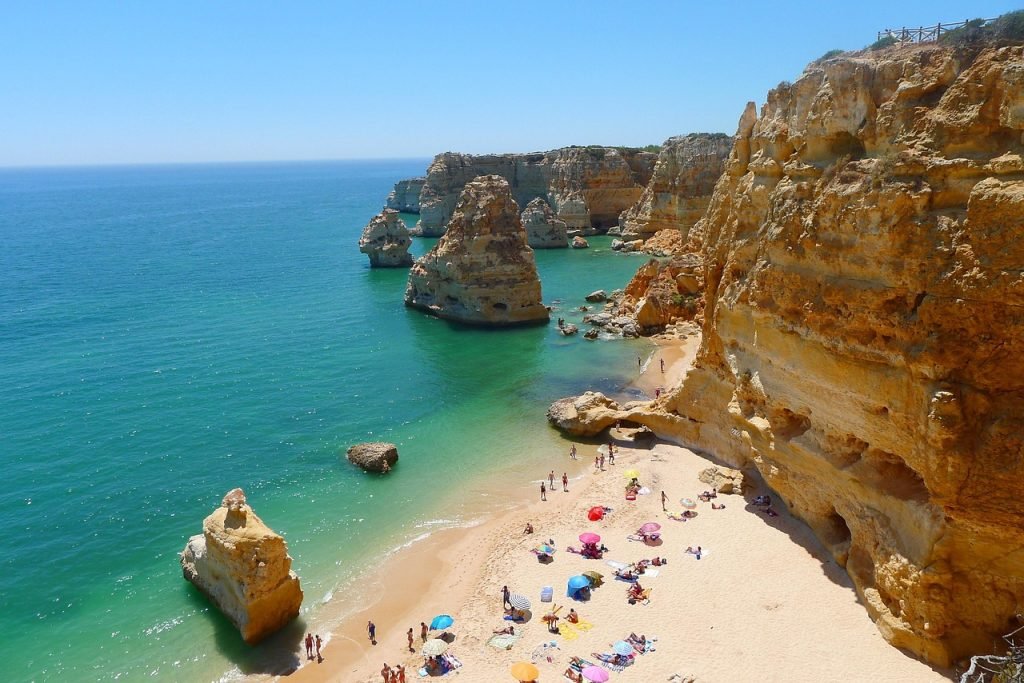
The Algarve’s magic lies in its diversity. Within a single day, you can explore medieval castle walls, hike dramatic clifftop trails, sample world-class wines, and watch the sunset paint limestone formations in impossible shades of gold and orange. This is a region that rewards curious travelers who venture beyond the obvious tourist circuits.
Day 1: Faro and Eastern Algarve (Ria Formosa)
Morning: Faro Old Town (9:00 AM – 12:30 PM)
Begin your Algarve adventure in Faro, the region’s capital and most authentic city. Unlike the beach resort towns, Faro maintains genuine Portuguese character with tree-lined boulevards, traditional architecture, and a thriving local life that doesn’t revolve entirely around tourism.
Faro Old Town (Vila Adentro) sits within perfectly preserved medieval walls. Enter through the Arco da Vila, an 18th-century gateway that frames the cathedral perfectly. The Faro Cathedral (€3, Open 10:00 AM – 5:00 PM, Closed Sundays) offers spectacular views from its bell tower over the Ria Formosa lagoon system.
Municipal Museum (€2, Open 10:00 AM – 6:00 PM, Closed Mondays) occupies a beautiful 16th-century convent and houses Roman mosaics discovered locally, providing context for the region’s long history.
The Bone Chapel (Capela dos Ossos) (€3, Open 10:00 AM – 5:00 PM) is smaller than Évora’s famous version but equally striking, with walls decorated with human bones and skulls – a meditation on mortality created by Franciscan monks.
Afternoon: Ria Formosa Natural Park (1:00 PM – 5:00 PM)
Ria Formosa is the Algarve’s ecological crown jewel – a vast lagoon system protecting barrier islands and supporting incredible biodiversity. This UNESCO-protected area is essential for understanding the region beyond its beach tourism image.
Boat Tours from Faro (€15-25, 2-3 hours): Multiple companies offer trips through the lagoon channels. Formosamar and Lands provide excellent naturalist guides who explain the ecosystem’s complexity. You’ll see flamingos, spoonbills, and numerous wading birds, while learning about traditional salt production and oyster farming.
Ilha Deserta: The boat trip typically includes a stop at this uninhabited barrier island with pristine beaches and crystal-clear water. The Estaminé Restaurant on the island serves fresh seafood in a stunning setting (€20-30 per person for lunch).
Olhão Market: If visiting on Saturday, the Olhão Market is the Algarve’s best traditional market, where local fishermen sell their catch alongside farmers offering regional produce. The vibrant atmosphere and authentic interactions make this worth the 15-minute train ride from Faro.
Evening: Tavira (6:00 PM onwards)
Tavira (30 minutes from Faro by train, €2.30) is arguably the Algarve’s most beautiful town, remarkably preserved from mass tourism development. The Gilão River flows through the town center, creating a Venice-like atmosphere with traditional boats and waterfront restaurants.
Tavira Castle (Free, Open 10:00 AM – 5:00 PM) offers panoramic views over the town’s famous pyramid-shaped rooftops and the Ria Formosa beyond. The ruins are modest, but the setting is magical, especially at sunset.
Igreja do Carmo (€2, Open 10:00 AM – 12:30 PM, 2:00 PM – 5:30 PM) houses one of Portugal’s most beautiful gilded wood altars, representing the finest Baroque craftsmanship in the region.
Dinner Recommendations:
- Restaurante Avenida (€25-35 per person): Traditional Portuguese cuisine with excellent fresh fish
- Aquasul (€20-30 per person): Riverside dining with romantic atmosphere
- A Ver Tavira (€15-25 per person): Local favorite with authentic regional dishes
Day 2: Central Algarve Beaches and Lagos
Morning: Benagil Cave and Praia da Marinha (9:00 AM – 1:00 PM)
Benagil Cave has become the Algarve’s most Instagram-famous attraction, and for good reason – this sea cave with a natural skylight creating a cathedral-like atmosphere is genuinely spectacular. However, visiting requires honest expectations about crowds and access challenges.
Getting There:
- Kayak Tours (€25-35, 2-3 hours): Most authentic way to reach the cave
- Boat Tours (€20-30, 1.5 hours): Comfortable but crowded
- Swimming: Only for strong swimmers, 200-meter swim from Benagil Beach
Honest Reality: Summer visits involve significant crowds. The cave is small, allowing only brief visits during busy periods. Consider visiting early morning (first tour of the day) or late afternoon for better experiences.
Praia da Marinha consistently ranks among the world’s most beautiful beaches. The clifftop viewpoint provides the classic Algarve postcard shot – golden limestone formations, turquoise water, and pristine sand. The beach itself requires a steep 10-minute walk down, but the setting is worth every step.
Practical Tip: Limited parking at both locations. Arrive before 9:00 AM or after 5:00 PM to avoid frustration.
Afternoon: Lagos Historic Center (2:00 PM – 6:00 PM)
Lagos perfectly balances historic significance with beach resort amenities. This former Portuguese naval base launched many Age of Discovery expeditions and maintains fascinating historic sites alongside modern tourism infrastructure.
Ponta da Piedade: The Algarve’s most photographed coastline features dramatic limestone cliffs, hidden grottoes, and secluded beaches accessible only by boat or challenging cliff paths. The lighthouse viewpoint offers spectacular panoramic views, while boat tours (€15-25, 1 hour) provide access to hidden beaches and sea caves.
Igreja de Santo António (€3, Open 9:30 AM – 12:30 PM, 2:00 PM – 5:00 PM) contains some of Portugal’s most elaborate gilded woodwork. The adjacent Municipal Museum houses archaeological finds and provides context for Lagos’ role in Portuguese expansion.
Slave Market Museum (€3, Open 10:00 AM – 12:30 PM, 2:00 PM – 5:30 PM) occupies the site of Europe’s first slave market, offering a sobering but essential perspective on the darker aspects of Portuguese colonial history.
Praia Dona Ana: Lagos’ most beautiful beach, accessible via a short walk from the town center. The small, sheltered cove surrounded by golden cliffs provides perfect swimming conditions and stunning photo opportunities.
Evening: Lagos Marina and Dining (7:00 PM onwards)
Lagos Marina offers upscale dining with harbor views, though at premium prices. For more authentic experiences, explore the old town’s narrow streets.
Restaurant Recommendations:
- Adega da Marina (€30-40 per person): Fresh seafood with marina views
- Restaurante Fortaleza (€25-35 per person): Traditional Portuguese cuisine in historic setting
- Taberna do Largo (€15-25 per person): Local favorite with excellent value
Day 3: Western Algarve and Sagres
Morning: Sagres – “The End of the World” (9:00 AM – 1:00 PM)
Sagres occupies a legendary position in Portuguese history as the supposed location of Prince Henry the Navigator’s navigation school. This windswept promontory, where the Atlantic Ocean meets the Mediterranean Sea, feels genuinely like the edge of the world.
Sagres Fortress (€3, Open 9:30 AM – 5:30 PM) sits on dramatic cliffs with powerful waves crashing below. The Rosa dos Ventos (Wind Rose) is a mysterious 43-meter diameter circle of stones whose original purpose remains debated. The Igreja de Nossa Senhora da Graça contains beautiful azulejo tiles depicting maritime scenes.
Cabo de São Vicente: Europe’s southwestern-most point, marked by a powerful lighthouse that’s been guiding ships for over 150 years. The lighthouse museum (€3, Open 10:00 AM – 5:00 PM) explains the area’s maritime importance, while the clifftop setting provides spectacular ocean views.
Fortaleza de Sagres Restaurant (€20-30 per person): Located within the fortress, this restaurant offers traditional seafood with unbeatable views. The grilled fish and seafood cataplana are exceptional.
Afternoon: Praia do Amado and Carrapateira (2:00 PM – 6:00 PM)
Praia do Amado is the Algarve’s premier surfing beach, consistently ranked among Europe’s best surf spots. Even non-surfers appreciate the dramatic 50-meter cliffs, powerful waves, and authentic beach culture. The Amado Beach Bar provides rental equipment and beginner lessons (€25-35 for 2-hour lesson).
Carrapateira Village: A traditional fishing village that feels authentically Portuguese, with whitewashed houses, cobblestone streets, and local restaurants serving fresh fish. The Praia da Bordeira nearby offers 3 kilometers of pristine sand with minimal development.
Hiking Opportunity: The Rota Vicentina coastal trail connects these beaches with spectacular clifftop walking. The section from Carrapateira to Amado (45 minutes) provides stunning ocean views and wildflower meadows.
Evening: Monchique Mountains (7:00 PM onwards)
Monchique offers a complete contrast to coastal tourism – a genuine mountain town surrounded by eucalyptus forests, traditional crafts, and thermal springs. The 30-minute drive from Sagres ascends through changing landscapes and progressively cooler temperatures.
Fóia Peak: The Algarve’s highest point (902 meters) provides panoramic views over the entire region. On clear days, you can see from Sagres to the Spanish border. The restaurant at the summit serves traditional mountain cuisine (€20-30 per person).
Caldas de Monchique: This thermal spa town has attracted visitors since Roman times. The thermal springs offer relaxation after days of coastal exploration, while the Termas de Monchique Spa (€15-25 for basic treatments) provides modern wellness facilities.
Accommodation Recommendation: Estalagem Abrigo da Montanha (€60-80 per night) offers mountain views and traditional Portuguese hospitality in a peaceful setting.
Day 4: Eastern Algarve and Inland Villages
Morning: Castro Marim and Vila Real de Santo António (9:00 AM – 1:00 PM)
Castro Marim sits near the Spanish border, crowned by a impressive medieval castle that once protected Portugal’s eastern frontier. This authentic town sees few international tourists, providing genuine insight into traditional Algarve life.
Castro Marim Castle (€2, Open 9:00 AM – 5:30 PM) offers spectacular views over the Guadiana River and salt marshes. The Reserva Natural do Sapal surrounds the town, providing excellent birdwatching opportunities with flamingos, storks, and numerous migratory species.
Vila Real de Santo António was built in the 18th century as a planned city, with geometric streets and beautiful architecture. The Museu de Vila Real de Santo António (€2, Open 9:30 AM – 12:30 PM, 2:00 PM – 5:30 PM) explains the town’s unique history and the Marquês de Pombal’s urban planning.
Ayamonte Ferry: For a unique experience, take the ferry to Ayamonte, Spain (€1.55, 15 minutes) across the Guadiana River. The Spanish town offers different architecture, cuisine, and atmosphere, making for an interesting cultural comparison.
Afternoon: Cacela Velha and Inland Villages (2:00 PM – 6:00 PM)
Cacela Velha is a perfectly preserved fishing village perched on cliffs overlooking the Ria Formosa. With only a handful of whitewashed houses, a small church, and a ruined fortress, this village represents the Algarve’s traditional character before tourism development.
Igreja de Nossa Senhora da Assunção: This simple church contains beautiful azulejo tiles and offers peaceful contemplation with lagoon views.
Praia da Fábrica: Accessible only by boat or a challenging walk, this pristine beach provides complete isolation and crystal-clear water. Boat trips from Cacela Velha (€10-15, 30 minutes) offer the easiest access.
Inland Village Options:
- Alte: Known as the Algarve’s most beautiful village, with traditional architecture and natural springs
- Salir: Hilltop village with castle ruins and panoramic views
- Estoi: Famous for its rococo palace and Roman ruins
Evening: Olhão and Seafood Finale (7:00 PM onwards)
Return to Olhão for your final Algarve evening. This authentic fishing port provides the perfect conclusion to your journey, with excellent seafood restaurants and genuine Portuguese atmosphere.
Olhão Markets: If visiting on Saturday, the fish market and farmers market showcase the region’s produce and maintain traditions dating back centuries.
Ria Formosa Sunset: Take a final boat trip through the lagoon channels for sunset views over the barrier islands. Formosamar offers sunset cruises (€20-25, 2 hours) with wine and local snacks.
Final Dinner Recommendations:
- Restaurante Taska (€25-35 per person): Exceptional seafood with harbor views
- Real Marina (€30-40 per person): Upscale dining with creative Portuguese cuisine
- O Capelo (€20-30 per person): Traditional tasca with authentic atmosphere
Honest Assessment: The Reality of Algarve Tourism
What Works
- Spectacular natural beauty: The coastline genuinely lives up to its reputation
- Excellent value: Significantly cheaper than other European beach destinations
- Authentic culture: Still exists in smaller towns and inland villages
- Climate: Reliable sunshine and warm weather April through October
Potential Disappointments
- Over-development: Some coastal areas are dominated by tourism infrastructure
- Crowds: Popular beaches become uncomfortably crowded in summer
- Tourist traps: Many restaurants and activities are overpriced and inauthentic
- Limited public transport: Reaching remote beaches requires car rental or expensive tours
- Seasonal variation: Many businesses close in winter, limiting off-season options
Final Verdict: Is the Algarve Worth It?
The Algarve delivers on its promise of spectacular coastal beauty, reliable weather, and excellent value for money. However, success depends entirely on your approach. Travelers who stick to the most famous beaches and tourist-oriented restaurants will find an pleasant but generic beach holiday. Those willing to explore beyond the obvious attractions will discover a region of remarkable natural beauty, authentic culture, and genuine Portuguese hospitality.
The key is balance. Use the famous beaches and attractions as anchor points, but spend equal time exploring lesser-known villages, hiking coastal trails, and seeking out local restaurants where Portuguese families eat. The Algarve rewards curious travelers who see beyond the surface tourism to discover the authentic region underneath.
Four days provides enough time to experience the region’s diversity while avoiding the rushed feeling that comes with shorter visits. You’ll leave with genuine appreciation for Portuguese culture, stunning coastal memories, and likely plans to return for deeper exploration.
The Algarve isn’t just another European beach destination – it’s a region where dramatic natural beauty meets centuries of maritime tradition, where excellent value combines with authentic experiences, and where every sunset over the Atlantic Ocean reminds you why people have been drawn to this “end of the world” for millennia.
Remember that the Algarve’s character changes dramatically with the seasons. Summer brings crowds and higher prices but guarantees sunshine and warm water. Spring and fall offer the best balance of weather, value, and authentic experiences. Winter provides solitude and insight into local life, though with limited services and cooler temperatures.