An Underground Cathedral of Salt
Deep beneath the charming town of Wieliczka, just 15 kilometers from Krakow’s historic center, lies one of Poland’s most extraordinary treasures: the Wieliczka Salt Mine. This isn’t just any tourist attraction – it’s a living testament to human ingenuity, artistic expression, and the relentless pursuit of “white gold” that spans over 700 years of continuous operation.
Walking into these ancient depths feels like stepping directly into the legendary mines of Moria from Tolkien’s Lord of the Rings. The parallels are uncanny and immediate – vast halls carved from living rock, intricate stonework that defies belief, and an unmistakable sense that you’re entering a realm where dwarven craftsmen once labored with picks and chisels. The only difference? Here, instead of mithril, the precious treasure was salt, and instead of fictional dwarves, real Polish miners created this underground kingdom with their own hands.
As you descend the original wooden staircase, each step taking you deeper into this subterranean realm, you’ll quickly realize why this remarkable site earned its place on UNESCO’s inaugural World Heritage List in 1978. The mine isn’t merely a historical curiosity; it’s an underground city where salt miners didn’t just extract precious mineral deposits – they created an entire world of chapels, chambers, and sculptures that rival any surface masterpiece.
The Crown Jewel: St. Kinga’s Chapel
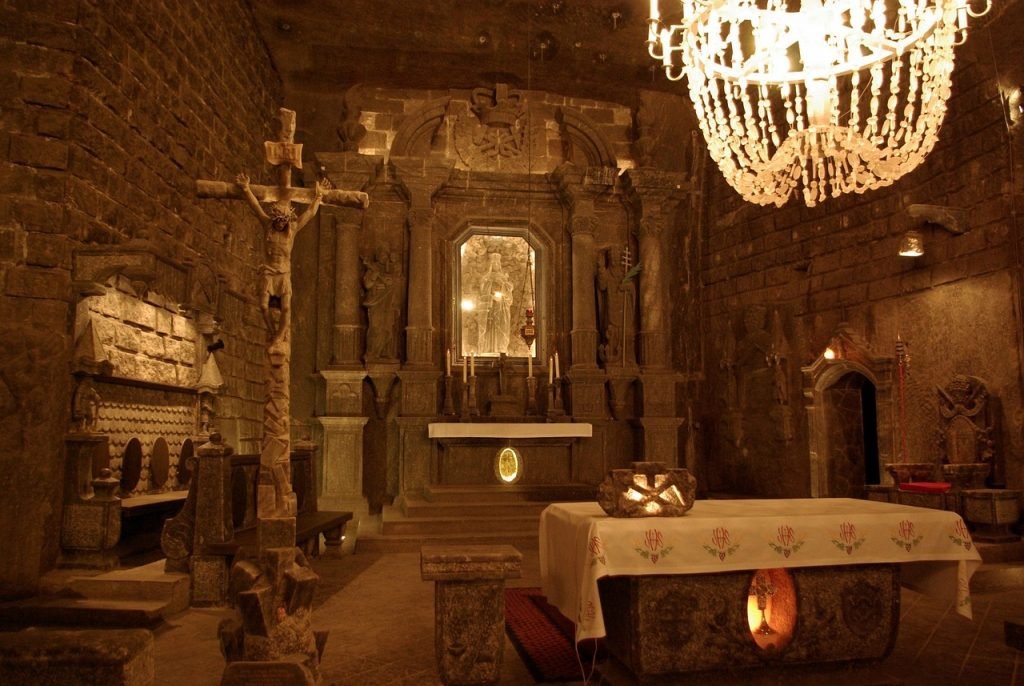
The absolute highlight of your underground journey awaits at a depth of 101 meters: the breathtaking St. Kinga’s Chapel. This isn’t simply a room carved from salt – it’s a cathedral that defies belief. Every single element, from the ornate chandeliers casting ethereal light across the space to the intricate altarpiece depicting the Last Supper, has been painstakingly carved from solid salt by the miners themselves.
The chapel’s dimensions are staggering: 54 meters long, 15 meters wide, and 12 meters high. Standing in this sacred space, surrounded by salt sculptures and reliefs that tell the story of St. Kinga (the patron saint of miners), you’ll understand why many visitors describe the experience as deeply moving, regardless of their religious beliefs. The acoustics are so perfect that the chapel regularly hosts concerts and even wedding ceremonies, creating an atmosphere that’s both mystical and profoundly romantic.
A Journey Through Living History
Your descent through the mine’s three levels (tourists visit the first level at 64 meters, second level at 100 meters, and third level at 135 meters deep) reveals a comprehensive story of medieval industry and human creativity. The standard tourist route spans approximately 3.5 kilometers of underground passages, showcasing 22 chambers that each tell a different chapter of the mine’s remarkable history.
You’ll encounter the Chamber of Weimar, where the walls glisten with crystalline salt formations that look like frozen waterfalls. The Copernicus Chamber pays homage to Poland’s most famous astronomer, while the Janowice Chamber demonstrates the various mining techniques used throughout the centuries. Each space has been carefully preserved and illuminated to showcase both the natural beauty of the salt formations and the incredible craftsmanship of the miners who transformed functional spaces into works of art.
Practical Information: Planning Your Visit
Getting There
From Krakow Main Station:
By Bus:
By Car:
Organized Tours:
Ticket Information and Costs
Tourist Route (Standard, guide included):
Miners’ Route (Advanced, guide included):
Opening Hours
April to October:
November to March:
Important: The mine is closed on January 1st, Easter Sunday, November 1st, and December 25th.
What to Expect During Your Visit
The Descent
Your underground adventure begins with a descent down 378 wooden steps on the original miners’ staircase. This isn’t just transportation – it’s part of the experience. As you spiral downward, the temperature drops to a constant 14-16°C (57-61°F), so bringing a light jacket is essential even in summer.
The Underground Lakes
One of the most mesmerizing features you’ll encounter is the series of underground lakes. These aren’t just pools of water – they’re mirrors reflecting the salt formations above, creating an almost otherworldly atmosphere. The largest lake in the mine reaches depths of 9 meters, and the salt content is so high that it’s nearly impossible to sink.
The Salt Sculptures
Throughout your journey, you’ll encounter dozens of salt sculptures created by miners over the centuries. These aren’t crude carvings – they’re sophisticated works of art depicting everything from historical figures to mythological scenes. The sculpture of the mine’s founder, Blessed Kinga, is particularly moving, showing her casting her engagement ring into the salt deposits, which according to legend, led to the mine’s discovery.
The Underground Museum
The mine houses an extensive underground museum showcasing the history of salt mining, the geology of the region, and the daily life of miners throughout the centuries. Interactive exhibits demonstrate mining techniques, while preserved mining equipment gives you a tangible connection to the men who spent their lives in these depths.
Honest Insider Tips
What the Brochures Don’t Tell You
Physical Demands: While marketed as suitable for all ages, the tour involves considerable walking on uneven surfaces and climbing numerous steps. The total walking distance is about 3.5 kilometers, and you’ll climb approximately 800 steps throughout the tour. If you have mobility issues, inform the staff when booking.
Claustrophobia Concerns: Some passages are narrow and low-ceilinged. If you’re claustrophobic, consider this carefully. However, most chambers are spacious, and the route is well-ventilated.
Photography: Photography is allowed but requires an additional fee (10 PLN for personal use). Professional photography requires special permission and higher fees.
Crowds: Summer months (June-August) are extremely busy. Early morning or late afternoon tours offer a more intimate experience. Weekdays are generally less crowded than weekends.
Best Time to Visit
Weather Independence: Since you’re underground, weather doesn’t affect the experience. However, seasonal variations in tourist numbers make timing important.
Optimal Seasons:
Time of Day:
Beyond the Standard Tour
The Miners’ Route
For the more adventurous, the Miners’ Route offers a completely different experience. You’ll crawl through narrow passages, slide down miners’ slides, and experience the mine as the workers did centuries ago. This route requires booking well in advance and good physical condition.
The miners’ route is separate from the tourist route and therefore does not allow visitors to photograph some of the most evocative parts. You will be provided with a helmet and torch, which makes the experience more immersive than the tourist route. However, this route is not suitable for families. Children under the age of 10 are not allowed.
Underground Events
The mine regularly hosts unique events:
Health and Safety
The mine maintains strict safety protocols developed over centuries of operation. The air quality is constantly monitored, and the microclimate is actually beneficial for respiratory conditions. The high salt content in the air acts as a natural purifier, and many visitors report feeling refreshed after their visit.
Emergency exits are clearly marked, and guides are trained in first aid. The mine has its own rescue service and medical facilities. However, inform your guide if you have any health conditions, particularly respiratory or mobility issues.
Making the Most of Your Visit
Combine with Krakow
Most visitors combine the salt mine with a trip to Krakow, which makes perfect sense given the proximity. Consider this itinerary:
Wieliczka Town
Don’t overlook the charming town of Wieliczka itself. The town square features beautiful architecture, and several restaurants offer traditional Polish cuisine. The Castle of Żupy, now a museum, provides additional context about the region’s salt-mining heritage.
Photography Tips
If you purchase the photo permit:
Final Thoughts
The Wieliczka Salt Mine delivers on its promise of being a unique, once-in-a-lifetime experience. It’s not just about seeing salt formations – it’s about understanding human creativity, perseverance, and the ability to create beauty in the most unexpected places. The mine represents seven centuries of continuous human activity, artistic expression, and technological innovation.
As you emerge from these depths, you’ll understand why the comparison to Tolkien’s dwarven realms feels so natural and immediate. Like the great halls of Khazad-dûm, Wieliczka represents the pinnacle of underground craftsmanship, where artisans worked not just for profit, but for the pure joy of creation. The difference is that this isn’t fantasy – it’s real, tangible history you can touch and walk through. Every carved pillar, every sculpted saint, every perfectly acoustical chamber stands as proof that sometimes reality surpasses even our most imaginative fiction.
While the standard tour provides an excellent overview, the mine’s true magic lies in its ability to transport you to a completely different world. As you emerge from the depths, blinking in the sunlight, you’ll carry with you not just memories of stunning underground chambers, but a deeper appreciation for human ingenuity and the transformative power of art.
Whether you’re a history enthusiast, art lover, or simply someone seeking an extraordinary experience, the Wieliczka Salt Mine stands as one of Europe’s most remarkable underground destinations. It’s a testament to the idea that sometimes the most incredible wonders are hidden beneath our feet, waiting to be discovered by those curious enough to descend into the depths.
Book your tickets in advance, especially during peak season (June-August), as daily visitor numbers are limited to preserve this UNESCO World Heritage site for future generations.