Safety Level: Moderate Caution – Tourist Scams & Desert Heat
The Pyramids of Giza deliver every bit of magic you’ve imagined, but avoiding crowds, scams, and tourist traps requires insider knowledge. After three days exploring every angle, entrance, and viewpoint, here’s how to experience humanity’s greatest ancient achievement like someone who actually understands what they’re seeing.
The Childhood Promise That Finally Came True (And Why It Almost Disappointed Me)
Every kid who’s ever owned a history book has made the same silent promise: someday, I’ll see the pyramids. For me, that someday stretched across three decades of dreaming, documentary watching, and mental preparation for what I assumed would be the ultimate travel experience.
Standing in the ticket queue at 8 AM on a blazing Cairo morning, surrounded by tour groups wielding selfie sticks and hawkers selling plastic pharaoh masks, I felt that familiar sinking sensation. Had I built up another tourist trap in my imagination?
Then I walked around the corner and saw them.
Nothing – absolutely nothing – prepares you for the scale of the Great Pyramid. Not documentaries, not photographs, not detailed measurements you’ve memorized. The physical reality of 2.3 million limestone blocks stacked 146 meters high hits you like a geological slap across the face.
This is the story of how three days at Giza transformed my understanding of ancient achievement and modern tourism – and how you can experience both the wonder and avoid the disappointments.
The Three Titans: Understanding What You’re Actually Seeing
The Great Pyramid of Khufu: The Lone Survivor of Ancient Wonders
Built around 2570 BCE, Khufu’s pyramid stands as the only intact Wonder of the Ancient World. But here’s what the guidebooks undersell: this isn’t just a tomb – it’s a mathematical and engineering statement that announces “we solved problems you haven’t even discovered yet.”
The Numbers That Boggle the Mind:
- 2.3 million stone blocks weighing 2.5-15 tons each
- Original height: 146.5 meters (now 138.8m after capstone loss)
- Base precision: Sides align with cardinal directions within 3/60th of a degree
- Construction timeline: Approximately 20 years of continuous work
What Actually Amazes You: Standing at the base, tilting your head back, and realizing that ancient engineers achieved precision that modern construction struggles to match. The cornerstone alignment, the internal chamber acoustics, and the sheer audacity of the enterprise become viscerally apparent only when you’re physically dwarfed by the structure.
The Pyramid of Khafre: The Clever Architectural Illusion
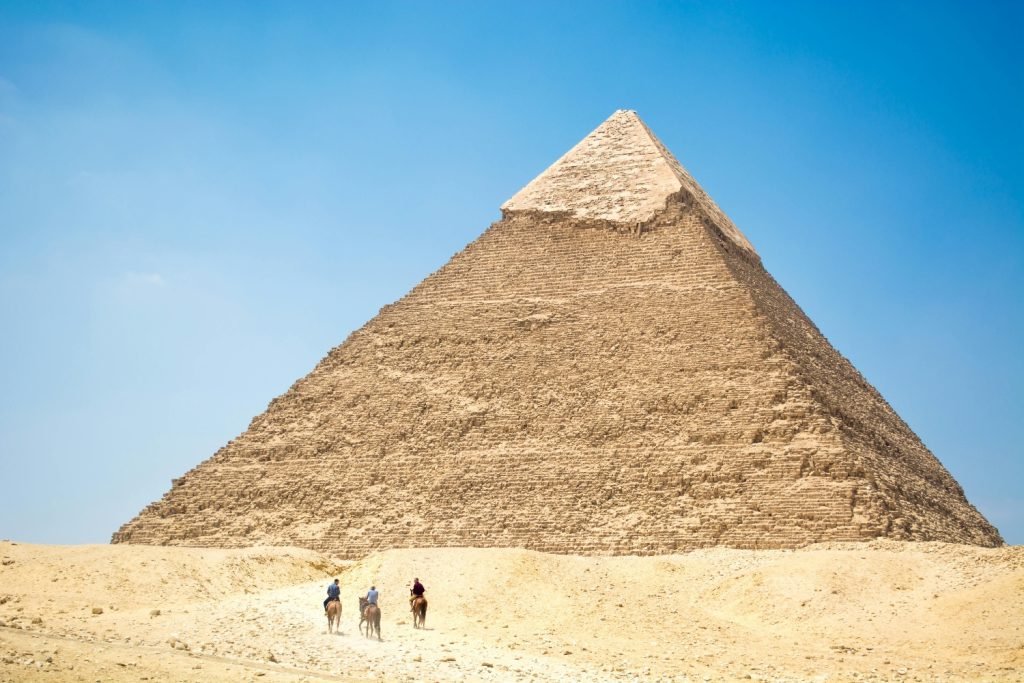
Khafre’s pyramid appears larger than Khufu’s from many angles due to its elevated position on the plateau. This isn’t accidental – ancient architects understood visual psychology and used topography to create impressions of dominance and grandeur.
The Strategic Design: Built on higher ground with a steeper angle (53°7′ vs 51°52′), creating the optical illusion of superior size while actually being 3 meters shorter than Khufu’s pyramid.
The Pyramid of Menkaure: Small but Perfectly Formed
The smallest pyramid (65 meters high) proves that Egyptian architects had mastered proportion and aesthetics beyond mere engineering prowess. Its granite casing stones, though partially removed, demonstrate sophisticated stone-cutting techniques that rival modern precision.
The Secret Viewpoint That Changes Everything: Panoramic Point
The Discovery: Past Menkaure’s pyramid, a rocky outcrop provides the plateau’s most spectacular viewpoint – six pyramids visible simultaneously in perfect ancient Egyptian symmetry.
Why It Matters: From this elevated position, you finally understand the Giza complex as its creators intended: not isolated monuments but a coordinated royal necropolis designed to demonstrate pharaonic power across the landscape.
The Journey: The 20-minute climb past Menkaure involves loose sand, rocky terrain, and intense sun exposure. But reaching the panoramic point transforms your understanding of ancient Egyptian urban planning. You see how the pyramids relate to each other, to the Nile (now obscured by modern Cairo), and to the desert that stretches toward Libya.
Photography Gold: This location provides the classic “three pyramids in perfect alignment” shots that define Egyptian imagery, but without the crowds and hassle of main viewing areas.
The Camel Controversy: Camel rides to this viewpoint are heavily promoted, but the experience often involves aggressive upselling and surprise fees. The walk, while challenging, provides better pace control and avoids tourism hassles entirely.
Inside the Great Pyramid: Descending into Ancient Ambition
The Physical Reality: Entering the Great Pyramid means crawling through the 1.2-meter-high Ascending Passage for 47 meters, then climbing the spectacular Grand Gallery’s steep 47-meter ascent to reach the King’s Chamber.
What Nobody Warns You About: The interior temperature hovers around 30°C (86°F) with humidity that makes breathing feel labored. The narrow passageways create claustrophobic conditions that test anyone with space anxieties. Tourist crowds in confined spaces compound these challenges significantly.
Cost vs. Value Analysis:
- Great Pyramid entry: 900 EGP (≈€18) – expensive but iconic
- Khafre Pyramid entry: 280 EGP (≈€6) – better value, fewer crowds
- Menkaure Pyramid entry: 280 EGP (≈€6) – intimate experience
My Honest Recommendation: Enter one pyramid for the experience, but choose based on crowd levels rather than size. Khafre often provides better conditions with equivalent interior features.
The Dahshur Alternative: Egypt’s Best-Kept Pyramid Secret
The Red Pyramid and Bent Pyramid at Dahshur offer superior pyramid interior experiences with minimal crowds and authentic archaeological atmosphere.
Why Dahshur Changes the Game:
- Red Pyramid interior: Spacious chambers, better ventilation, peaceful exploration
- Bent Pyramid uniqueness: Two internal chamber systems showing experimental construction
- Crowd levels: 90% fewer tourists creating meditative rather than chaotic experiences
- Cost advantage: Combined entry costs less than single Great Pyramid ticket
The Trade-off: One hour additional travel from Cairo, but the enhanced experience and educational value justify the extra journey for serious pyramid enthusiasts.
The Grand Egyptian Museum: Context That Transforms Understanding
The recently opened Grand Egyptian Museum, located minutes from the pyramids, revolutionizes how you understand ancient Egyptian civilization.
What Makes It Essential: Complete Tutankhamun collection, pyramid construction explanations, and artifacts that provide cultural context for what you’ve seen on the plateau.
The Experience Flow: Visit the museum after seeing the pyramids to understand the civilization that created them, or before to appreciate the engineering achievements you’re about to witness.
Practical Value: Air conditioning, modern facilities, and educational exhibits provide perfect respite from desert heat while deepening your archaeological appreciation.
Scam Prevention: The Harsh Realities of Pyramid Tourism
The Fake Guide Epidemic: Unofficial “guides” approach constantly with offers for special access, secret chambers, or exclusive tours. These individuals have no archaeological training and often demand payment for fabricated information.
The Camel Ride Scam Pattern:
- Free ride offer to viewpoint
- Demand for tips halfway through journey
- Refusal to return without substantial payment
- Aggressive negotiation while you’re stranded on camel
Photography Extortion: Some individuals claim authority over photo locations, demanding fees for pictures at public viewpoints. Official photography fees are clearly posted at entrance gates.
The Solution Strategy: Purchase all tickets at official entrances, ignore unsolicited approaches, and research current pricing before arrival. Hotel concierges provide legitimate guide recommendations when needed.
Accommodation Strategy: Why Location Changes Everything
The Luxury Option: Marriott Mena House offers legendary pyramid views from colonial-era elegance, but premium pricing (€300+ per night) puts it beyond many budgets.
The Smart Alternative: Multiple hotels within walking distance now provide excellent pyramid views at reasonable rates (€60-120 per night). Staying nearby transforms your experience by allowing:
- Dawn access: Enter the site at opening time with minimal crowds
- Sunset viewing: Watch pyramids change colors from hotel terraces
- Multiple visits: Return to the site easily if weather or crowds interfere
- Local rhythm: Experience the plateau’s changing moods throughout the day
The Morning Magic: Watching sunrise illuminate the pyramids from your hotel balcony while Cairo awakens provides intimate moments impossible during crowded daytime visits.
The Sound and Light Show: Free Alternative That Actually Works
The Official Show: €20-30 for narrated light projection onto pyramid facades with historical commentary and dramatic music.
The Hotel Hack: Many pyramid-view hotels offer rooftop terraces where you can watch the light show for free while enjoying dinner or drinks. You miss the narration but gain comfort, better service, and often superior viewing angles.
My Experience: Watching the light show from the Great Pyramid Inn’s rooftop restaurant provided perfect views, excellent food, and civilized conditions without tourist crowds or hard seating.
Temperature and Timing: Desert Reality Check
Summer Conditions (May-September): Daily highs exceed 40°C (104°F) with intense solar radiation making outdoor exploration genuinely dangerous during midday hours.
Winter Sweet Spot (November-February): Comfortable 20-25°C (68-77°F) temperatures ideal for extended pyramid exploration and climbing to viewpoints.
Optimal Daily Schedule:
- 6:30-8:00 AM: Early entrance with minimal crowds
- 8:00-10:00 AM: Pyramid interior exploration
- 10:00 AM-4:00 PM: Museum visit and hotel rest during peak heat
- 4:00-6:00 PM: Panoramic Point climb and sunset photography
The Great Sphinx: Ancient Mystery in Modern Crisis
The Enigma: Dating controversies, erosion patterns suggesting much greater age, and the missing nose (destroyed by Mameluke target practice, not Napoleon) create ongoing archaeological debates.
Current Condition: Active restoration work means scaffolding and restricted access areas change frequently. The Sphinx’s limestone body shows continued deterioration from pollution, tourism, and natural weathering.
Viewing Strategy: The platform between the Sphinx and Khafre pyramid provides classic photography angles, but early morning visits capture better lighting and fewer crowds.
The Honest Assessment: Managing Expectations vs. Reality
What Exceeds Expectations: The overwhelming scale, engineering precision, and historical significance create genuinely transformative experiences for anyone interested in human achievement.
What Disappoints: Tourist infrastructure, aggressive vendors, and crowd management often detract from the contemplative experience ancient monuments deserve.
The Solution: Strategic timing, accommodation location, and realistic expectations about modern tourism realities allow the ancient wonder to shine through contemporary complications.
My Three-Day Revelation: Day one overwhelmed me with tourist chaos. Day two, arriving at dawn and staying late, revealed the pyramids’ true majesty. Day three, exploring Dahshur and returning for sunset, completed my understanding of ancient Egyptian pyramid evolution.
Final Verdict: Why Giza Remains Essential Despite the Challenges
The Pyramids of Giza justify every frustration, every expense, and every moment of discomfort required to experience them properly. These monuments represent humanity’s first successful attempt at building for eternity – and 4,500 years later, they’re still succeeding.
The Bottom Line: Plan carefully, stay nearby, arrive early, and approach these ancient wonders with the patience and respect they’ve commanded for over four millennia. The pyramids have outlasted empires, wars, and countless tourists. They’ll outlast today’s complications too.
Planning Your Pyramid Pilgrimage: Book accommodation with pyramid views, prepare for desert conditions, budget for official entries only, and remember that you’re not just visiting monuments – you’re encountering humanity’s most enduring architectural achievement.
Visiting the pyramids soon? Share your questions with us – these ancient wonders deserve proper preparation.