Warsaw is Poland’s capital of contradictions—a city that was literally erased from the map during World War II, then rebuilt with such determination that today it pulses with an energy that’s both ancient and ultramodern. This isn’t the fairy-tale medieval city that many expect; instead, Warsaw offers something far more compelling: the raw story of human resilience, wrapped in gleaming skyscrapers, meticulously reconstructed historic quarters, and a cultural scene that’s exploding with creativity. It’s a city that doesn’t hide its scars but transforms them into strength, creating one of Europe’s most dynamic and underrated capitals.
Why Warsaw Deserves Your Attention
Let’s be honest: Warsaw often gets overlooked in favor of Krakow’s medieval charm or Prague’s tourist-friendly appeal. But that’s exactly what makes it special. This is a working capital city where real life happens alongside tourism, where Communist-era architecture stands boldly next to reconstructed Baroque palaces, and where the food scene rivals any European capital at a fraction of the cost.
Warsaw’s greatest asset is its authenticity. You won’t find crowds of tour groups clogging every street corner or souvenir shops dominating historic squares. Instead, you’ll discover a city that’s confident in its own skin, proud of its complex history, and eager to show visitors what modern Poland really looks like.
When to Visit: Warsaw Through the Seasons
Spring (March-May): The City Awakens
Warsaw in spring is a revelation. The city shakes off winter’s gray coat as parks burst into bloom and sidewalk cafés reopen. May is particularly magical, with warm days perfect for exploring the reconstructed Old Town and the expansive Łazienki Park. Spring also brings fewer tourists and reasonable hotel prices, making it an ideal time for budget-conscious travelers.
Summer (June-August): Festival Season
Summer transforms Warsaw into an outdoor playground. The Vistula River beaches come alive with bars, concerts, and cultural events. This is festival season, with everything from classical music concerts in historic venues to cutting-edge electronic music events in repurposed industrial spaces. However, summer also brings the highest prices and largest crowds, particularly in July and August.
Autumn (September-November): Golden Warsaw
Early autumn might be Warsaw’s best-kept secret. September and October offer comfortable temperatures, beautiful fall colors in the city’s numerous parks, and a cultural calendar packed with theater premieres, art exhibitions, and music events. The city feels more authentic as local life resumes its regular rhythm after summer holidays.
Winter (December-February): Cozy and Cultural
Warsaw winters are cold and gray, but they’re also atmospheric and budget-friendly. This is the time for museum hopping, cozy restaurant meals, and experiencing the city’s vibrant indoor cultural scene. Christmas markets add charm to the historic squares, and the shorter days make the city’s evening lighting particularly dramatic.
What to Do: Warsaw’s Essential Experiences
The Old Town (Stare Miasto): A Masterpiece of Reconstruction
Warsaw’s Old Town is unique in Europe—it’s a UNESCO World Heritage site that’s entirely reconstructed. After 85% of the city was destroyed during World War II, Warsaw residents used historical paintings, photographs, and architectural plans to rebuild their historic center brick by brick.
Castle Square (Plac Zamkowy) anchors the Old Town with the Royal Castle, which houses impressive collections of European art and period rooms showcasing Poland’s royal heritage. The reconstruction is so meticulous that it’s hard to believe these buildings are less than 80 years old.
Market Square (Rynek Starego Miasta) buzzes with café life and street musicians. The colorful burgher houses that line the square each tell a story, and the Warsaw Historical Museum provides context for understanding the city’s dramatic 20th-century history.
The Barbican and medieval city walls offer perfect photo opportunities and a sense of the city’s former fortifications. The nearby St. John’s Cathedral has witnessed coronations, royal weddings, and the prayers of resistance fighters.
Palace of Culture and Science: Love It or Hate It
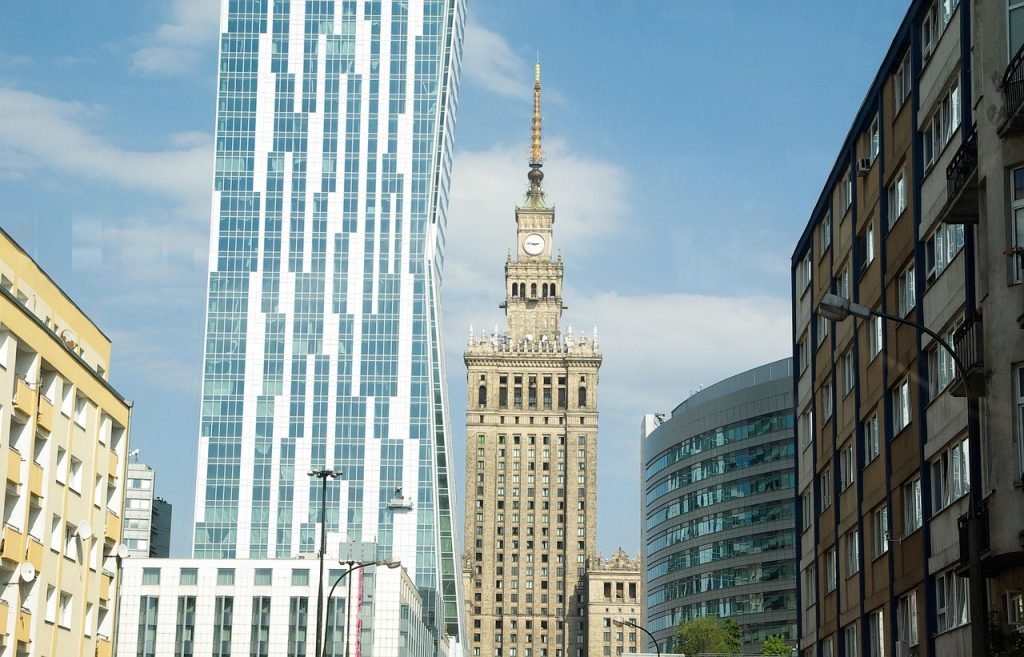
This Stalin-era skyscraper dominates Warsaw’s skyline like a Communist-era exclamation point. Built in the 1950s as a “gift” from the Soviet Union, it’s a controversial symbol that Varsovians have a complex relationship with. Some see it as an unwelcome reminder of Soviet occupation; others appreciate it as an important part of the city’s architectural heritage.
The 30th-floor observation deck provides stunning 360-degree views of Warsaw, helping visitors understand the city’s layout and the scale of post-war reconstruction. The building also houses theaters, museums, and concert halls, making it a cultural center despite its political baggage.
Łazienki Park: Warsaw’s Green Heart
This 76-hectare park is Warsaw’s most beloved green space, combining beautiful gardens with significant historical buildings. The Palace on the Isle seems to float on its reflecting pond, while peacocks roam freely through the manicured gardens.
The Chopin Monument hosts free outdoor concerts every Sunday from May to September, where pianists perform the composer’s works in the place where he once walked. The park’s network of paths, bridges, and pavilions makes it perfect for leisurely strolls or picnics.
POLIN Museum: Jewish Heritage Rediscovered
The Museum of the History of Polish Jews tells the 1,000-year story of Polish-Jewish life through innovative multimedia exhibits. Located in the heart of the former Warsaw Ghetto, it’s both a celebration of Polish-Jewish culture and a sobering reminder of what was lost during the Holocaust.
The museum’s interactive exhibits bring Polish-Jewish history to life, from medieval times through the modern era. It’s essential for understanding Warsaw’s complex identity and the vibrant Jewish community that once made up one-third of the city’s population.
Praga District: The Authentic Side
While the west bank of the Vistula was rebuilt after the war, the Praga district on the east bank survived relatively intact, offering a glimpse of pre-war Warsaw. This formerly rough neighborhood has become the city’s hipster quarter, with artist studios, vintage shops, and alternative bars occupying pre-war buildings.
Soho Factory is a converted vodka distillery turned cultural center, housing galleries, shops, and restaurants. The Neon Museum showcases Communist-era neon signs in a atmospheric setting that captures the aesthetic of Socialist realism.
The Warsaw Uprising Museum: Confronting History
This immersive museum tells the story of the 1944 Warsaw Uprising, when Polish resistance fighters attempted to liberate the city from German occupation. The museum doesn’t sugarcoat the tragedy—the uprising failed, and the Germans systematically destroyed the city in retaliation.
Interactive exhibits, including a replica of the underground sewers used by resistance fighters, create an emotional journey through one of World War II’s most heroic and tragic episodes. It’s essential for understanding why Warsaw looks the way it does today.
Day Trips by Pendolino: Poland at High Speed
One of Warsaw’s greatest advantages is its position at the center of Poland’s excellent rail network. The Pendolino high-speed trains make day trips to Poland’s other major cities not just possible but comfortable and efficient.
Krakow: Medieval Magnificence (2.5 hours)
The Pendolino to Krakow runs multiple times daily, taking just 2 hours and 30 minutes to reach Poland’s former capital. Tickets cost 89-149 PLN (€19-32) depending on class and advance booking.
For a complete guide to exploring this enchanting city, see our detailed post “Krakow: Where Medieval Magic Meets Modern Soul” with insider tips and hidden gems.
Perfect Day Trip Itinerary:
The Pendolino offers comfortable seats, free WiFi, and dining car service, making the journey part of the experience. Book online at www.intercity.pl for the best prices.
Gdansk: Baltic Beauty (3 hours)
The Pendolino to Gdansk connects Warsaw to the Baltic coast in just 3 hours, opening up Poland’s maritime heritage and stunning coastal scenery. Tickets range from 99-169 PLN (€21-36).
Extended Day Trip Strategy:
This ambitious day trip showcases Poland’s coastal beauty, Solidarity movement history, and the charming resort town of Sopot. The Pendolino’s speed makes it feasible to experience the Baltic Sea and return to Warsaw the same day.
Wrocław: Silesian Gem (3.5 hours)
The Pendolino to Wrocław takes 3.5 hours to reach this beautiful Silesian city known for its colorful market square and dwarf statues. While ambitious for a day trip, it’s perfect for overnight excursions.
Booking Tips for Pendolino Travel:
Practical Warsaw: Getting Around and Staying Connected
Transportation Within the City
Warsaw’s public transport system is excellent, with metros, trams, and buses covering the entire city. The Warsaw Metro has two lines that serve major attractions and neighborhoods.
Day passes cost 15 PLN and cover all public transport. The Jakdojade mobile app helps navigate routes and provides real-time updates. Most tourists find the combination of walking and public transport sufficient for exploring the city.
Bike sharing: The Veturilo system offers short-term bike rentals throughout the city, perfect for exploring parks and riverside paths.
Where to Stay: From Historic to Hip
Old Town: Maximum tourist convenience but limited nightlife and higher prices
City Center: Modern hotels near business district and cultural attractions
Praga: Bohemian atmosphere with excellent restaurants and authentic local feel
Wola: Up-and-coming district with good transport connections and reasonable prices
Language and Cultural Tips
English proficiency: Generally good in tourist areas and among younger people, but learning basic Polish phrases is appreciated
Currency: Polish złoty (PLN). Card payments widely accepted, but carry cash for markets and traditional establishments
Tipping: 10-15% in restaurants if service charge isn’t included
Cultural sensitivity: Respect for World War II history is important; avoid casual references to the war or comparisons to other cities’ destruction
The Honest Assessment: Warsaw’s Strengths and Limitations
What Warsaw does exceptionally well:
What might challenge visitors:
The bottom line: Warsaw rewards visitors who approach it with curiosity rather than preconceptions. This isn’t a city trying to be charming or cute—it’s a serious capital that’s comfortable with its complex history and excited about its future.
Why Warsaw Matters Now
Warsaw represents something unique in European travel: a major capital that’s still discovering itself. The city’s rapid development, growing international profile, and excellent transport connections make it an ideal base for exploring Poland. The Pendolino connections mean you can experience medieval Krakow, Baltic Gdansk, and modern Warsaw all in one trip.
More importantly, Warsaw tells the story of 20th-century Europe like no other city. From royal splendor to wartime destruction to Communist reconstruction to capitalist transformation, Warsaw has experienced it all. Understanding Warsaw helps you understand not just Poland, but the broader European experience.
For travelers seeking: Authenticity over tourist polish, history over fairy tales, and value over luxury, Warsaw delivers an experience that’s both educationally rich and surprisingly enjoyable. It’s a city that doesn’t need to prove anything to anyone—it simply is what it is, and that’s more than enough.